Italian Family Traditions
Why Do Italians Talk With Their Hands? The Complete Guide to a Language Older Than Words
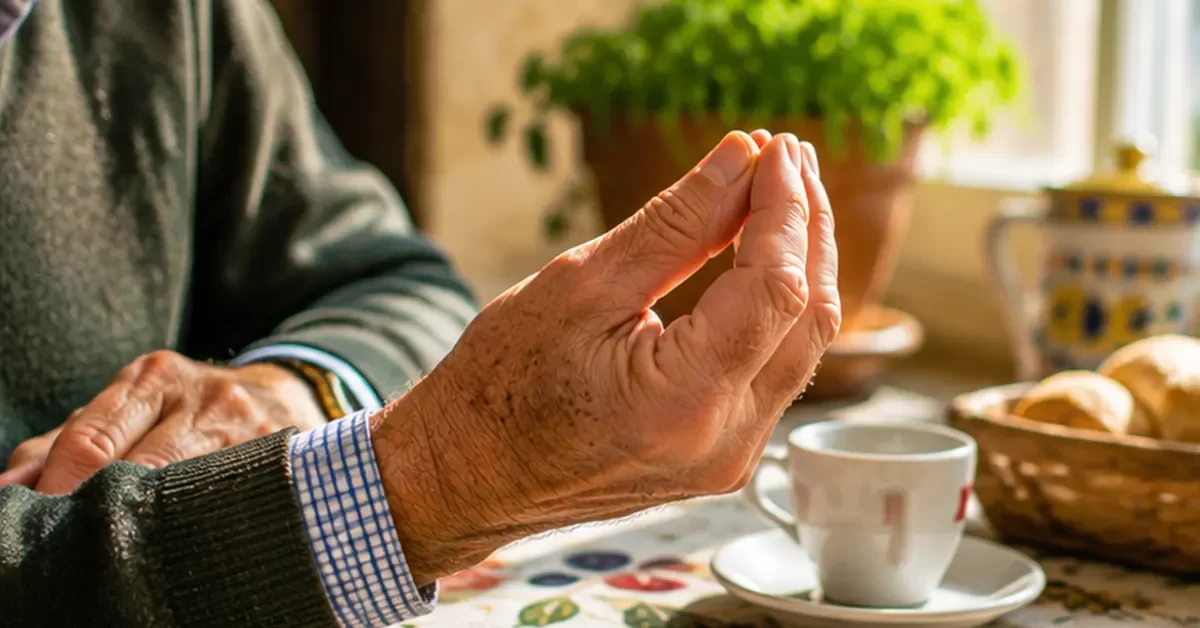
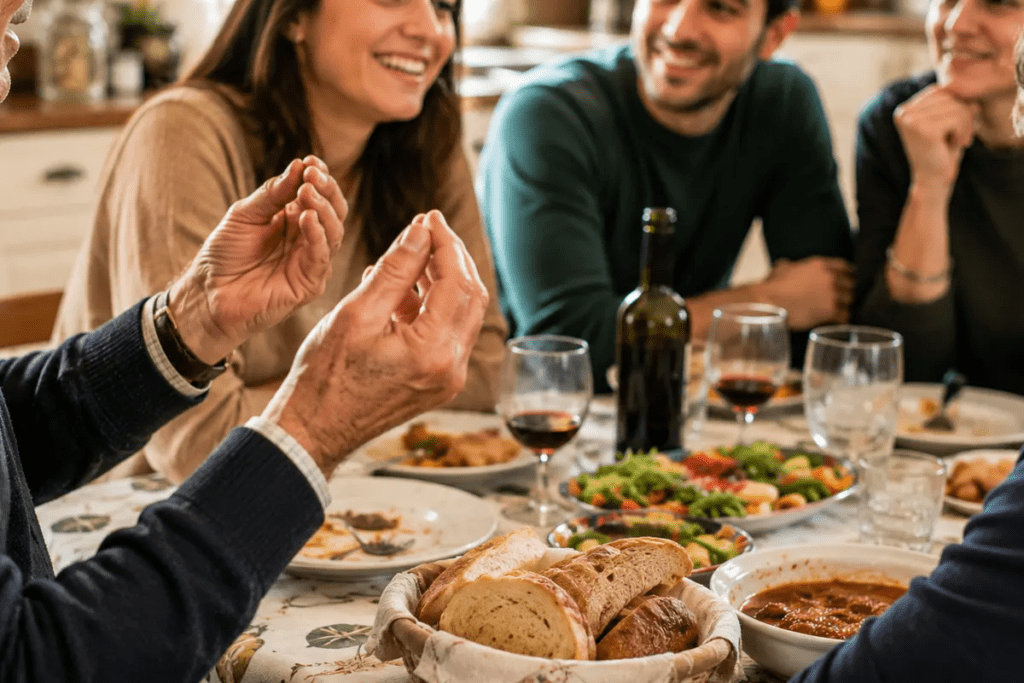
You could mute the volume on any conversation in my grandfather’s kitchen and still know exactly what was happening. The pinched fingers shaking upward meant someone had said something absurd. The hands pressed together meant he was begging the universe for patience. The fist drawn to the mouth meant something was, against all odds, even better than expected. None of it needed translating. It is, quite literally, a language — one that researchers say is older than Italian itself.
⏱ 9 minute read
📋 What you will learn in this post
- The real, researched history of why Italians talk with their hands
- A complete reference table of the most common Italian hand gestures and exactly what they mean
- Why southern Italy has a far richer gestural vocabulary than the north
- The surprising scientific scale of the whole system — and its UNESCO recognition
- How to actually use a few of these correctly without causing an international incident
Table of Contents
- The silent language at my grandfather’s table
- Where it actually comes from
- The complete gesture reference table
- Why the south gestures more than the north
- How one gesture became a global emoji
- How to actually use these — carefully
- The gestures that crossed the ocean
- FAQ
The silent language at my grandfather’s table
Long before I understood a word of Italian, I understood my grandfather’s hands perfectly.
The pinched fingers, shaken upward like he was trying to shake water off them, meant exasperation — ma che vuoi, what do you want, what is this, why are we even discussing this. The hands pressed flat together, raised slightly, sometimes bobbing in small frustrated waves, meant he was pleading with the heavens for patience he clearly did not have in stock that day. The fingertips brought to the lips and kissed outward meant something — usually food, occasionally a person, very occasionally an idea — had cleared an extremely high bar. And the single finger drawn in a slow circle near the temple needed no translation in any language on Earth: someone, somewhere, had said something he considered completely insane.
None of this was performance. He was not doing bits for an audience. These Italian hand gestures were simply how an entire emotional register got communicated in his house — faster than words most of the time, and somehow more precise. A whole argument could happen, escalate, and resolve itself in the time it took someone else to clear their throat to speak.
Where it actually comes from
This is not a stereotype dressed up as culture. Italian hand gestures are a documented, studied, centuries-old communication system with real academic literature behind it.
There are several competing theories about its origin, and they are not mutually exclusive. Italian Teachers UK notes one leading theory: given Italy’s long history of being occupied by foreign powers, Italians may have come to depend on hand gestures as a secretive way of communicating that occupying forces couldn’t understand. Wikipedia’s documentation on the subject gets specific about who those occupiers were — Germanic tribes including the Vandals, Ostrogoths, and Lombards, along with Moors, Normans, French, Spaniards, and Austrians — seven major groups whose presence, the theory holds, pushed Italians toward a rudimentary shared sign language that could cross dialect and occupier alike.
A second theory locates the origin somewhere entirely different: overcrowding. Language Drops explains the idea that gesturing took root in densely packed cities like Naples as a way of marking one’s presence, getting attention, and standing one’s ground amid the noise and crush of public life. L’Idea Magazine traces the formal documentation of this tradition to Neapolitan priest and archeologist Andrea de Jorio, who in 1832 wrote an entire scholarly volume connecting the gestures he observed on the streets of Naples to remarkably similar gestures depicted on ancient Greek vases and Roman frescoes uncovered at Pompeii and Herculaneum — meaning some of these exact hand movements may be over two thousand years old.
And there is a third thread entirely, reaching back to Ancient Rome itself: oratory. L’Idea Magazine notes that Cicero — the great Roman lawyer, philosopher, and orator — believed an excellent speech required not just words but “movement of the body,” deploying gesture, facial expression, and vocal inflection together as a single persuasive instrument. Some scholars see a direct line from Roman public oratory through to the expressive hands still moving across Italian kitchen tables today.
🇮🇹 Did you know? L’Idea Magazine cites Italian communications expert Dr. Isabella Poggi’s research finding that Italians produce roughly 250 distinct, identifiable gestures over the course of an average day — meaning the “Italians talk with their hands” stereotype is, if anything, a significant understatement of an actual measured phenomenon.
The scale of the documented system is genuinely remarkable. Wikipedia notes that around 251 specific Italian hand gestures have been formally identified and catalogued by researchers — not a loose handful of recognizable moves, but a structured vocabulary nearly as extensive as a small spoken lexicon. In 2021, Italy formally submitted this tradition for UNESCO recognition as intangible cultural heritage, a serious acknowledgment that what looks like spontaneous flailing to outsiders is, in fact, a refined and historically continuous communication system.
Preserve the Language Your Family Never Wrote Down
The gestures your grandparents used, what each one meant in your household, and the expressions that needed no translation are part of your family history too. The Italian Family Heritage Kit gives you the questions and space to record those details before they disappear.
Explore the Italian Family Heritage Kit →The complete gesture reference table
Here is the real lexicon of Italian hand gestures — the ones you have almost certainly seen, plus several you probably haven’t, with exactly what each one means.
| The gesture | How to do it | What it means |
|---|---|---|
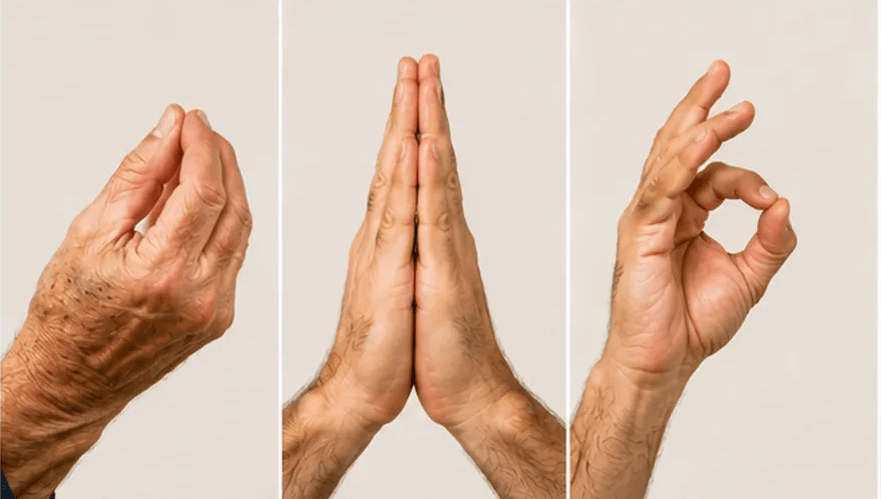
| Ma che vuoi? (the pinched fingers) | All fingertips of one hand pressed together pointing up, hand shaken at the wrist | “What do you want?” / “What are you talking about?” — frustration, disbelief, or pure emphasis |
| The two-handed pinch | Both hands doing the pinched-fingers gesture simultaneously, often shaking | An extreme version of the above — total, theatrical disbelief |
| Ti prego (the prayer) | Palms pressed together in front of the chest, bouncing gently up and down | “I’m begging you” — exasperated pleading, often with a tinge of affection |
| Perfetto / Eccellente (the chef’s kiss) | Fingertips bunched, brought to the lips, kissed, then flicked open | Something — usually food — is exceptional. The internet stole this one and got it mostly right |
| The temple circle | Index finger drawn in slow circles near the temple | “This person is crazy” or “that idea is insane” |
| Che buono (finger to the cheek) | Index finger pressed into the cheek and twisted, as if turning a screw | The food is delicious — a gesture children learn before they can properly talk |
| The shrug | Shoulders raised, palms open and turned upward | “What do I know?” — good-natured helplessness and disavowal of responsibility |
| The chin flick | Back of the fingers flicked outward from under the chin | “I don’t care at all” — complete indifference |
| Soldi (the money rub) | Thumb rubbed against index and middle fingers | Money, or “that’s expensive” |
| Perfetto (the drawn line) | Thumb and index finger pinched together, drawn in a straight line through the air | “Exactly right” or “perfect,” as if sealing the point shut |
| The eyelid pull | Index finger placed below the eye, pulling the lower lid down slightly | “I see what you’re doing” — watchfulness, knowing skepticism |
| Furbo (the same eyelid pull, shared) | Finger under the eye, directed knowingly at another person | “You’re clever” or “we both know what’s really going on here” |
| The hand purse, slow | The che vuoi pinch held still and steady rather than shaken | A genuine question — “what exactly do you mean?” — rather than frustration |
| Hands wiped against each other | Palms brushed together twice as if cleaning off dust | “I’m done,” “finished,” “that’s the end of it” |
| The horns (corna) | Index and pinky extended, other fingers folded, pointed downward | Warding off bad luck or the malocchio — but pointed at a person, a serious insult (see warning below) |
| Thumbs bitten / knuckle bite | Side of the index finger or thumb brought to the teeth | Intense desire, anger, or “I could just—!” — strong, barely contained emotion |
| Counting from the thumb | Counting on fingers starting with the thumb as “one,” not the index finger | Not a message but a tell — this is simply how Italians count, and starting with the index finger marks you instantly as a foreigner |
A few of these deserve their own explanation, since they came up specifically in my own family and carry more weight than the table alone suggests. The pinched, shaking fingers — che vuoi — were less a single gesture in my grandfather’s hands than an entire punctuation system, deployed at different speeds and intensities depending on exactly how absurd he found whatever had just been said. The prayer hands appeared specifically in moments of theatrical, half-serious despair — usually directed at the ceiling, occasionally at a particular family member who had, once again, done something he considered beyond reasonable explanation.
Why the south gestures more than the north
Just as with the cheek-kiss greeting, gesturing is not evenly distributed across Italy — and the regional pattern follows a similar logic.
Italy Planner’s detailed regional analysis notes that southern Italy — particularly Naples, Sicily, and Calabria — has a significantly richer and more frequently used vocabulary of Italian hand gestures than the north. The explanation offered is environmental and historical: southern Italian public life was traditionally conducted in shared outdoor spaces — the piazza, the street, the open-air market — creating conditions of background noise and physical distance where gesture naturally supplemented speech. Northern Italian commercial life, by contrast, was historically more indoor and formal, creating less practical necessity for a gestural supplement to conversation.
The same source traces the specific gestural vocabulary most associated internationally with “Italian gesture” directly back to Naples, citing the 1832 volume Usi e costumi di Napoli by Francesco de Bourcard as the first systematic documentation of the Neapolitan gestural tradition — the same tradition de Jorio had begun cataloguing just a few years earlier. My own Calabrian family fits squarely inside this documented pattern: animated, frequent, fluent gesturing was simply the water we swam in.
How one gesture became a global emoji
In 2020, the most famous Italian hand gesture of them all made the leap from the kitchen table to every smartphone keyboard on Earth.
The che vuoi pinch — all five fingertips drawn together, pointing up — became an official Unicode emoji in 2020, now universally recognized as the “pinched fingers” 🤌 emoji. The proposal that introduced it explicitly described the gesture as broadly representative of Italian culture, and the internet wasted no time adopting it. What had been, for centuries, a specifically Italian piece of physical vocabulary suddenly became global shorthand for sarcasm, emphasis, and a certain kind of exasperated “what are you even talking about” energy that translates across every language.
There is something quietly funny about watching the rest of the world discover, via emoji, a gesture that my grandfather deployed forty times a day without ceremony. For non-Italians, the pinched fingers became a fun novelty. For anyone who grew up in an Italian household, it was simply a Tuesday — the visual punctuation mark that had been hanging in the air over every family argument for as long as anyone could remember, now officially encoded into the global digital language. The gesture’s journey from ancient Naples to the Unicode Consortium is, in miniature, the whole story of this post: a 2,000-year-old form of communication, too useful and too instinctive to ever fully disappear, simply finding new surfaces to live on.
How to actually use these — carefully
A few of these Italian hand gestures are safe for anyone to use immediately. A few are genuinely not — and the difference matters.
The chef’s kiss, the che vuoi pinch, and the cheek-twist for delicious food are all generally safe, widely understood, and even charming when used by a non-Italian making a genuine effort. Preply’s guide to Italian gestures offers sound practical advice here: spend time around Italians, observe how and when they actually use these gestures in context, and ask questions rather than guessing.
Some gestures, however, carry real weight and should be approached with caution. The same Preply guide flags the corna gesture specifically — formed by extending the index and pinky fingers while folding the others — as one that can be easily mistaken for an innocent rock-and-roll hand sign, but in Italian context carries two very different meanings depending on how it’s used. Pointed downward, it is protective — a way of warding off the malocchio, the evil eye, the same instinct behind the cornicello horn charm. But pointed at a person, it implies that person has been cheated on by their partner — a genuinely sensitive accusation in many parts of Italy, and not a gesture to use casually or in front of people you don’t know well. The same caution applies to several of the more vulgar gestures in the broader lexicon — the elbow-slap arm sweep among them — which carry real offense and have no place in casual or polite use.
The safest rule, consistent with how this entire site approaches Italian custom: watch first, ask questions, and never deploy a gesture you don’t fully understand simply because it looked fun in a video.
The gestures that crossed the ocean
Unlike a holiday that depends on infrastructure, or a recipe that depends on specific ingredients, gesture requires nothing but a body — which made it one of the most completely portable pieces of Italian culture to survive immigration.
This is, in many ways, the most resilient tradition documented anywhere on this site. La Vigilia required a kitchen and specific ingredients. Ferragosto required an entire country agreeing to stop together — and largely didn’t survive the crossing intact. But the che vuoi pinch required nothing except hands, frustration, and an audience, which meant it traveled to Montreal, to New York, to Buenos Aires, to every corner of the Italian diaspora, completely intact and completely undiminished. Wikipedia’s documentation of the che vuoi gesture specifically notes it remains widely used today not just in Italy but throughout Argentina, Brazil, Uruguay, and other countries with large Italian diaspora populations, carrying the same meaning everywhere it landed.
In Italian-Canadian households, this is the tradition that needed no deliberate preservation effort at all. Nobody had to remember to teach it. It simply happened, automatically, every time emotion outpaced words — which, in a Calabrian household, was often. The Italian hand gestures that filled my grandfather’s kitchen are the same ones filling kitchens across the Italian diaspora today, completely unbroken across the ocean and across generations, because some things really are too instinctive to lose.
🤌 Love these Italian family traditions?
Get new stories about Italian customs, gestures, food rules, and family traditions sent straight to your inbox — the same warm, real take you just read. Enter your email below to join.
You could mute the volume on my grandfather’s kitchen and still know exactly what was happening. The pinched fingers, the prayer hands, the chef’s kiss, the temple circle — a complete vocabulary, two thousand years old in places, requiring no words at all. It is, quite literally, a language. And like every other language in this family, it never once needed a lesson. You just learned it by watching.
What Did Your Family Say Without Words?
Record the gestures, sayings, and stories only your family understood.
Which gesture meant “enough”? Which one appeared at every dinner? What expressions did your grandparents use without ever explaining them? The Italian Family Heritage Kit includes 133 guided pages and more than 120 prompts to preserve your family’s people, names, traditions, recipes, sayings, photographs, and memories.
Explore the Heritage Kit — $19.99Instant digital download. Print it and complete it with your family.
This kind of instinctive, portable communication connects to the broader regional story explored in why Italians kiss on both cheeks, where the same north-south divide shapes another deeply physical Italian custom. You’ll find the same expressive instinct in the Italian nonna, whose hands were rarely still, and woven through the whole Italian feast day calendar she carried in her head. For the broader story of what survived Italian immigration and what didn’t, read Italian-American traditions: what changed and what stayed.
Gestures weren’t the only language Italian families kept — the Italian-American slang of the immigrant kitchen carried just as much meaning.
📌 Quick summary
- The scale: Around 251 distinct Italian hand gestures have been formally catalogued by researchers
- Three origin theories: secret communication during foreign occupation, a tool for standing out in crowded cities like Naples, and a direct line back to Roman oratory
- Ancient roots: Some Italian hand gestures match figures depicted on 2,000+ year old Greek vases and Roman frescoes
- Regional divide: Southern Italy — Naples, Sicily, Calabria — has a noticeably richer gestural vocabulary than the north
- Recognition: Italy submitted the tradition for UNESCO intangible cultural heritage status in 2021
- Why it survived immigration so completely: it requires nothing but hands — no kitchen, no calendar, no community infrastructure
FAQ
Why do Italians talk with their hands so much?
Several theories explain this, and they likely reinforce one another rather than competing. One traces the habit to Italy’s long history of foreign occupation — by Germanic tribes, Moors, Normans, the French, Spanish, and Austrians — during which gestures may have functioned as a shared communication system that crossed dialects and occupiers’ languages alike. Another theory points to overcrowded cities like Naples, where gesturing helped individuals stand out and command attention amid noise and crowds. A third connects the tradition to Ancient Roman oratory, where figures like Cicero treated physical gesture as an essential part of persuasive public speaking.
How many Italian hand gestures actually exist?
Wikipedia’s documentation on the subject identifies around 251 distinct, catalogued Italian hand gestures — a structured, extensive nonverbal vocabulary rather than a loose handful of recognizable moves. Separately, communications researcher Dr. Isabella Poggi’s work estimates that Italians produce roughly 250 distinct gestures over the course of an average day, underscoring just how embedded gesture is in everyday Italian communication rather than reserved for dramatic or exceptional moments.
What does the famous pinched-finger Italian gesture mean?
Known as “che vuoi?” or “ma che vuoi?” — roughly “what do you want?” — this is performed by bringing all the fingertips of one hand together to form an upward-pointing shape, then shaking the hand at the wrist. It expresses disbelief, frustration, or confusion at what someone has just said or done, and the speed and intensity of the shaking motion typically indicates the level of frustration behind it. The gesture became official Unicode emoji 🤌 in 2020, following a formal proposal recognizing it as broadly representative of Italian culture.
Is it true that southern Italians gesture more than northern Italians?
Yes, this is a well-documented regional pattern. Southern Italy, particularly Naples, Sicily, and Calabria, has a significantly richer and more frequently used gestural vocabulary than northern Italy. The most commonly cited explanation is environmental and historical: southern Italian public life traditionally took place in shared outdoor spaces like piazzas, streets, and markets, where gesture helped supplement speech across noise and distance. Northern Italian commercial and social life was historically more indoor and formal, creating less practical demand for an equally elaborate gestural system.
How old are Italian hand gestures, really?
Genuinely ancient in some cases. Nineteenth-century Neapolitan priest and archeologist Andrea de Jorio conducted detailed comparisons between gestures he observed on the streets of Naples in his own era and gestures depicted on ancient Greek vases and in Roman frescoes uncovered at Pompeii and Herculaneum, finding striking continuity between them. This suggests that while spoken Italian has evolved considerably over the centuries, certain physical gestures have remained remarkably stable — potentially making some of today’s everyday Italian hand gestures well over two thousand years old.
Are there Italian hand gestures that are considered offensive or rude?
Yes, and it’s important to know the difference before using any gesture casually. The corna gesture, formed by extending the index and pinky fingers, can be mistaken for an innocent rock-and-roll hand sign by outsiders, but in Italian context implies that someone has been cheated on by their romantic partner — a genuinely sensitive accusation in many parts of Italy. Other gestures in the broader lexicon, including several vulgar arm and hand movements, carry real offense and are not appropriate for casual or polite use. When in doubt, observing context and asking is always safer than guessing.
Did Italian hand gestures survive immigration to Canada and the United States?
Remarkably completely, more so than almost any other Italian tradition. Because gesture requires no specific infrastructure — no kitchen, no calendar, no community-wide participation — it transferred to Italian immigrant communities essentially intact. The che vuoi gesture specifically remains widely used not only across Italy but throughout Argentina, Brazil, Uruguay, and other countries with large Italian diaspora populations, carrying the same core meaning everywhere it took root. In Italian-Canadian and Italian-American households, gesture is frequently the single most unbroken, undiminished piece of inherited Italian culture across multiple generations.
💬 Which gesture is most “your family”? The pinched fingers, the prayer hands, something else entirely — leave a comment below and tell us which one you’d recognize from across the room.
Marco Ricci is an Italian-Canadian writer and the grandson of Calabrian immigrants. He created Italian Family Traditions to document the customs, feast days, and family rituals Italian families carried from Italy to North America — and to understand what they actually meant. He is based in Montreal.