Italian Family Traditions
What Are I Giorni della Merla? Italy’s Blackbird Days Tradition
Some traditions come with saints, feasts, and special foods. This one comes with cold. Not ordinary cold — story cold. Fireplace cold. “Put more soup on, these are the merla days now” cold. The kind of cold that makes old sayings feel true before anyone proves them.
My grandmother said it the same way every year. Late January, the sky the particular grey of winter exhausted with itself, and she would look out the window while doing something ordinary — rinsing a pot, folding a dish cloth — and say, without special ceremony, “These are the giorni della merla now.” It was not a warning exactly. It was more like an acknowledgment. The season had arrived at its worst point, which meant, by the logic she had inherited from her own grandmother in Calabria, that it had also arrived at its turning point. The worst comes before the end. The merla days are winter’s last serious effort before it begins — reluctantly, imperceptibly — to loosen its grip.
I did not know the story of the blackbird for years. I knew only the phrase and the tone in which it was said: the specific quality of resigned acknowledgment that older Italians bring to the facts of winter, the way they named the cold rather than simply suffering it, the way a little folklore makes the hardest part of any season easier to carry. That is what this tradition is — not a feast, not a ceremony, not a saint’s day. A name for the cold. A story about a bird. A way of saying “we are almost through the worst of it” without being quite sentimental enough to say it directly.
I giorni della merla are winter’s last serious effort — but the old Italians who named them understood that naming the worst part of a season is the first step toward surviving it with some grace.
What i giorni della merla are
In the simplest sense, i giorni della merla are traditionally the last three days of January — usually January 29, 30, and 31. Meteo.it gives those dates as the standard version, while Focus describes them as the days popularly known as the coldest of the year.
They are not a national holiday. They are not a religious feast. They are a folk marker — one of those old calendar traditions that gave the year a felt shape rather than an administrative one. People who lived closely with seasons, harvests, and the management of winter provisions needed names for the critical points of the year. The merla days marked one of them: the moment when winter was understood to be at its peak and — crucially — when the turn toward spring was about to begin.
Not every region counts them exactly the same way. Meteo.it notes that in parts of Cremona and Lodi the tradition shifts to January 30, 31, and February 1. That little variation is very Italian — even the folklore cannot fully agree with itself. And that is part of the charm. This was never a fixed rule in the modern sense. It was a living tradition, shaped by the specific weather of specific places and passed down in the specific voices of specific grandmothers who had learned it from theirs.
The story of the blackbird — and why it matters
The name giorni della merla means “days of the blackbird” — merla being the female blackbird — and the tradition carries two distinct legends about how the bird got involved in the calendar.
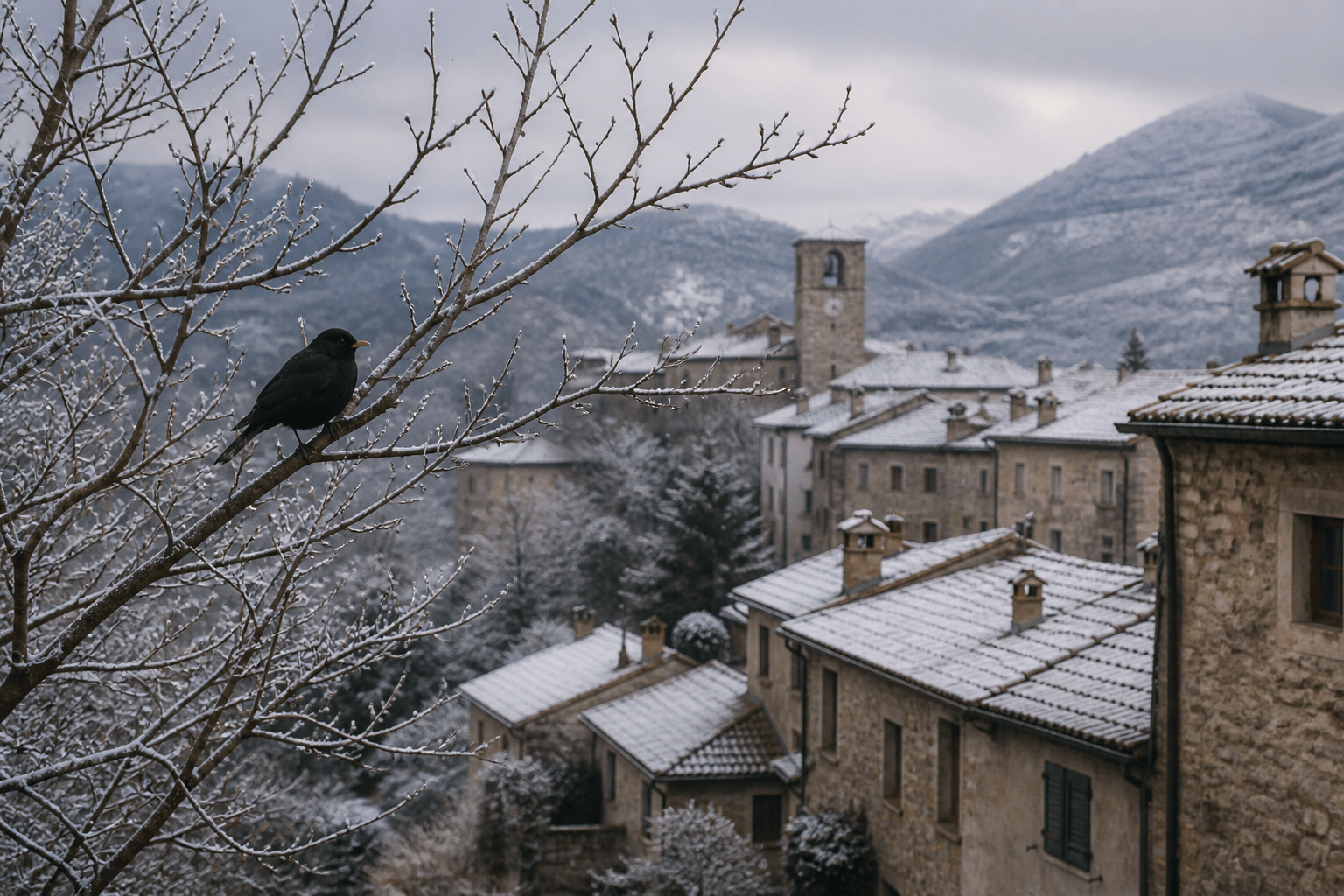
The chimney legend. Blackbirds were not always black. In the most widely told version, a white female blackbird took shelter with her young inside a chimney during the brutal last days of January, escaping the killing cold outside. When she came out three days later, her feathers had been permanently blackened by the soot. That is why blackbirds are black — and that is why the last days of January are named for her ordeal. La Cucina Italiana and Focus Junior both tell this version.
The borrowed days legend. A blackbird, prematurely convinced that winter was essentially over, mocked January from a rooftop. January took this personally. It borrowed three extra days of cold from February and unleashed one final punishing attack — specifically to teach the blackbird a lesson about premature celebration. The bird survived by hiding, but came out changed. La Cucina Italiana includes this version too. It carries the clearest moral: do not get comfortable too soon, and do not taunt winter before spring is confirmed.
Both legends are beautiful in different ways. The chimney story is about survival through endurance — the bird hiding from something it cannot fight, coming out permanently marked by what it went through. The borrowed-days story is about hubris and its consequences, which is a moral Italian family culture has always appreciated. The bird bragged. January heard it. January acted. That second version in particular feels immediately recognizable if you grew up around older Italian relatives. They had a consistent position on premature optimism. They respected the cold. They did not announce spring early.
Are they really the coldest days of the year?
Folklore says yes. Weather data says: not necessarily. This gap is part of what makes the tradition interesting rather than undermining it.
Focus says the belief has no scientific proof and notes that in Italy the last three days of January have not been the statistically coldest days of the year for decades. The Centro Geofisico Prealpino’s data from Varese shows that from 1967 to 2024, the average temperature for the merla days was actually about 0.8°C warmer than January’s overall average for that location.
The Centro Geofisico Prealpino suggests the legend may come from an earlier, colder climate period — or simply from the human feeling that the heart of winter must be its hardest point. That second explanation is the more interesting one. People who had been carrying winter for two months by late January may have felt those final days as the most grinding regardless of what a thermometer would have said. The cold accumulated. The provisions depleted. The firewood diminished. By January 29 it was not necessarily colder; it was heavier. And a folk tradition preserved that felt truth rather than the meteorological one.
My grandmother was not wrong about the cold even when the temperature was not technically at its lowest. She was right about the feeling. By late January the house had been cold for a long time. The novelty of winter had been over since December. The days were still very short. The weight of it was at its heaviest. When she said “these are the merla days” she was not making a meteorological claim. She was naming something real about the experience of being in winter at that point — two months in, with February still to come — and that naming was a kind of care. It said: this is the hardest part, and we know it, and we have a name for it, and it will pass.
What the merla days looked like in family life
This is not a tradition with a feast table or a saint’s statue. It is a tradition of attention — of noticing a specific point in the winter calendar and marking it in the family’s own way.
In rural Italian life, late January was a practical inflection point. La Cucina Italiana connects the merla days to winter’s peak and to the foods that sustained families through the hardest stretch — soups, broths, polenta, beans, the warming things that made sense when the cold was at its worst and the body needed something that worked from the inside out. These were not feast foods. They were endurance foods. The kind that required patience and produced warmth and filled the house with a smell that made it possible to believe the season would eventually change.
Beyond the food, the merla days were a moment of shared attention. Someone would note the date. Someone would repeat the saying. The story of the blackbird would get told — briefly, in passing, the way family lore gets told when it has been embedded long enough to require no special occasion. Children absorbed it without being taught it formally. They heard the phrase repeated at the same point every January until it settled into them as a seasonal marker, the way certain phrases settle when they are heard often enough at the right time of year.
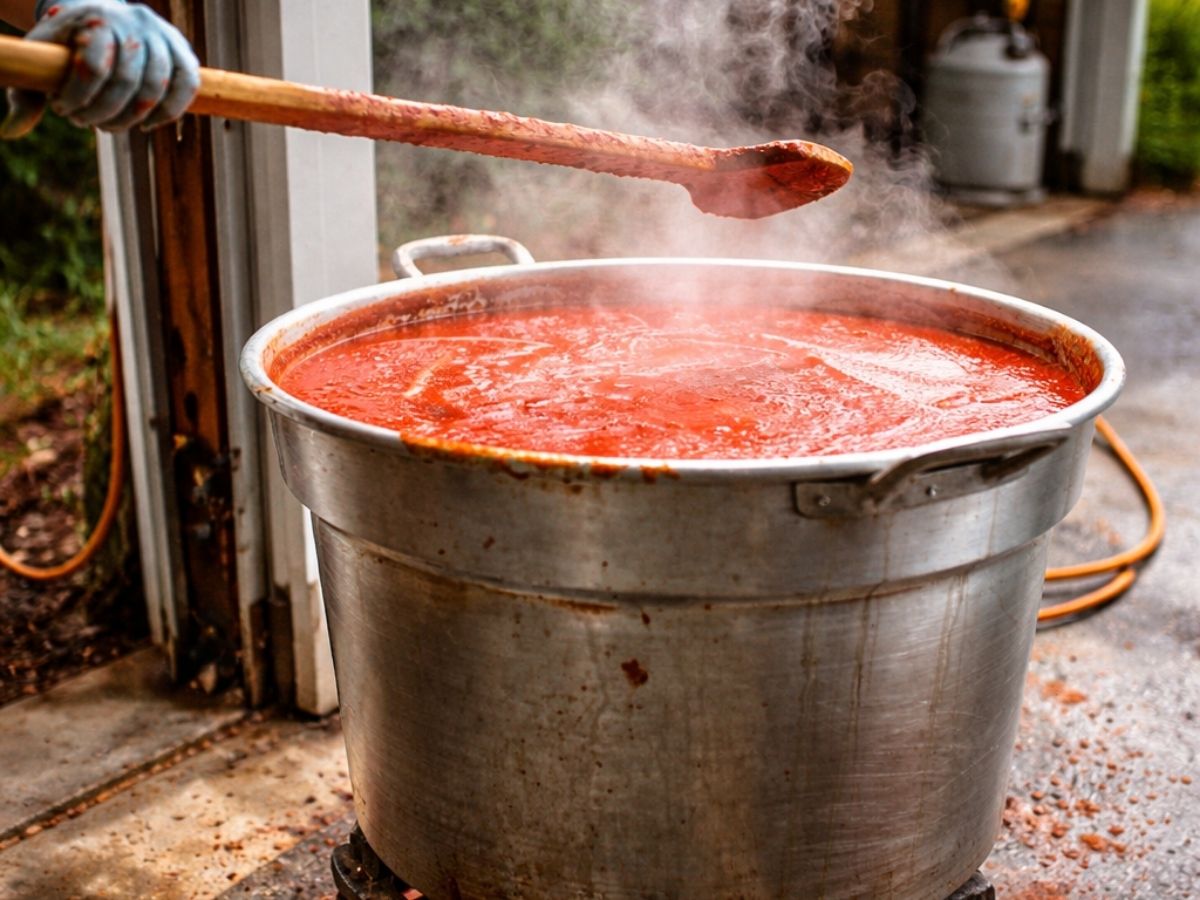
The soup my grandmother made in the last week of January was different from other soups. Not in recipe — she made many of the same things all winter — but in how it was served. More slowly. More deliberately. She brought the pot to the table herself rather than serving from the stove, which she did not always do. She sat down before everyone was finished, which she also did not always do. The giorni della merla were not a feast, but they produced a quality of attention around the meal that ordinary evenings did not. The cold outside was acknowledged. The warmth inside was deliberate. That is the whole tradition, really — the acknowledgment and the deliberateness, together, in a house that knew exactly where it was in the year.
How the tradition varied across Italy
Like most Italian folk traditions, i giorni della merla were never uniform across the whole country. They shifted by region, by local climate, and by the specific oral traditions of specific communities.
In northern Italy, particularly in Lombardy, the tradition was strongest and most elaborately developed. Focus Junior notes that in Lodi there are still dialect songs connected to the merla days, which suggests a community practice that went beyond family storytelling into shared public culture. Meteo.it describes the broader tradition as historically celebrated with rites, songs, and popular gatherings — the kind of communal observance that marked the turning of a season in pre-industrial life, when the calendar was something people participated in rather than simply noted.
In southern Italy the tradition was generally less formally observed as a specific three-day period, but the underlying understanding — that late January was winter’s cruelest stretch, that those days deserved acknowledgment and naming — was present across the peninsula in various forms. The Italian relationship with seasonal lore was never confined to one region. It simply expressed itself differently depending on where the lore had been shaped by which climate, which birds, which local stories.
The merla days and the coming of spring — why the worst and the turning point are the same
One of the most beautiful aspects of this tradition is the logic embedded in it: the worst days of winter and the beginning of winter’s end are the same days. The merla days are not just a marker of cold at its peak. They are, in the folk understanding, the announcement that the peak has been reached — and that what comes after is, however slowly and reluctantly, the return of warmth.
That is excellent emotional strategy. Naming the hardest point as simultaneously the turning point does something important for people who still have February ahead of them. It reframes the cold. The worst is not simply bad; it is also the evidence that you are almost through. The blackbird survived the chimney. January’s borrowed days ran out. February begins. And something — not spring exactly, not yet, but the direction of spring — is now technically underway.
In Italian family culture, this kind of seasonal reframing is part of a broader tradition of living with difficulty without catastrophizing it. You name the hard thing. You give it a story. You serve the soup. You say “these are the merla days now” with the specific tone of someone who has been here before and knows how it ends. And then you wait — which is the oldest possible strategy for getting through a winter.
How to keep the tradition alive today
This is one of the easiest Italian traditions to maintain, because it asks almost nothing from you.
Mark the last days of January. Say the phrase — questi sono i giorni della merla — at the right moment, in late January, with the specific tone of someone who knows exactly where they are in the year. Tell the story of the blackbird. Tell both versions if you have children who need to decide which one they prefer. Make soup. Make something slow and warming that fills the house with the right smell. Ask older relatives if they remember a different version of the legend or a different way the phrase was used.
The merla days work especially well with children because the tradition has all the right ingredients: a bird, a chimney, a weather mystery, a playful moral, and just enough folk weirdness to stick in the mind. It is the kind of story children remember because it sounds both silly and true in the way that the best family stories always do.
And the tradition carries a genuinely useful idea worth passing on: naming the hardest stretch of winter is not pessimism. It is the opposite. Giving the worst part of something a name, a story, and a turning point is how families have survived difficult seasons — literal and otherwise — for a very long time. For how to preserve the seasonal sayings and winter memories of older relatives while there is still time, read what to ask your grandparents about your Italian family history.
She looked out the window. She said the same thing she said every year. “These are the giorni della merla now.” Not a warning. An acknowledgment. The season had arrived at its worst point, which meant it had also arrived at its turning point. That is the whole tradition. It costs nothing, requires no ceremony, and lasts a lifetime.
Tell the story of the blackbird. Make the soup. Say the phrase at the right moment in late January. Name the cold. Know where you are in the year. And know that winter, even now, has already started to end.
The merla days belong to the same Italian relationship with seasons and folklore as the protective traditions and superstitions and la smorfia and its folk wisdom. For how to preserve the seasonal sayings and winter memories of older relatives, read what to ask your grandparents about your Italian family history. For how to record and preserve those conversations before they fade, read how to record family stories before they’re lost. And for the broader story of how Italian folk traditions survived immigration, read Italian-American traditions: what changed and what stayed.
FAQ
What are i giorni della merla?
I giorni della merla — “the days of the blackbird” — are traditionally the last three days of January, usually January 29, 30, and 31, believed in Italian folklore to be the coldest days of the year. They are not a religious feast or a national holiday but a folk calendar marker: a traditional name for the point in winter considered to be its hardest, and also — in the same tradition — the turning point after which spring, however slowly, begins its return. Meteo.it gives the standard dates, while noting that in parts of Lombardy the tradition shifts to include February 1 instead of January 29.
Why are they called the Blackbird Days?
The name comes from two related legends about the merla — the female blackbird. In the chimney legend, a blackbird who was once white took shelter inside a chimney during the brutal last days of January and emerged three days later permanently blackened by the soot — which is why blackbirds are black today. In the borrowed-days legend, a blackbird prematurely mocked January for being nearly over; January borrowed three extra days of cold from February and unleashed them to punish the bird. Both legends are told by La Cucina Italiana and Focus Junior. The borrowed-days version carries the clearest moral: do not announce spring before winter has finished its business.
Are i giorni della merla really the coldest days of the year?
Not necessarily, according to modern weather data. Focus notes that the belief has no scientific basis, and the Centro Geofisico Prealpino’s statistics from Varese show that from 1967 to 2024 the merla days averaged about 0.8°C warmer than January’s overall average. The Centro suggests the legend may originate from an earlier, colder climate period — or from the accumulated psychological weight of late January, when two months of winter have already passed. Folk traditions preserve felt truth as often as meteorological truth, and by late January the cold felt heaviest regardless of what the thermometer said.
Do all parts of Italy count the same days?
No. The most common version counts January 29, 30, and 31, but Meteo.it notes that in parts of Cremona and Lodi the tradition extends to include February 1 instead. The variation is typical of Italian regional folk traditions — the same underlying idea expressed slightly differently depending on local climate, local oral tradition, and which grandmother’s version of the story got passed down in which village.
What did families traditionally eat on i giorni della merla?
There is no specific feast dish, but La Cucina Italiana connects the merla days to the warming winter foods that sustained families through the hardest stretch of the season: soups, broths, polenta, beans, and other slow-cooked dishes that made sense when the cold was at its worst and the body needed sustained warmth from the inside out. These were endurance foods rather than celebration foods — associated with a specific quality of winter domesticity, the deliberate warmth of a house that knows exactly where it is in the year.
Why did this tradition matter in family life?
It gave families a way to acknowledge the hardest point of winter rather than simply enduring it in silence. Naming the worst days — giving them a story, a phrase, a specific quality of attention — turned passive suffering into something more active and shared. The phrase “questi sono i giorni della merla,” said at the right moment in late January, did practical emotional work: it confirmed that the season had reached its peak, that the family had made it this far, and that the direction of change was now, however reluctantly, toward warmth. The tradition preserved the idea that naming a hard thing is the first step toward surviving it with grace.
How can I keep the tradition alive today?
Mark the last days of January. Say the phrase — “questi sono i giorni della merla” — at the right moment, in late January, with the tone of someone who knows exactly where they are in the year. Tell both versions of the blackbird legend and let children decide which one they prefer. Make soup — something slow and warming that fills the house with the right smell. Ask older relatives if they remember the tradition or a different version of the story. The merla days cost nothing, require no ceremony, and work especially well with children because the tradition has all the right ingredients: a bird, a chimney, a folk mystery, and a moral that is both silly and true in the way that the best family stories always are.

Marco Ricci is an Italian-Canadian writer and the grandson of Calabrian immigrants. He created Italian Family Traditions to document the customs, feast days, and family rituals Italian families carried from Italy to North America — and to understand what they actually meant. He is based in Montreal.