Italian Family Traditions
Italian-American Traditions: What the Ocean Changed — and What It Could Not Touch
They did not arrive and simply continue life with a different zip code. They arrived into a world that demanded adaptation immediately. What survived was not what was easiest to keep. It was what mattered too much to lose.
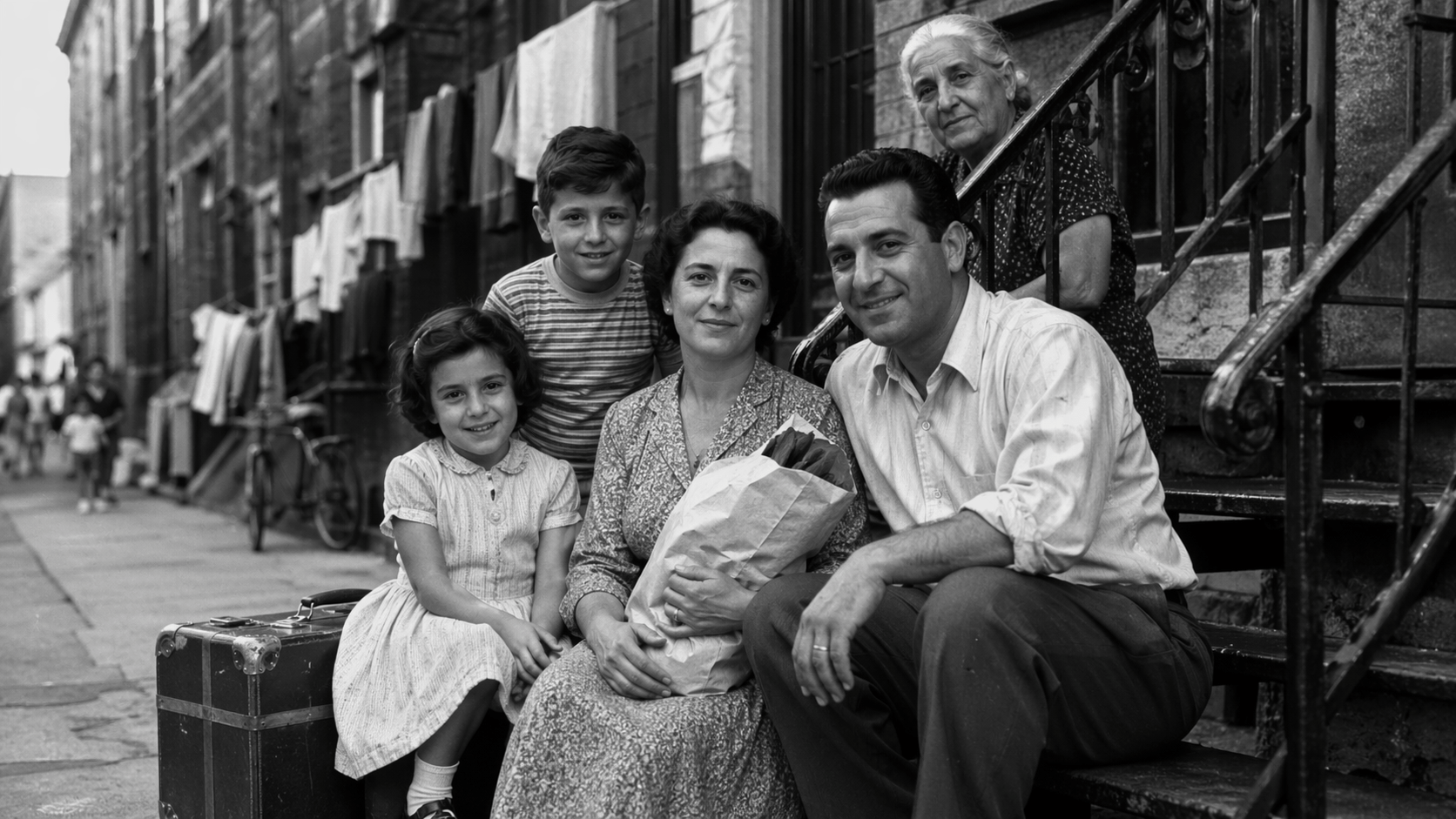
My grandparents arrived in Montreal in the early 1950s with almost nothing that would survive the crossing in physical form. They came from a small town in southern Italy — one of the hundreds of thousands of Italians who made the postwar crossing to Canada when Italy was rebuilding and Canada was recruiting, and when a young couple with ambition and very little money looked at the options and chose north. They settled first in Little Italy, on and around Saint-Laurent, in the neighborhood that was already dense with families who had made the same calculation — the same streets, the same churches, the same dialect in the stairwells, the same smell of sauce on Sunday mornings coming from every floor of every building.
They were not there to be nostalgic. They were there to build.
From Little Italy they moved to Saint-Michel as the family grew and the finances allowed it, then eventually to Rivières-des-Prairies, where they finally settled and where the family put down the roots that are still there. Each move outward from the original neighborhood was a small act of arrival — evidence that something had been built, that the family had more room than it started with, that the crossing had been worth making.
The recipe survived all three moves. My grandmother carried it in her head. She still does.
Italian traditions did not cross the ocean intact. They crossed as intentions — carried in the head and the hands and the instinct of people who knew what they refused to leave behind.
This is what this article is really about. Not a list of Italian-Canadian or Italian-American customs. Not a nostalgic inventory of things that used to happen and no longer do. It is about the specific, human, and often surprising way that traditions cross oceans — what changes, what refuses to change, and what becomes more important in the new country than it ever was in the old one.
If you come from an Italian-Canadian or Italian-American family, you probably know this feeling without needing it explained. Maybe your family kept Sunday dinner but not the dialect. Maybe they kept Christmas Eve but not every saint’s day. Maybe they kept the name, the food, the attitude, the phrases, the guilt, the warmth, the loyalty, the loudness — but lost the exact reasons behind some of it. Maybe your grandparents lived one version of being Italian, your parents lived another, and now you are trying to figure out what is worth carrying forward.
That is exactly what this is about.
Why immigration changed everything — and why that is not the whole story
Let’s be honest about what immigration actually was before we talk about what it did to tradition.
It was not a vacation. It was not a lifestyle choice. For most of the millions of Italians who came to North America between 1880 and 1960 — the majority from the south, from Campania and Calabria and Sicily and Basilicata and Puglia — immigration was an economic necessity that often felt like an amputation. You left the village that had shaped you. You left the landscape your body knew. You left the specific social world that gave life its structure and meaning. You arrived somewhere that spoke a different language, operated on different assumptions, and was not always interested in making room for you.
In Canada, Italians came in two major waves — the first in the late 19th and early 20th centuries, the second and larger wave after World War II, when the Italian government and Canadian companies actively recruited Italian workers for construction, factories, and the postwar infrastructure boom. Montreal, Toronto, Hamilton, and Vancouver all became home to large Italian communities. In Montreal specifically, the neighborhood now known as Little Italy — centered on Saint-Laurent and Dante — became one of the most densely Italian urban spaces in North America, a neighborhood where you could live, work, shop, worship, and mourn entirely in Italian if you chose to.
My grandfather worked construction in Montreal for twenty years. He spoke Italian at home, French when he had to, and English when there was no other option. On Sunday he went to the Italian parish on Dante Street where the priest understood what a village in Calabria smelled like in autumn and the congregation was full of men who had made the same crossing for the same reasons. He kept a garden in Saint-Michel that was embarrassing in its ambition for a city lot — tomatoes, peppers, eggplant, herbs, and a fig tree he wrapped in burlap every November exactly as his father had done in Italy. He made wine in the cantina. He did none of this as performance. He did it because these things kept him connected to something he needed to stay connected to in order to remain himself in a city that was genuinely cold, in multiple senses, for the first several years he lived there.
That is the context for everything that follows. Traditions did not change or survive in a neutral environment. They changed and survived under the specific pressure of immigrant life — the pressure to adapt, to find work, to learn new languages, to raise children who would be legible to the new country while not losing the thread back to the old one.
And under that pressure, something interesting happened. Some traditions shrank. Some disappeared. But others became more emotionally charged than they had ever been before. A Sunday dinner was no longer just lunch — it became proof that the family still had a center. A Christmas Eve was no longer just a feast day — it became a small act of cultural survival. The ordinary became sacred because it was now carrying more weight than it used to.
What the ocean could not take — what stayed
| What stayed | What changed |
|---|---|
| Family at the center of everything | Language — faded within two generations |
| The power and meaning of the shared table | Regional identity — blurred into “Italian” |
| Catholic milestones and major holidays | Everyday rhythm — compressed into occasions |
| Hospitality as obligation and love | Food ingredients and dish forms |
| Pride in heritage and family name | Gender roles and family authority patterns |
| Food as the primary language of care | Public expression of identity |
| The instinct to show up | Village-level customs and local nuance |
| Loyalty to the family circle | The pace and unhurriedness of tradition |
Family stayed at the center — and the reasons why matter
If there is one thread running through Italian-Canadian and Italian-American traditions across every generation and every region of origin, it is this: family stayed central. Not perfect family. Not movie family. Not always peaceful family. Real family — the kind that shows up, knows too much about your business, can make you laugh and annoy you and feed you and judge you and forgive you all in one afternoon.
This was not sentimentality. It was survival strategy. In the early decades of Italian immigration, family was the primary safety net. If you lost your job, family fed you. If you were sick, family cared for you. If you needed money, family lent it. If you were alone in a city that did not particularly want you, family was the community you already belonged to.
My grandmother used to describe Little Italy in the 1950s as a place where everyone was in everyone else’s business, always. She did not mean this as a complaint. She meant it as a description of how survival worked. If someone did not show up at the market on a Tuesday, the neighbor noticed and knocked on the door. If a family was going through a hard week, food appeared without anyone being asked. If someone died, the whole street showed up. That density of mutual attention looked like intrusion from the outside. From the inside it looked like safety. She said she never felt alone in those years, even when things were genuinely hard. The crowdedness was the point.
That instinct — toward presence, toward obligation, toward the idea that you belong to people and people belong to you — is one of the most durable things Italian immigrant culture carried into Canadian and American life. It changed form over generations, became less dense, more negotiated, adapted to suburban life when families moved from the old neighborhood to Saint-Michel and then further out to Rivières-des-Prairies and the newer suburbs. But the emotional logic stayed. You still see it now, in who gets called, who is expected to show up, who gets forgiven, who still gets the Sunday dinner invitation regardless of how far they have moved from the original address. That is the thread.
The table stayed powerful — even when everything on it changed
Food changed. Of course it changed. Ingredients were different. The specific dishes from a specific village in Campania could not always be replicated exactly in a Montreal kitchen with Canadian pantry staples. But the table stayed powerful — and that is not exactly the same thing as the food staying the same.
The table was never only a place to eat. In Italian-Canadian family life it remained the main stage — the place where stories got repeated, opinions got shared, jokes got recycled, decisions got made, and traditions kept breathing. A shared meal did an enormous amount of social and emotional work. It kept generations in contact. It brought elders and children into the same physical space and kept them there long past the point where the food was gone.
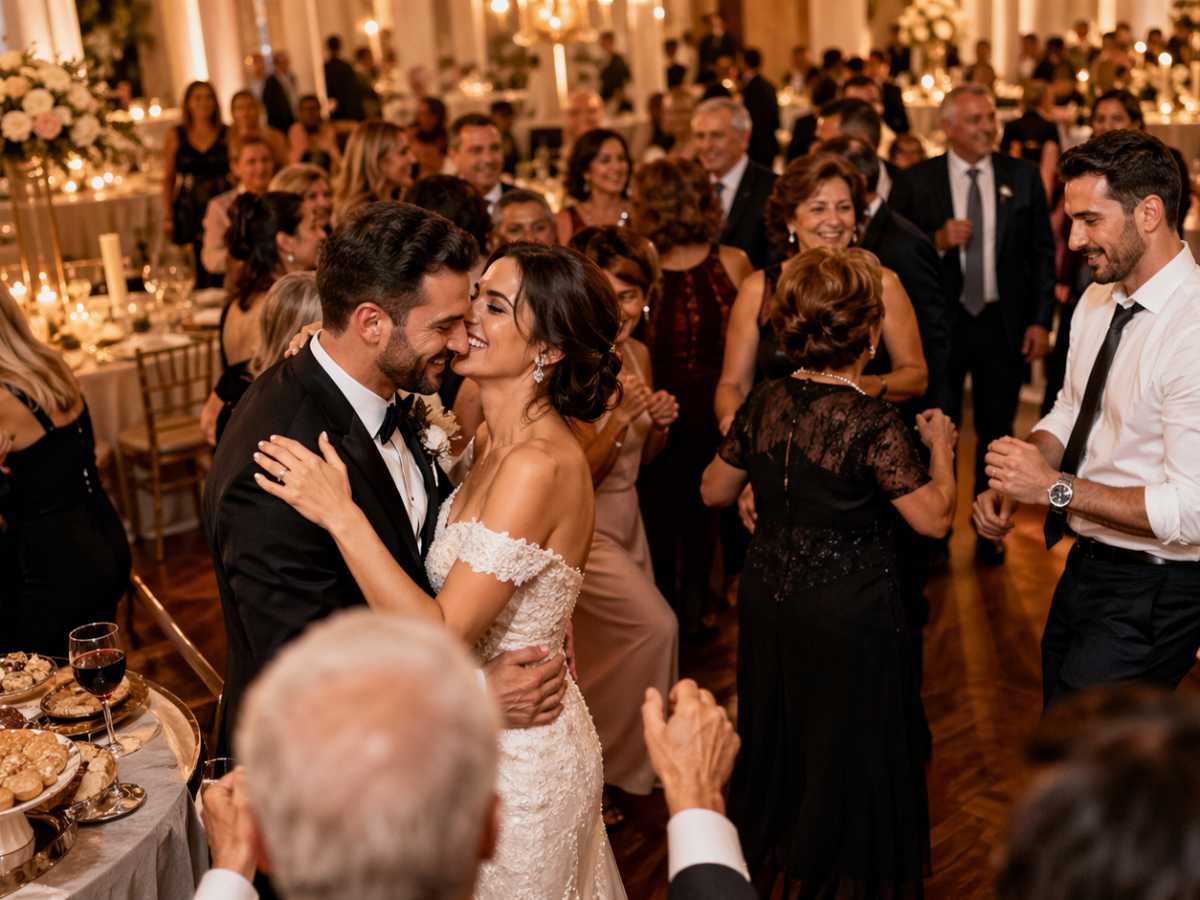
Sunday dinner at my grandparents’ house in Rivières-des-Prairies lasted a minimum of three hours. Nobody timed this. It was simply how long it took. The pasta came out first, then the second course, then the salad, then the fruit, then the coffee, then the pastries someone had brought from the Italian bakery on Saint-Laurent, then the conversation that had been happening throughout all of this and showed no signs of concluding. The house was not large. There were never fewer than twelve people at the table. The noise level was such that you could not always hear the person next to you. I have spent the rest of my life trying to recreate that feeling in rooms that are bigger and quieter and somehow less right.
Descendants do not only remember what was served. They remember the feeling of belonging around the table. The smell. The noise. The order of things. Who sat where. Who talked the most. Who cut the bread. Who came late and acted like they were on time. Who insisted everyone stay longer. That is memory with structure in it. And structure is what tradition actually is.
Faith stayed — even when practice changed
Even in families that later became less formally religious, the structure of Catholic life often stayed deeply woven into tradition. Baptisms mattered. First Communions mattered. Weddings mattered. Funerals mattered enormously. Christmas and Easter stayed enormous. The religious calendar remained a major frame for family life even in households where weekly Mass attendance had drifted.
For Italian families in Montreal, the Italian parish was also a social institution of the first importance — the place where the community assembled, where you saw the families you had known in Italy or had come to know in the new country, where the rituals of the Catholic year were observed in the language and the style that felt correct. The parish on Dante, the Madonna della Difesa church with its famous and historically complicated murals, the feast days celebrated with a specifically Italian flavor — these were not only religious institutions. They were cultural ones.
One of the clearest examples of how these traditions traveled and transformed is La Vigilia, Italy’s Christmas Eve tradition, which grew into well-known Italian-American and Italian-Canadian customs like the Feast of the Seven Fishes. The theological meaning of the vigil was not always articulated clearly in immigrant homes. But the practice held. The fish still came out. The family still gathered. Christmas Eve still felt different from every other night of the year.
What the ocean did take — what changed
Language faded faster than values
This is the clearest and most documented shift. Italian immigrants came speaking Italian, a regional dialect, or often both. Their children learned French and English quickly because survival required it — in Montreal, this meant navigating both official languages while keeping Italian at home. Their grandchildren often kept fragments: food names, nicknames, expressions, a few words, the tone. The values traveled through different channels when the language channel closed — through food, through gestures, through ritual, through the specific emotional logic of how a household operated.
My grandmother spoke Italian to her sisters, French to her neighbors, and English to the younger generation of grandchildren who had drifted furthest from the original language. She code-switched her whole life without ever calling it that. When she wanted to say something with the full weight of what she meant, she reached for Italian. French was for errands. English was for school. Italian was for meaning things. After she died I found letters she had written to her sister back in Italy — in a dialect I cannot read, about ordinary things: the grandchildren, the weather, what someone said at church. It is the most foreign document I have ever held from my own family. The language that was most hers is the language that is most lost to me. That is one of the specific griefs of the immigrant experience, inherited by people who never made the crossing themselves.
Regional identity got blurred into something new
In Italy, local identity can be everything. The village matters. The town matters. The region matters. A family from a specific village in Sicily carried a very specific cultural inheritance — particular dialect, particular saints, particular foods, particular ways of doing things — that was not the same as the family from a different village twenty kilometers away.
In Montreal’s Little Italy, those fine distinctions got compressed quickly. Calabrians lived beside Sicilians. Neapolitans shopped at the same markets as Abruzzese. The regional recipes merged in the same kitchens. Intermarriage between Italian families from different regions accelerated the blending. The result was not a lesser version of Italian culture — it was a new one. A blended immigrant culture formed under the specific pressure of Montreal life, carrying elements from many different places, none of them perfectly preserved and all of them genuinely real.
Italian-Canadian tradition is not a watered-down mistake. It is a blended immigrant culture formed under pressure, in a specific city, in a specific century. And that is actually one of the more interesting things about it.
Everyday routines became special occasions
This is perhaps the subtlest and most consequential change. In the old country, many traditions were woven into ordinary daily and weekly life. In Canada, the rhythm changed. Work was different. Schedules were different. The dense social world of the village — the proximity of family, the shared calendar of the Church, the daily encounters that maintained community — that did not survive the crossing intact.
So traditions migrated. Everyday customs became weekly. Weekly became monthly. Monthly became annual. Annual became memory. Nobody made a speech announcing this. Life just got crowded, then more crowded, then modern. And quietly, what was once ordinary became special — doing more emotional work per occasion but occurring less often.
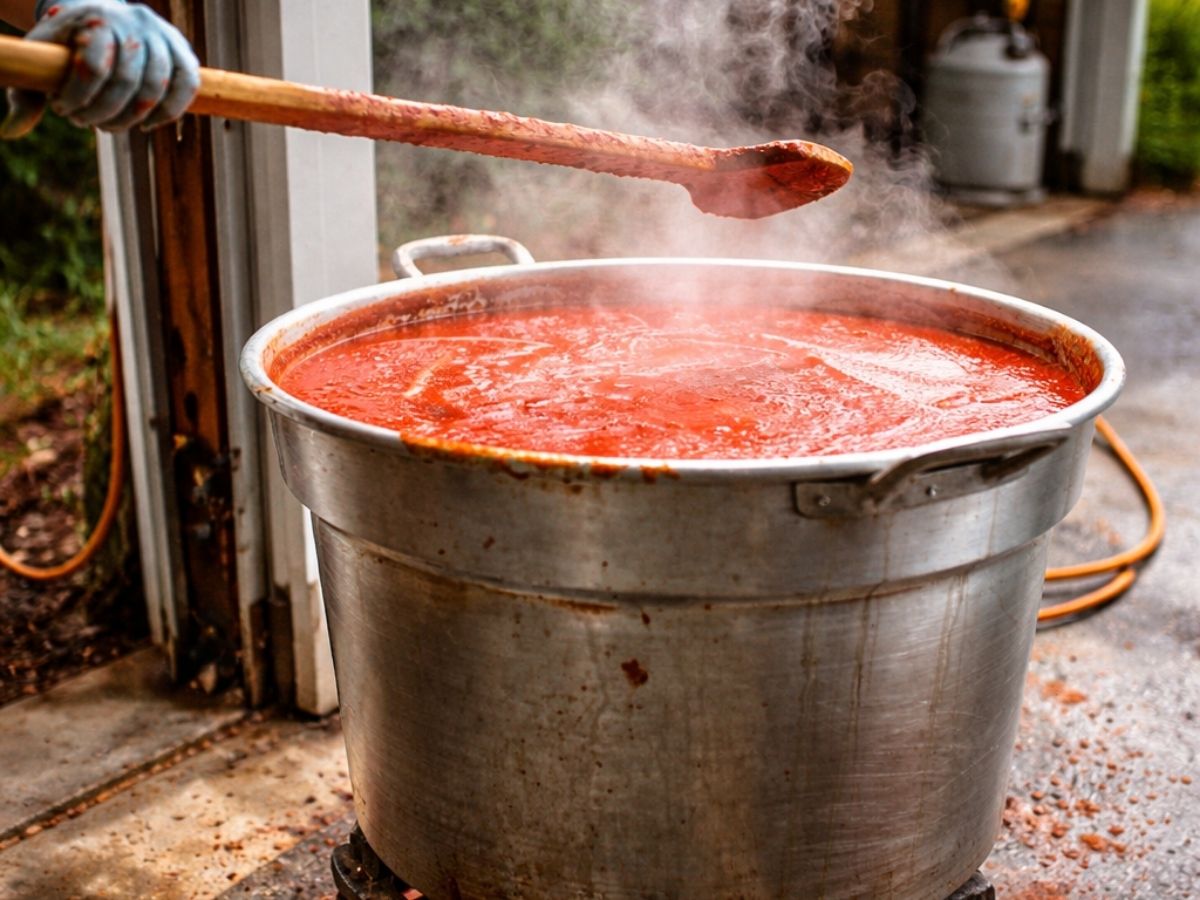
My family made tomato sauce every August. Not Sunday sauce — the annual passata, the whole-day production that filled the pantry for the year. When my parents were growing up in Saint-Michel, this was simply what August was — a Saturday when everyone came, the equipment came out, and the work happened. By the time my generation arrived, it had become an occasion. A specific Saturday planned weeks in advance, treated with a seriousness that a recurring Saturday in August had never required when it was just part of the rhythm of life. The sauce was the same. The event around it had become ceremonial. That is what happens to tradition in immigrant families over time. It does not disappear. It concentrates. The meaning gets more intense precisely because the occasions become rarer.
The biggest shift: what Italian-Canadian actually means
The most important change after immigration was not a specific custom or a particular food or a lost dialect word. It was the creation of a new identity entirely.
Italian-Canadian. Italian-American.
These identities are not simply old Italy transplanted. They are their own things — formed by the specific experience of migration, work, adaptation, Catholic life, urban neighborhoods, intermarriage, economic mobility, language loss, ethnic pride, and the particular experience of being between two worlds and fully belonging to neither. In Montreal this identity had a specific flavor: trilingual, shaped by Quebec culture as much as by Canadian or American mainstream culture, embedded in a neighborhood geography that moved outward from Little Italy to Saint-Michel to Rivières-des-Prairies and beyond as families established themselves.
I went to Italy for the first time in my thirties. I had grown up thinking of myself as deeply connected to Italian culture — the food, the family values, the religious calendar, the specific emotional logic of my family’s life in Montreal. And Italy was beautiful and familiar in certain ways. But I was also, unmistakably, a visitor. The Italy my grandparents came from was not this Italy. It was an Italy that no longer quite existed — the Italy of specific villages in specific decades, carrying specific customs shaped by poverty and faith and geography in ways that modern Italy has moved past. What my family kept was not Italy. It was a memory of Italy, transformed by decades in Montreal into something that was its own real thing. I stopped being disappointed by that and started being interested in it. What they built deserved to be understood on its own terms.
If you want to understand which region of Italy your family’s specific traditions came from — why your grandmother’s malocchio ritual was different from your friend’s, why the dialect words don’t match, why the feast days your family observed were not the same ones as other Italian families — an AncestryDNA kit combined with the ethnicity breakdown and family tree tools gives you the most direct route back to the specific village. The regional detail is often surprising. Southern Italians find they are more distinct from northern Italians than they expected. Calabrian traditions look different from Sicilian ones. Knowing where your family specifically came from explains almost everything about what they kept.
What got lost — honestly
It is worth being direct about this. Not everything stayed. Not everything survived in meaningful form.
The specific “why” behind many traditions got thin. A family keeps doing something across three generations and eventually fewer people remember exactly what it means. The fish on Christmas Eve stays but the spiritual meaning of the vigil gets foggier. The Sunday gathering stays but the older social structure around it disappears. The dish stays but the regional story it belonged to fades. What remains is a shell filled with feeling — which still matters, but is different from the full thing.
Village-level richness disappeared first and fastest. The broad identity — “we are Italian” — survived more easily than the fine detail. How a specific feast was celebrated in a specific town. What word a specific grandmother used. Which saint mattered most in a particular valley. That granular texture, once lost, is nearly impossible to recover.
The pace got lost too. Even when the customs survived, the unhurriedness did not always travel. A meal remains but nobody lingers as long. A family gathers but half the people leave quickly. A ritual still exists but now has to fit inside modern stress. The older version had more time built into it — more patience, more room for the drifting conversation that is actually where most of the real transmission of culture happens.
How to keep Italian-Canadian and Italian-American traditions alive — without turning it into a museum
You do not have to recreate the past perfectly. Trying to do that is the quickest way to make tradition feel like a costume. The goal is not museum accuracy. The goal is living continuity.
- Keep one ritual on purpose — a Sunday meal, a monthly gathering, a Christmas Eve custom, a summer sauce day. One ritual repeated with intention can carry more than twenty things done once
- Explain the meaning, not just the action — do not only cook the dish, tell the story. Where it came from, who made it, what changed, what your family kept and why
- Save the little things — the nicknames, the sayings, the gestures, the family phrases, the way someone set the table or insisted everyone eat more. These carry enormous emotional truth
- Let the tradition adapt — Sunday lunch can become Sunday dinner, the big meal can happen monthly instead of weekly, one dish can stay while four others go. That is not failure. That is tradition doing what it has always done: adjusting so it can keep living
- Involve children before they understand why — let them absorb the repetition first. A lot of tradition works slowly, over years, and they will realize one day that it shaped them
- Make it warm, not performative — it does not need to look perfect or impress anyone. It needs to feel real to the people living it. A slightly chaotic family table with genuine affection is worth more than a flawless heritage aesthetic
They crossed an ocean. They arrived in Montreal, in Toronto, in New York, in Boston, in cities that did not always welcome them. They built something — a neighborhood, a family, a version of the life they had known that could survive in a new world. They lost some things and kept others and invented some things that had never quite existed before. Italian-Canadian and Italian-American traditions are not powerful because they stayed untouched. They are powerful because they stayed alive — and because the things that survived did so for a reason.
That is not small. That is the whole story.
Some of the most memorable things families kept were not only foods and holidays, but also sayings, charms, and beliefs like malocchio and the cornicello. And for a full picture of how specific holidays traveled and transformed, read about La Vigilia and the Feast of the Seven Fishes.
What also crossed the ocean was language itself: the Italian-American slang spoken at the kitchen table, and the way Italian names changed in English. Even the food rituals survived, like roasting chestnuts the Italian way each autumn.
For a thorough account of exactly what Italian immigrant families carried across the ocean — the customs, the food traditions, the folk beliefs, the specific ways heritage survived and changed in North America — Italian Americans: The History and Culture of a People is the most readable and most comprehensive account available in English.
FAQ
What are Italian-American and Italian-Canadian traditions?
They are the family customs, rituals, foodways, holiday practices, values, and habits that Italian immigrants brought to North America and reshaped over generations. They are not simply Italian traditions transplanted — they are distinct cultural forms created by the specific experience of immigration, adaptation, and the creative act of building family identity in a new country. They include visible things like Sunday dinner and Christmas Eve, and quieter things like how elders are treated, how food expresses love, and how the instinct to show up for family survives even when everything else has changed.
What stayed the same after Italian immigration to America and Canada?
The strongest things that stayed were family closeness and the expectation that family remains central, the power and meaning of the shared table, major religious celebrations and Catholic milestones, hospitality as both obligation and love, pride in heritage and family name, and the fundamental instinct that you show up for the people who belong to you. These persisted not because they were easy to maintain but because they were doing essential emotional and social work — providing identity, belonging, safety, and continuity in a country that was often indifferent or hostile to new arrivals.
What changed after Italian immigration?
Language faded fastest — often within two generations. Regional identity blurred as families from different parts of Italy intermarried and their customs merged. Everyday traditions became special-occasion traditions as work schedules compressed the old rhythms. Food changed in ingredients and form, though not always in meaning. Gender roles shifted. The pace slowed — meals got shorter, lingering diminished. And the “why” behind many customs thinned as the original context they belonged to disappeared.
Are Italian-Canadian traditions the same as traditions in Italy today?
No — and that is one of the most interesting things about them. They came from Italian roots but were shaped by a completely different experience: immigration, urban North American life, intermarriage between regional Italian families, economic mobility, and decades of adaptation in cities like Montreal, Toronto, New York, and Boston. Modern Italy has also continued to change in its own directions. What Italian-Canadians and Italian-Americans practice today is neither a perfect copy of old Italy nor a fully assimilated thing — it is its own real cultural form, deserving to be understood on its own terms.
Why did Italian food change so much in North America?
Ingredients were different, availability was different, prosperity changed what families could afford, and the blending of regional Italian cooking traditions in the same neighborhoods produced new combinations. But food also changed because it was now doing more symbolic work — it had to carry the full weight of cultural identity that used to be distributed across language, community, church, and neighborhood. That is partly why Italian-Canadian and Italian-American celebrations got more abundant and elaborate. The food was compensating for everything else that had thinned.
How many Italians immigrated to Canada?
Italian immigration to Canada came in two major waves — the first in the late 19th and early 20th centuries, the second and larger wave after World War II when Canadian companies and the Italian government actively recruited Italian workers. By the 1960s, Italian-Canadians were one of the largest non-British, non-French ethnic groups in Canada. Montreal and Toronto became home to two of the largest Italian-Canadian communities in the country, with Montreal’s Little Italy centered on Saint-Laurent and Dante Streets becoming one of the most concentrated Italian urban communities in North America.
How can I keep Italian-Canadian traditions alive in my family?
Start with one ritual rather than twenty. Repeat it with intention rather than occasionally. Explain the story behind it rather than only performing the action. Save the small things — the nicknames, the phrases, the gestures — not only the headline customs. Let the tradition adapt to your actual life rather than insisting it match a version that may not be possible for your family. And involve the children before they understand why, because tradition works slowly over years, through repetition and atmosphere, not through a single explanation.

Marco Ricci is an Italian-Canadian writer and the grandson of Calabrian immigrants. He created Italian Family Traditions to document the customs, feast days, and family rituals Italian families carried from Italy to North America — and to understand what they actually meant. He is based in Montreal.