Italian Family Traditions
Onomastico: The Italian Name Day — and How to Find Yours
It was not your birthday. It was something older and in some ways warmer — the day the calendar reminded you that your name belonged to a saint, a family line, and at least one relative who absolutely remembered before you did.
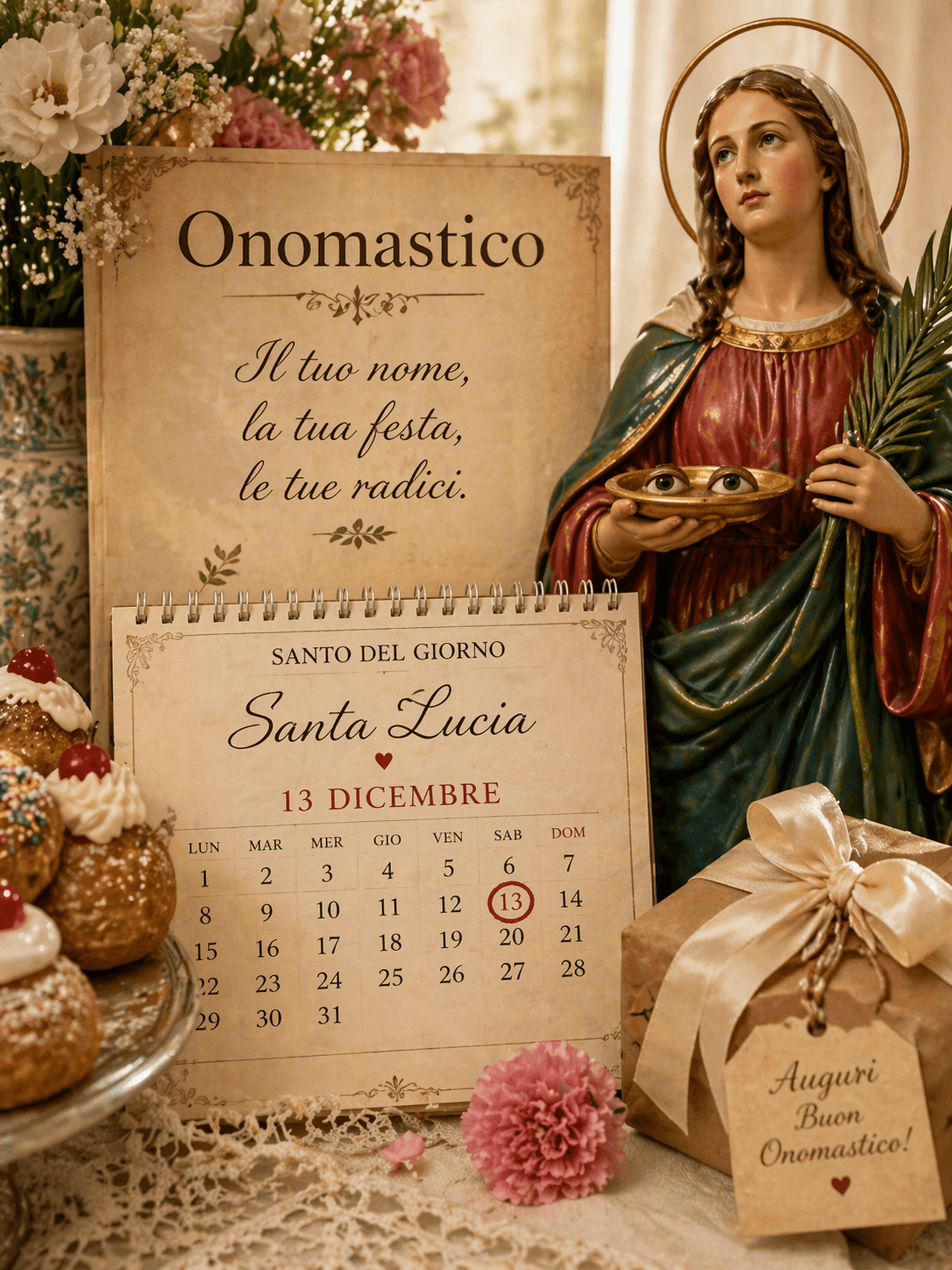
Onomastico is the Italian name day: the feast day of the saint who shares your name, celebrated much like a second birthday. In many Italian families it mattered just as much as the birthday itself — sometimes more. Here is what it means, how it works, and how to find your own.
My grandfather Giovanni did not make a speech about his onomastico. He did not need to. By the time June 24 arrived each year, everyone in the family already knew what was expected. You came for dinner. You stayed for the whole dinner. You did not arrive late and you did not leave early and you did not try to negotiate your way out of it with some scheduling excuse that would be remembered and referenced for the next three years. Giovanni’s name day was Giovanni’s name day, and that was the entire logic of it. The saint’s feast happened to fall on the same calendar date as the tradition, and the tradition happened to require your presence, and your presence was therefore required. That was how it worked.
It was not a birthday. Birthdays were something else — more personal, more individual, more about the person arriving in the world on a specific day. The onomastico was about something older than that. It was about the name. About the saint the name belonged to. About the chain of people who had carried that name before this particular Giovanni arrived, and the acknowledgment that carrying a name well was its own kind of thing worth marking once a year with family and food and the clear expectation of attendance.
A birthday says: this is the day you arrived. An onomastico says: your name is tied to something older than you. That difference is small and enormous at the same time.
If you grew up in an Italian family you probably know this feeling without needing it explained. Somebody in your family took name days seriously. Maybe seriously enough that skipping the dinner was not actually an option. Maybe just seriously enough to always call first. Either way, the day was marked. The name was acknowledged. And there was almost certainly something sweet involved.
Name days make even more sense when you see how saints, family naming, and Catholic customs fit into Italian-American and Italian-Canadian traditions after immigration.
Find Your Italian Name Day (Name Day Finder)
Italian Family Traditions
Find Your Italian Name Day
In Italy, your onomastico — the feast day of the saint you’re named for — was celebrated like a second birthday. Enter a name to find its saint and its day.
Not sure?
Every name in your family carries a saint, a day, and a story. Record who each one came from — before no one remembers.
Explore the Heritage KitWhat onomastico actually means — and what it is not
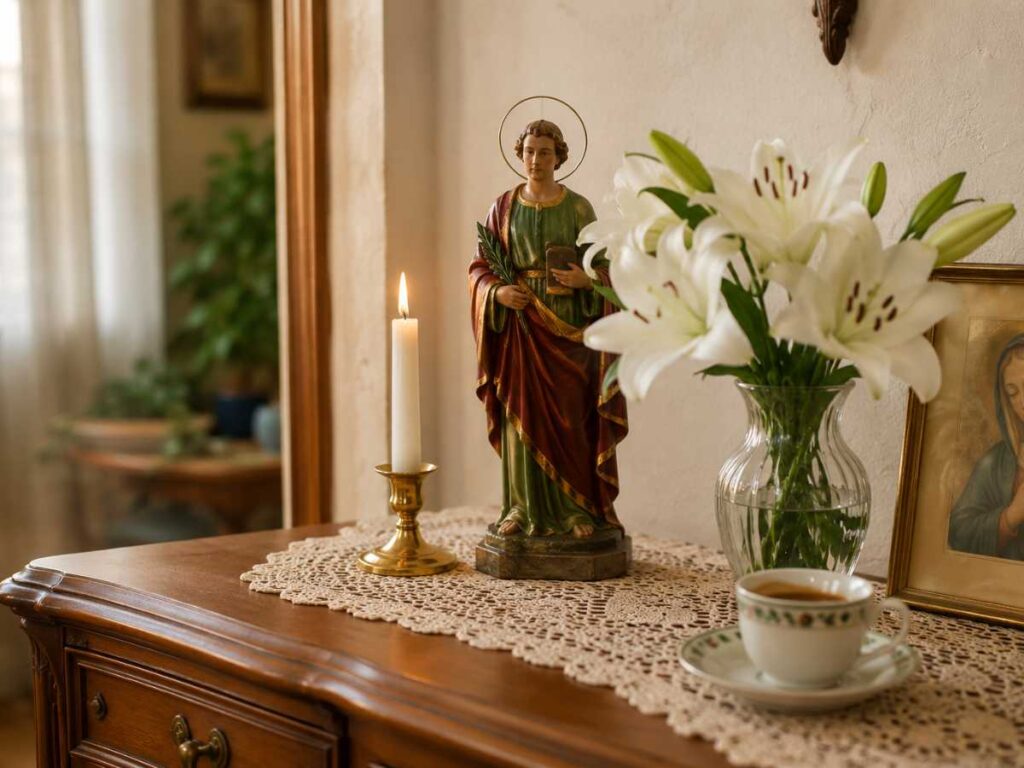
At the most basic level, onomastico means name day — the feast day on the liturgical calendar connected to the saint who shares your name. If your name was Giuseppe, people thought of March 19. If your name was Giovanni, they thought of June 24. The point was not when you were born. The point was which saint your name belonged to.
Worth being clear about what it is not. The onomastico is not a birthday — that is the compleanno. It is not All Saints’ Day, though November 1 serves as a fallback onomastico for names without a specific feast day. It is not a generic Italian celebration or a vague heritage gesture. It is a specific, dated, saint-anchored occasion that the Italian Catholic calendar created and that Italian family life turned into one of its warmest recurring traditions.
That specificity is what gives it its character. Unlike a birthday, which belongs to every person regardless of their name, the onomastico belongs to the name itself — and through the name, to the saint, and through the saint, to every person who ever carried that name in the family before you.
My grandmother kept a small calendar in her kitchen — not a decorative one, a working one, with saints’ names listed beside each date in small print. She consulted it with the regularity of someone checking the weather. When a name day was approaching she began planning. Not always something elaborate — sometimes just a phone call and a box of pastries from the bakery on Saint-Laurent. But always something. Always deliberate. Always on the right day. She never missed a family member’s onomastico in my memory. She did not think of this as remarkable. She thought of it as simply what you did when you knew whose name belonged to which day and you respected what that meant.
The most common Italian name days — a quick reference
These are the names that appear most frequently in Italian and Italian-Canadian families, with their feast days and patron saints. This is what Italian grandmothers kept in their kitchen calendars without needing to be reminded.
| Italian name | English equivalent | Feast day | Patron saint |
|---|---|---|---|
| Giuseppe / Beppe | Joseph | March 19 | San Giuseppe |
| Giovanni / Gianni | John | June 24 | San Giovanni Battista |
| Maria | Mary | Sept 8 / Aug 15 | Various Marian feasts |
| Antonio / Tony | Anthony | June 13 | Sant’Antonio di Padova |
| Francesco | Francis | October 4 | San Francesco d’Assisi |
| Rosa | Rose | August 23 | Santa Rosa da Lima |
| Anna | Anne | July 26 | Sant’Anna |
| Luigi / Gigi | Louis | June 21 | San Luigi Gonzaga |
| Carmela / Carmen | Carmen | July 16 | Madonna del Carmelo |
| Salvatore / Sal | Salvador | August 6 | Trasfigurazione |
| Concetta / Connie | Connie | December 8 | Immacolata Concezione |
| Pietro | Peter | June 29 | Santi Pietro e Paolo |
| Lucia | Lucy | December 13 | Santa Lucia |
| Caterina | Catherine | November 25 | Santa Caterina d’Alessandria |
| Michele | Michael | September 29 | San Michele Arcangelo |
| Domenico | Dominic | August 8 | San Domenico |
| Vincenzo / Enzo | Vincent | January 22 | San Vincenzo |
| Rocco | Roch | August 16 | San Rocco |
For names not listed here, search “onomastico [name]” online or check an Italian saints’ calendar. For names without a specific feast day, November 1 — Ognissanti, All Saints’ Day — serves as the traditional fallback.
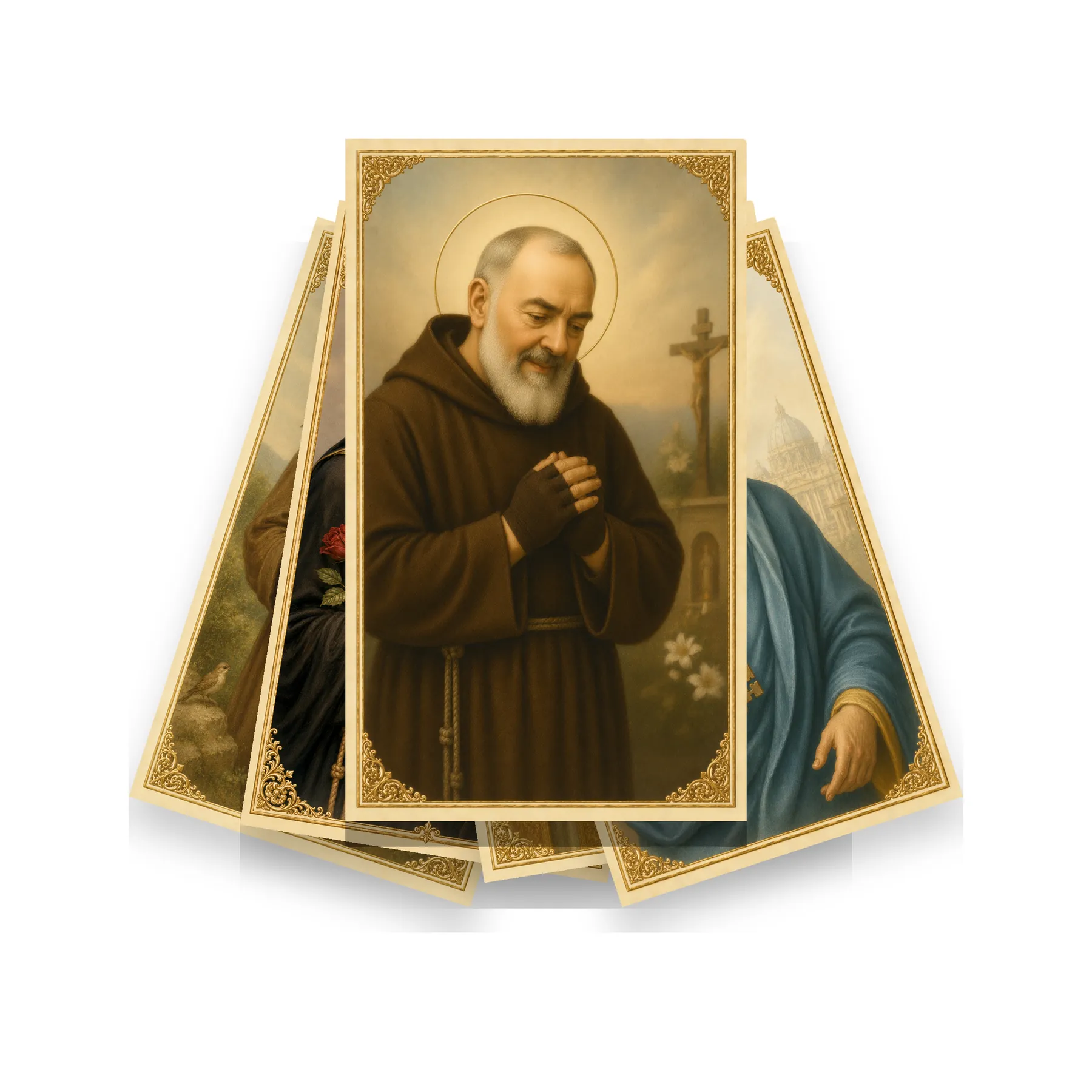
✝️ Give a Saint on Their Name Day
Printable Italian saint prayer cards (santini) — 11 beloved saints, each with a traditional prayer in Italian and English. Perfect to keep or to give on someone’s onomastico.
$9.49
Instant digital download
Get the Saint Cards →📅 Never miss a name day again
Get the free printable Italian Family Traditions calendar — every feast day, every name day, and the whole year’s rhythm marked out the way an Italian nonna would keep it. Enter your email below and I’ll send it to you.
The Italian naming system — why the name was never random
To understand the onomastico fully you have to understand how Italian names were chosen in the first place — because the naming system and the name day tradition were not separate things. They were part of the same logic.
Traditional Italian naming followed a specific and largely unwritten pattern that most families observed without needing to discuss it. The firstborn son was named after the paternal grandfather. The firstborn daughter was named after the maternal grandmother. The second son carried the maternal grandfather’s name. The second daughter carried the paternal grandmother’s name. After that, subsequent children might be named for great-grandparents, aunts and uncles, or saints whose feast days fell near the date of birth.
The result was that names did not belong to individuals so much as to family lines. The same names cycled through generations — Giovanni, Giuseppe, Maria, Carmela, Antonio — not because people lacked imagination but because the name was understood as an inheritance to be honored and continued rather than a personal expression to be invented. A child named Giovanni was not only named for the Baptist. He was named for his grandfather Giovanni, who had been named for his grandfather Giovanni, who had been named for his grandfather before him. The saint was the anchor. The family chain was the meaning.
My grandfather used to explain his name day with a simplicity that I found both funny and perfect. June 24 was San Giovanni. His name was Giovanni. Therefore June 24 was his day. He said this as though the reasoning were airtight, which in his world it was. What I understand now that I did not understand then is that he had also been named for his own grandfather, who had been named for his grandfather, and that Giovanni had been running through the family long enough that by the time it reached him it carried not just a saint but a whole chain of specific men. His onomastico was honoring all of them simultaneously. He knew that. He just did not say it in those words.
This is why the Italian baptism naming tradition connects so directly to the onomastico. The name was chosen at the baptismal font, in a church, with godparents present, in a moment the family treated as serious and ceremonial. The onomastico was then the annual return to that moment — the yearly acknowledgment that the name chosen at the font still carried its meaning, still connected the person to a saint and to the ancestor they had been named for, still deserved to be marked with something intentional and warm.
When Italian families immigrated and names began to change — Giuseppes becoming Josephs, Giovannis becoming Johns, Concettas becoming Connies — something in this system was disrupted. The anglicised name often did not have the same onomastico. The connection to the original saint’s calendar became less direct. Many families preserved the original Italian name as a middle name specifically so that the onomastico could still be observed — so that the chain remained unbroken even when the first name had adapted to the new country.
Onomastico versus birthday — which one mattered more
This is one of the more surprising aspects of Italian name day culture for people encountering it from the outside: in many traditional Italian families, the onomastico was treated as equal to or more important than the birthday. Not universally — there was always regional variation and family variation — but the instinct was genuinely there, particularly in older and more Catholic households.
The reasoning behind it is worth understanding. A birthday — the compleanno — marked a biological fact. The day you arrived in the world. It was personal and it was yours, but it did not connect you to anything beyond yourself and the calendar. An onomastico connected you to a saint, to a family line, to a devotional tradition that placed your name within something much larger than one person’s life span. In a culture where those connections were taken seriously, that larger meaning carried genuine weight.
There was also a practical dimension. In older Italian society, birthdays were not always carefully recorded or widely known. Saints’ feast days, however, were fixed and universal — the whole community knew when San Giuseppe fell, when Sant’Antonio arrived, when the Baptist’s feast came around in June. The onomastico was the more socially legible occasion. Everyone knew when it was. No one needed to be reminded. The calendar itself was the reminder, and the whole community shared the same calendar.
My grandmother could tell you the onomastico of every family member without consulting anything. She had internalized the saints’ calendar so completely that knowing whose day was approaching was simply part of how she experienced the year. She sometimes knew people’s onomastico better than she knew their birthdays. I think she considered the onomastico the more important date — not because birthdays did not matter, but because the name day said something about who you were named for and what that meant, while the birthday said something about the accident of which particular date you happened to arrive. The name was chosen deliberately. The birthday just happened. That distinction, in her thinking, made the onomastico the occasion with the deeper meaning.
Why Italians celebrated name days in the first place
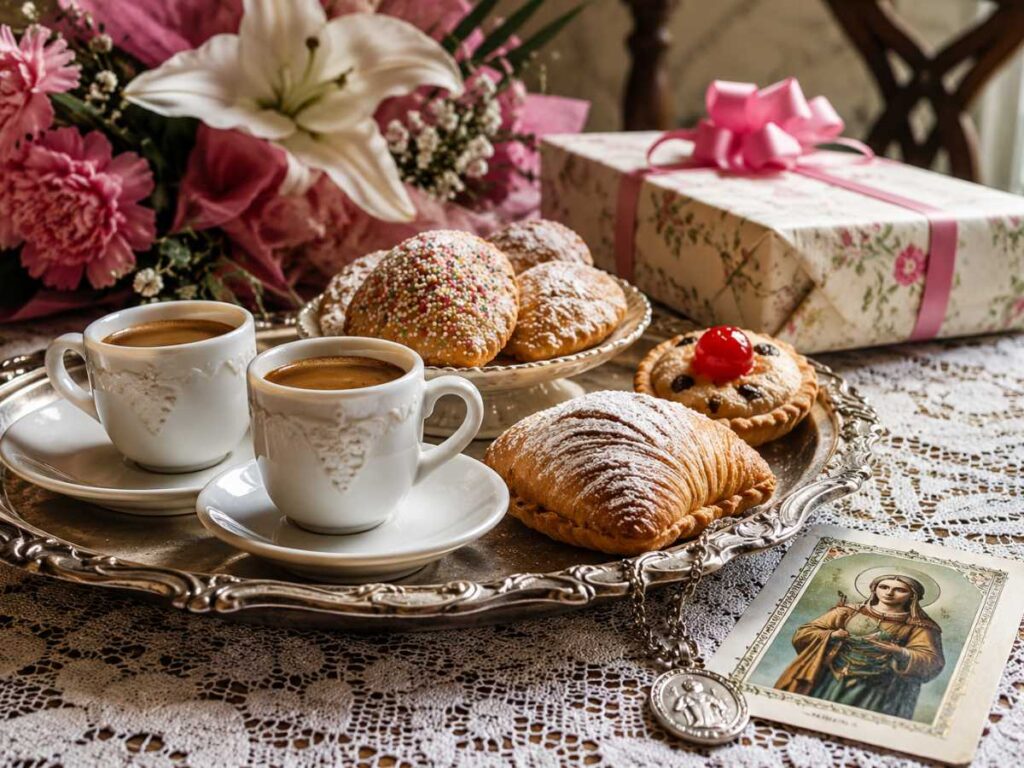
Because names used to mean something different than they mean now. In traditional Italian family life, names were not chosen primarily for how they sounded or how well they aged. They were chosen for what they carried — a connection to a saint who could serve as a heavenly patron, a connection to a grandparent whose name was being honored and continued, a connection to a feast day that would recur every year as a small annual reminder of who you were named for and why.
Once a child had that name, the onomastico came built in. It was already waiting on the calendar. The celebration was not earned. It was inherited. You carried the name. The day came with it.
That gave the tradition a few layers simultaneously. It was religious, because it connected the person to a saint. It was family-based, because names ran through generations. And it was practical, because older people actually knew when the day was — the calendar was shared and the feast days were public knowledge. You did not need reminder apps or group chats. The day was there. Older relatives knew it. And if they were the kind of relatives who took traditions seriously, they really knew it.
What an onomastico actually looked like — the real version
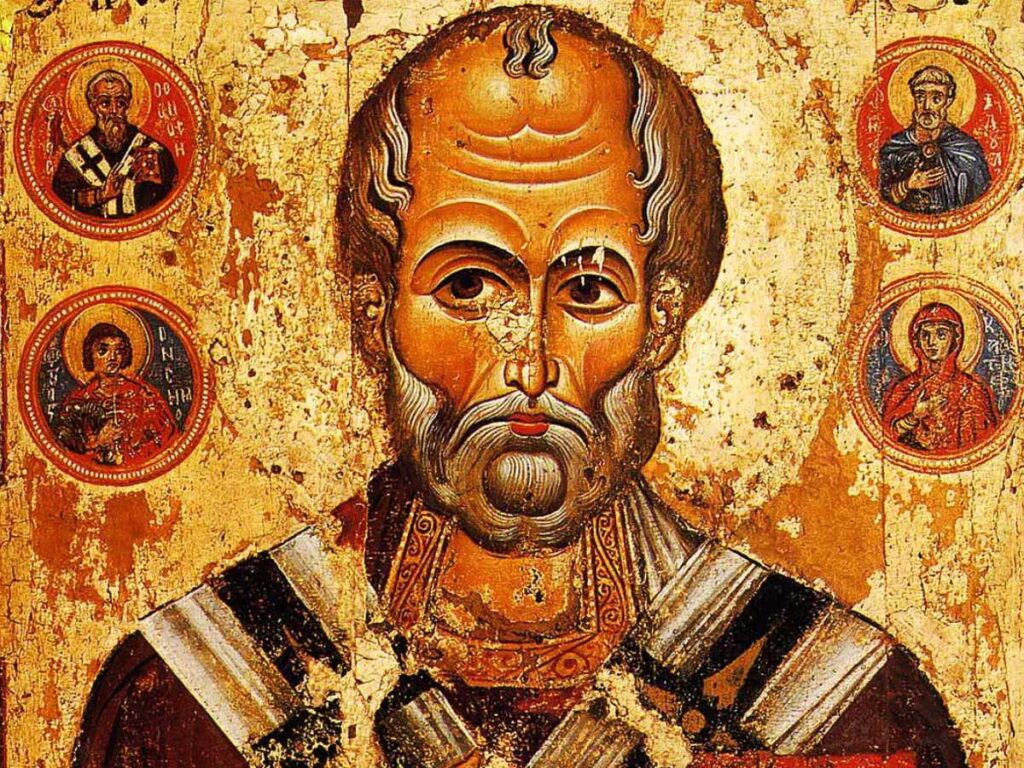
The onomastico was almost never a birthday-sized production. It was quieter than that and warmer for it. The scale was calibrated to the person and the family — but the acknowledgment was consistent. The day did not pass unmarked. That was the rule. Everything else was negotiable.
For some families it meant a dinner, a gathering, a table full of people who had shown up specifically because it was someone’s day. For others it meant a phone call in the morning and pastries left at the door. For others still it meant a specific sweet that belonged to that saint and that occasion — which leads directly to the Giuseppe question.
My uncle Giuseppe had a very clear view of how his onomastico should work. On March 19, San Giuseppe’s Day, zeppole were expected. Not suggested — expected. He did not announce this requirement because in his understanding it did not need announcing. It was self-evident. San Giuseppe meant zeppole. He was Giuseppe. Therefore zeppole appeared on his onomastico. The year they were slightly late arriving — some confusion about the bakery order — he received them with the specific expression of a man who had been patient about a thing he should not have had to be patient about. The zeppole were delicious. The expression was discussed for months. That is the Italian name day in its fullest form: the tradition so internalized that its absence is felt like a genuine absence, not merely a missed formality.
The other version — the dinner attendance version — was my grandfather Giovanni’s domain. June 24, the Feast of San Giovanni, was his day in every sense: his saint’s feast, his name day, and his actual birthday, all compressed into one date. Three occasions at once, which he found entirely appropriate and which the family understood meant the gathering was not optional. You came. You stayed. You ate. You acknowledged that this was Giovanni’s day and you behaved accordingly.
What gifts were given — the culture of the pensierino
The Italian gift-giving culture around the onomastico has its own specific character that is worth understanding, because it differs from birthday gift-giving in ways that are both subtle and revealing.
The key word is pensierino — literally “a little thought.” A small, thoughtful gesture rather than a significant purchased gift. The onomastico was not an occasion for elaborate presents unless the person or the occasion called for it. It was an occasion for acknowledgment — for showing that you had remembered, that you knew whose day it was, that the name and the saint behind it had registered with you as something worth marking.
In practice this most often meant food. Pastries from the bakery were the classic onomastico gesture — a box of sfogliatelle, a tray of cannoli, a bag of zeppole on San Giuseppe, whatever the family’s preferred bakery produced and whatever the saint’s day traditionally called for. Flowers were also common — particularly for women’s name days, where a bouquet arriving with someone saying Buon onomastico was a completely appropriate and warmly received gesture. A bottle of wine. A small devotional object — a saint’s card, a small medal, something that connected the gift to the saint being honored rather than simply to the occasion of gift-giving in general.
The scale mattered. A major onomastico — a grandfather whose name day was also a feast day, a grandmother whose devotion to her patron saint was well known — warranted more than a phone call. A minor one — a young cousin, a distant relative — warranted a text and perhaps something small. The calibration was social and relational, done by feel rather than by rule. Italian families were generally good at knowing which occasions required what level of acknowledgment without needing it written down.
The most Italian onomastico gift I ever witnessed was given by my great-aunt to her sister on the feast of Sant’Anna in July. She arrived with a box of pastries, a small bunch of flowers, and a saint’s card of Sant’Anna that she had found in a religious goods shop on Saint-Laurent — one of those beautiful old lithograph-style cards with the saint’s image and a prayer on the back. The pastries were eaten immediately. The flowers lasted a week. The saint’s card went into a frame and stayed on the wall for the rest of my great-aunt’s life. That is the pensierino in its ideal form: small, specific, connected to the saint and the name rather than to a general idea of celebration, and lasting far longer than its apparent scale would suggest.
The saint behind the name — why this was never just a calendar quirk
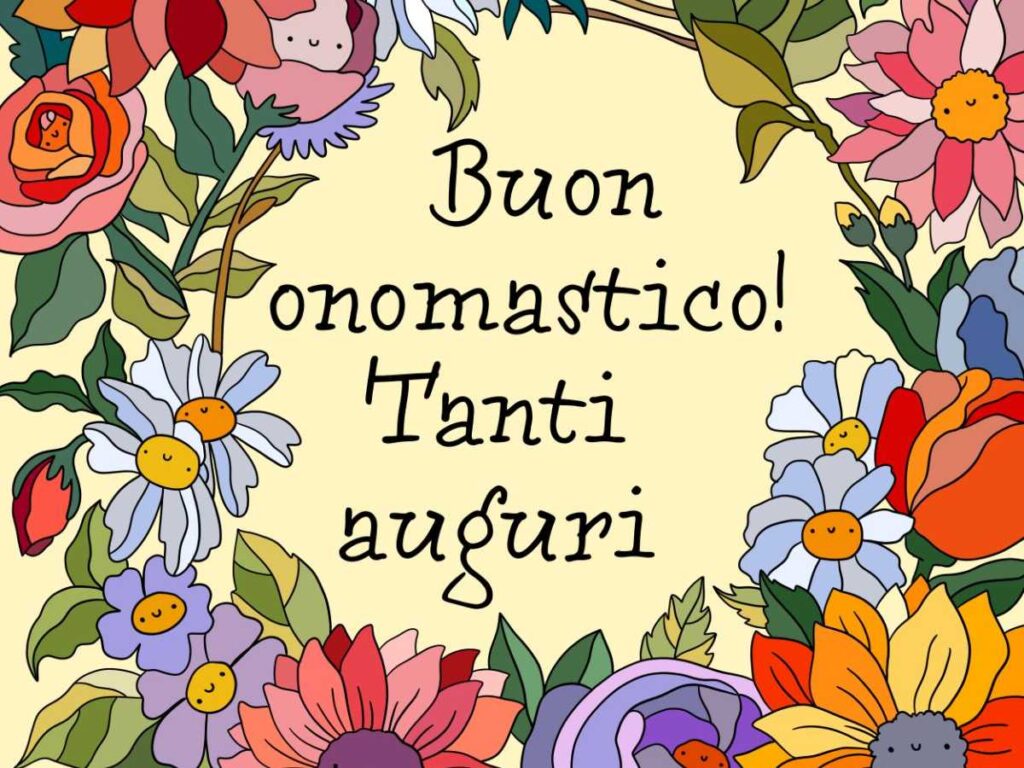
The onomastico was never purely social. Underneath the pastries and the phone calls and the dinners was a devotional layer that gave the whole tradition its depth and what separates it, ultimately, from simply having a second birthday with a different date.
When an Italian family celebrated someone’s name day, they were implicitly acknowledging the saint whose feast it was. The person’s name was not a coincidence — it was a connection. It tied them to a specific figure in the Church’s long history of holiness, a specific life that had been lived with enough virtue and faith that it was named worth remembering. And in the Catholic understanding, that connection was not merely historical. The saint was a patron — a heavenly intercessor, someone whose prayers could be sought, whose example could be followed, whose feast day was an occasion not only for celebration but for reflection and blessing.
My great-uncle Antonio turned June 13 into a minor institution in Montreal’s Little Italy. He was not a man of formal piety exactly, but he was a man of consistent loyalty to his saint, and that loyalty expressed itself through the onomastico with a specificity that was genuinely touching. He lit a candle on June 13. He said a prayer specific to Sant’Antonio di Padova. He went to the Italian parish on Dante Street for Mass in the morning. Then he spent the afternoon in the neighborhood receiving the people who came by — relatives, old friends from the same region of Italy who had been in Montreal long enough that they all knew each other’s name days the way people in the old country had known them. It was not a party. It was an observation. The feast day was old-world. The setting was Montreal. The feeling was both at once.
The onomastico in Montreal’s Italian community
In Montreal’s Italian community — centered first in Little Italy around Saint-Laurent and Dante, then spreading outward to Saint-Michel and Rivières-des-Prairies as families established themselves — the onomastico functioned in a specific way that was shaped by the density and character of that particular community.
In the early decades, when Little Italy was at its most concentrated, the onomastico operated almost as it had in the old country. Everyone in the neighborhood knew each other’s names. They knew the calendar. When San Giuseppe arrived in March, every Giuseppe in the building received recognition. When Sant’Antonio came in June, every Tony in the street knew his day had arrived. The community held the tradition collectively — not because anyone had organized it, but because the shared Catholic calendar and the density of Italian family life made it simply part of how time was experienced.
As families moved outward from the original neighborhood — to Saint-Michel in the 1960s, to Rivières-des-Prairies in the 1970s and 1980s — the community context thinned. The neighborhood no longer collectively observed the saints’ calendar. The onomastico became more of a family-internal tradition and less of a communal one. It survived in the families where someone — usually a grandmother, usually with a kitchen calendar and a habit of noting dates in pencil — kept it alive personally.
After my grandmother died I found the calendar. It was an ordinary paper calendar, the kind that used to come free from the Italian pharmacy or the insurance broker on Saint-Laurent. She had kept one every year for decades. Beside certain dates she had written names — family members, the pencil marks sometimes faint and sometimes refreshed over multiple years where the date recurred. She had been tracking everyone’s onomastico for as long as she had lived in Montreal, from the years in Little Italy through Saint-Michel through Rivières-des-Prairies. The calendar moved with her. The names stayed. That is what the tradition looked like when it survived immigration — not a public feast, not a neighborhood observance, but a woman with a pencil and a calendar who refused to let the day pass unmarked for the people whose names she knew and loved.
What changed after immigration — and what quietly held on
Like most Italian customs, the onomastico did not vanish after immigration. It got quieter. It moved indoors. It became something the family carried rather than something the whole community supported.
In Italy — especially in older or more Catholic communities — the custom made sense because the entire surrounding culture reinforced it. Saint calendars were familiar. Feast days were part of the public rhythm of life. Names carried obvious religious and family meaning that everyone shared. When Italian families moved to Montreal or Toronto or New York or Boston, that wider environment faded. The family might still know that San Giuseppe was March 19, but the street did not know it and the school did not know it and the workplace did not know it.
So the tradition shrank to fit the space that remained. A phone call instead of a neighborhood observance. A pastry instead of a public feast. A family memory instead of a communal one. Sometimes something grandparents cared about more than grandchildren — until the grandchildren got old enough to feel the loss of it and wish someone had made more of it while there was still time.
But that actually makes it more revealing, not less. When a tradition survives without the whole society holding it up, it usually means the family itself is carrying it. The home becomes the small place where the old rhythm still lives. And the onomastico is exactly the kind of custom that gets carried privately when the public world stops holding it — maintained by specific individuals, in specific families, with specific intentions, against the current of a culture that has moved on.
What if your name does not have a saint — the flexible Italian answer
Not every modern name maps neatly onto a saint’s feast day. The official answer is November 1 — Ognissanti, All Saints’ Day — which serves as a catch-all onomastico for anyone whose name does not have a specific feast day. The real-life answer is more Italian: some families use November 1, some find the closest saint with a similar name, some shrug and improvise. The tradition was never meant to be a bureaucratic exercise. It was meant to be warm and intentional. Families that wanted to keep it found ways to keep it.
How to bring the onomastico back — without making it a project
This is one of the easiest Italian traditions to revive because it requires almost nothing in the way of preparation, equipment, or planning. What it requires is intention and a little knowledge.
- Find out the name days of the people in your family — use the table above as your starting point. Write them in your calendar the way your grandmother wrote them in hers. In pencil is fine
- Send a message on the right day — just Buon onomastico is enough. It costs nothing and it signals that you know the tradition and kept it alive for another year
- Bring a pensierino — pastries are the classic choice for good reason. A box of sfogliatelle or cannoli or zeppole on the right day is the onomastico in its most distilled and delicious form. A saint’s card from a religious goods shop is the most specifically Italian version of a thoughtful gift
- Tell children which saint shares their name and when that saint’s feast day falls. Even a brief explanation plants something that can grow
- Light a candle and say a short prayer on your own onomastico or a family member’s — the devotional dimension is what gives the tradition its depth
- Call rather than text — the older relatives who kept this tradition kept it through voice, through physical presence, through showing up. The call is the minimum viable version of that presence
- Show up for dinner if you know what is good for you — some things have not changed
The name was not random. It belonged to a saint. The saint had a feast day. The feast day was your day too. And somewhere in the family — usually a grandmother, usually with a penciled kitchen calendar — someone remembered that every year without being asked, and made sure you knew it.
My grandfather Giovanni is gone now. June 24 still comes every year. We still gather, a smaller version of the table that once assembled itself around him. We still say his name. We still say the other names too — the ones my grandmother used to say at her kitchen table every Ognissanti, in order, in the deliberate way of someone who had promised herself she would not let the names get lost. That is the onomastico doing its deepest work: not marking a day on the calendar but keeping a name alive in the mouths of the people who carry it forward.
Buon onomastico. Whenever yours falls. May your saint stay close.
For the full story of how feast days like San Giuseppe and San Giovanni were celebrated in Italian families, read St. Joseph’s Day traditions and the meaning of the feast and the Feast of San Giovanni and the Italian name day tradition. For how Italian naming connected to baptism and family continuity, read Italian baptism traditions. And for the broader story of what Italian families kept after immigration, read Italian-American traditions: what changed and what stayed.
Named after a saint? Find their patronage and story in the patron saint finder, and keep a santino of your name-saint close.
FAQ
What does onomastico mean?
Onomastico means “name day” in Italian — the feast day on the Church calendar that is linked to the saint who shares your name. If your name is Giuseppe, your onomastico falls on March 19, the feast of San Giuseppe. If your name is Giovanni, it falls on June 24. The onomastico was traditionally marked with wishes, pastries, flowers, a small gift, or a family dinner — whatever the family habit and the importance of the occasion called for. It is distinct from the birthday and in many traditional Italian families was treated as equally or more important.
What is my onomastico?
Your onomastico is the feast day of the saint who shares your name. To find it, look up your name in the name day table above or in an Italian saints’ calendar. For example, if your name is Maria your onomastico is September 8 (or August 15, the Assumption), if it is Giuseppe it falls on March 19, and if it is Antonio it falls on June 13. For names without a specific saint’s feast day — including many anglicised or modern names — November 1, Ognissanti (All Saints’ Day), serves as the traditional fallback onomastico that covers everyone.
What is the difference between onomastico and compleanno?
Compleanno is the Italian word for birthday — the anniversary of the day you were born. Onomastico is the name day — the feast day of the saint whose name you carry. A birthday marks a biological fact about one specific person. An onomastico marks something relational — your connection to a saint, to a family naming tradition, and to the annual acknowledgment that your name carries meaning beyond being a label. In older Italian families, particularly those with strong Catholic devotion, the onomastico was often treated as the more significant occasion because it connected the person to something larger than their individual biography.
Is onomastico the same as a birthday?
No — they are different occasions that Italian families observed separately. The birthday marks the day you were born. The onomastico marks the saint’s feast day linked to your name. Both were acknowledged in traditional Italian family life, but through different gestures and with different emotional registers.
How do you wish someone a happy onomastico?
The classic greeting is Buon onomastico — Happy name day. You can also say Tanti auguri di buon onomastico for a fuller version. In older Italian family usage the greeting was almost always accompanied by something physical — a call rather than a text, a visit, a box of pastries, flowers, or a small devotional gift — because the tradition was about being remembered in a tangible way, not just acknowledged digitally.
What gifts do you give for an onomastico?
The traditional onomastico gift is a pensierino — a small thoughtful gesture rather than a significant purchased present. Pastries from the bakery are the most classic choice: zeppole on San Giuseppe, sfogliatelle or cannoli for other occasions, whatever the saint’s day and family habit call for. Flowers are also common, particularly for women’s name days. A saint’s card or small devotional object — something that connects the gift to the saint being honored rather than to gift-giving in general — is the most specifically Italian version of a thoughtful onomastico present. The scale should match the person and the occasion; a major name day in a family that takes traditions seriously warrants more than a minor one.
How do you find your Italian name day?
Use the name day table in this article as a starting point for the most common Italian names. For names not listed, search “onomastico [your name]” online, or look up an Italian saints’ calendar which lists feast days beside each saint’s name. If your name does not have a specific feast day — particularly for anglicised or non-traditional names — November 1, Ognissanti, serves as the traditional fallback onomastico.
Do Italians still celebrate name days?
Many do, especially in more traditional or older families and in families that have consciously maintained the custom across generations. In Italy the onomastico is still widely recognized and many people receive wishes on their name day alongside or instead of a birthday. In Italian-Canadian and Italian-American communities the tradition is less universal but still alive in families where someone — usually a grandmother with a kitchen calendar — kept it going. Like many quiet traditions, it tends to survive in the families where at least one person took it seriously enough to maintain it.
Why did Italian families name children after grandparents?
Traditional Italian naming followed a specific pattern: the firstborn son was named after the paternal grandfather, the firstborn daughter after the maternal grandmother, the second son after the maternal grandfather, and the second daughter after the paternal grandmother. This system meant names were understood as family inheritances to be honored and continued rather than personal expressions to be invented. When a child was named after a grandparent, they also inherited that grandparent’s onomastico — the annual name day became the annual acknowledgment of both the saint and the ancestor they had been named for simultaneously.
Marco Ricci is an Italian-Canadian writer and the grandson of Calabrian immigrants. He created Italian Family Traditions to document the customs, feast days, and family rituals Italian families carried from Italy to North America — and to understand what they actually meant. He is based in Montreal.