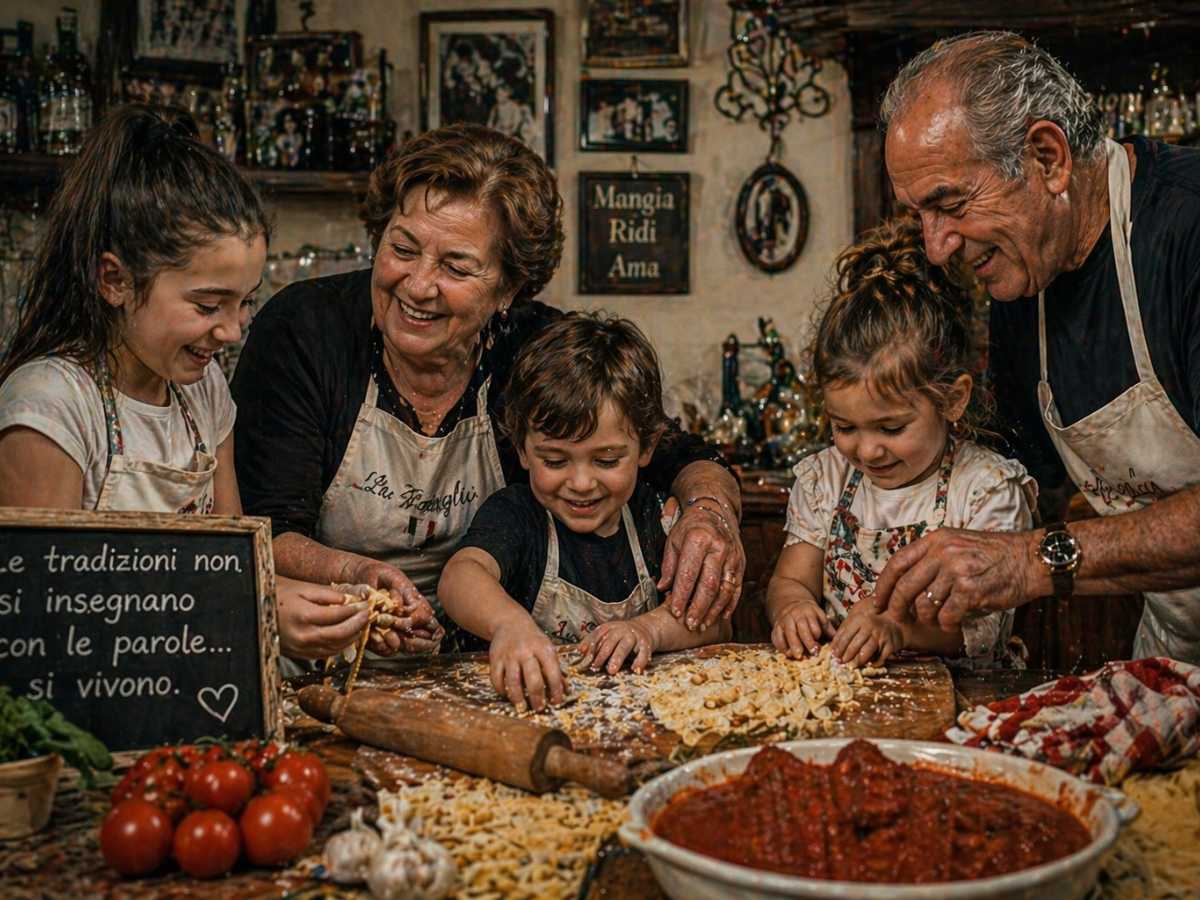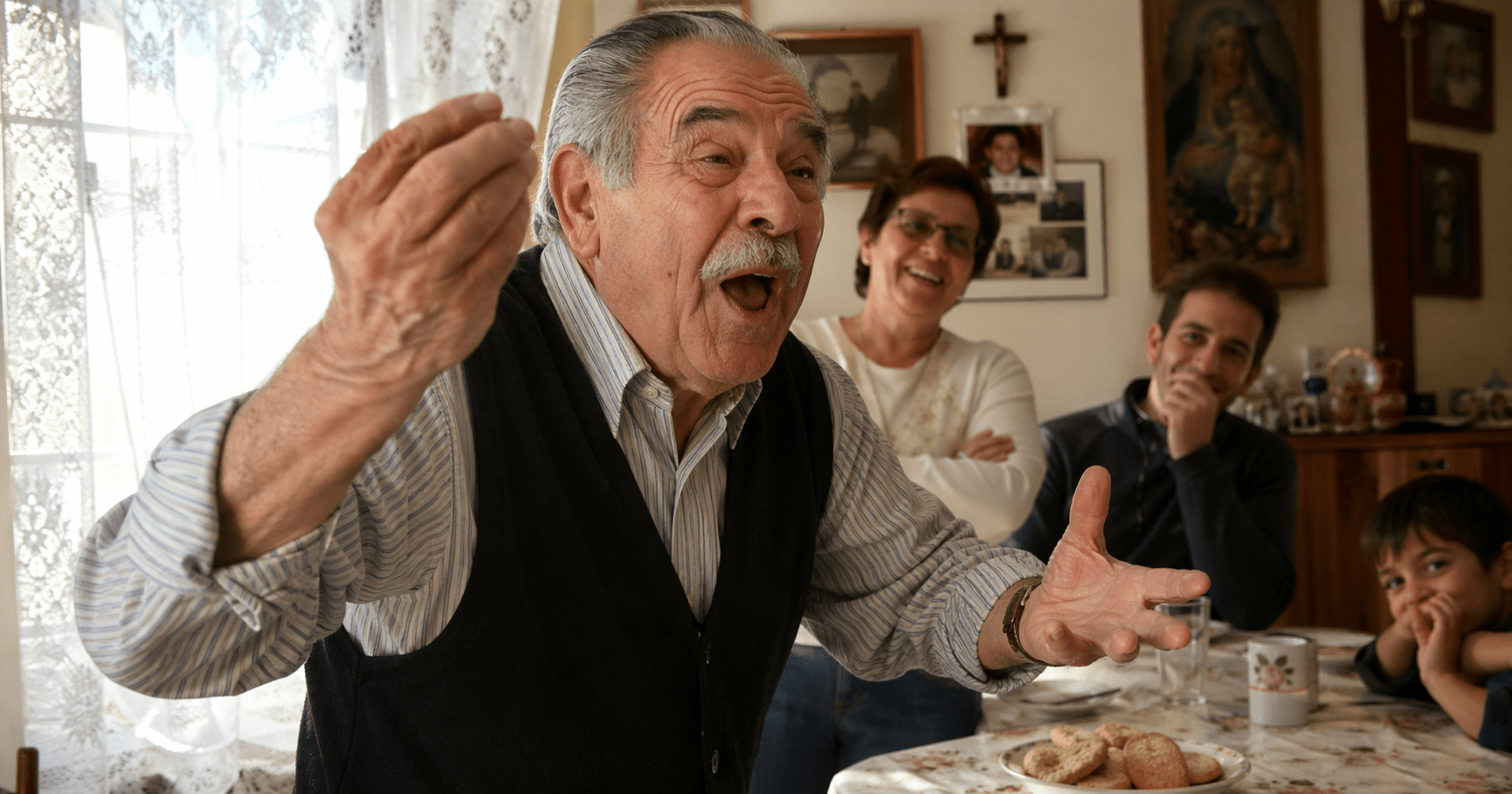
Italian Family Traditions
What Is Fare Bella Figura? The Italian Art of Making a Good Impression
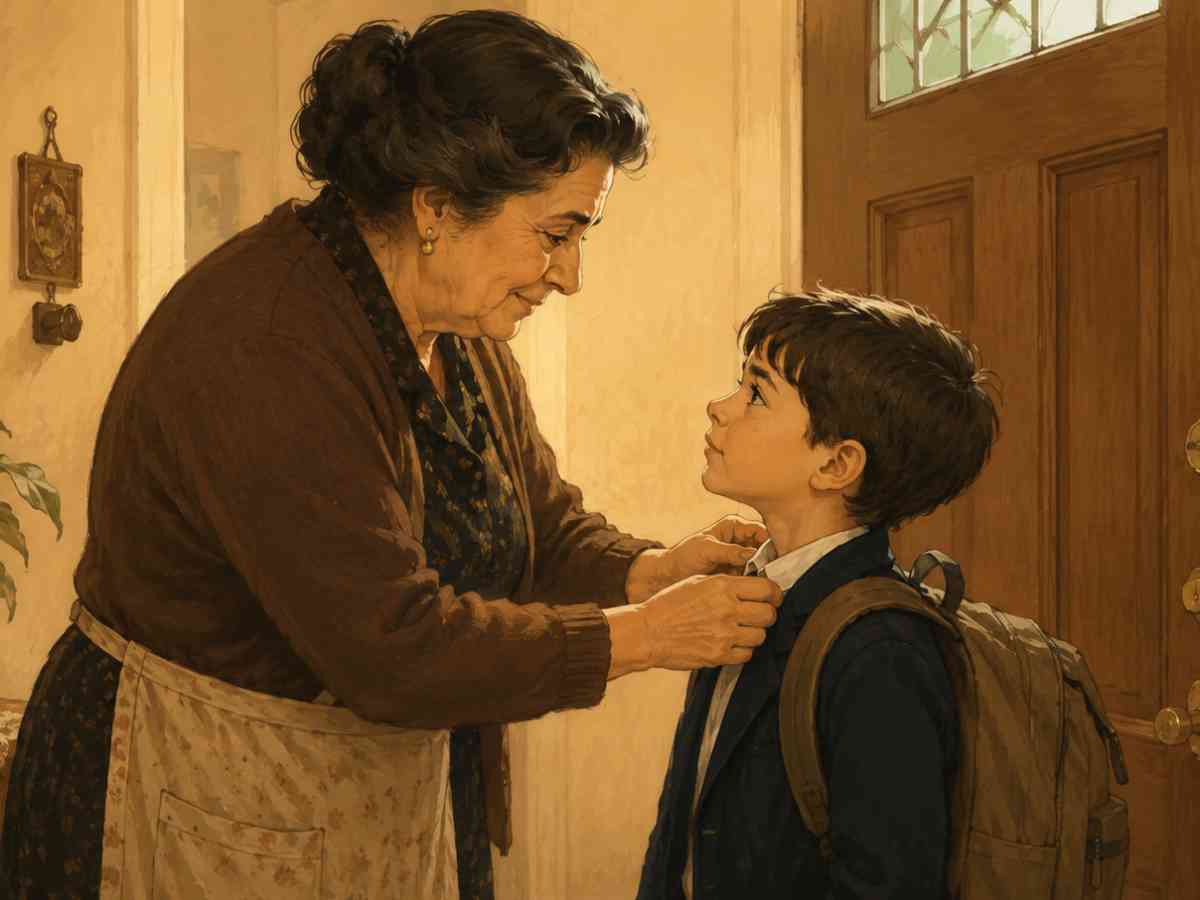
It was not called anything when I was growing up. There was no Italian phrase attached to it. There was just my grandmother’s voice before we left the house — calm, specific, and carrying the full weight of everything she believed about how a person should move through the world.
Before we went anywhere — a birthday party, a neighbour’s house for dinner, a relative we saw twice a year — there was a specific preparation that had nothing to do with what time we were leaving or whether we knew where we were going. It was a preparation of presentation. Clean clothes. Not just clean — pressed where pressing was appropriate. Hair done. Shoes checked. Nails examined. And then, before the door opened, a conversation that was less a conversation than a set of instructions delivered with the certainty of someone who had been following these rules their entire life and expected them to continue being followed long after she was gone.
You will eat what they give you. You will tell them it is good. You will say thank you and mean it. You will not interrupt the adults. You will sit properly at the table. You will not touch things that are not yours. You will leave the bathroom the way you found it. And when you come home you will tell me how it went — and I will know, from how you tell me, whether you represented this family correctly.
That last part was the part that stayed with me longest. She would know. How she would know was never explained. She simply would. And she was always right.
Fare bella figura was never explained to me as a concept. It was demonstrated, corrected, and enforced. By the time I understood what it was called, I had already been practicing it for years — not because I had been taught a philosophy, but because the consequences of fare brutta figura had been made perfectly clear from the time I was old enough to go anywhere without my grandmother holding my hand.
What fare bella figura actually means
The literal translation is “to make a beautiful figure” — but that translation loses almost everything that matters about the phrase. Parla Italiano gets closer to the real meaning: to do well and behave in a good way in a social situation, and in so doing reflect well on yourself, your circle of people, and your family. Cultural Atlas describes it as the art of making a good impression — not only in physical appearance but in the aura a person projects in the way they hold themselves, in everything they say and do.
The opposite — fare brutta figura, making an ugly impression — was the thing actually being warned against. Fare bella figura was the standard. Fare brutta figura was the failure. And in Italian family culture, the failure was not only personal. Parla Italiano notes that fare bella figura also means making someone else look good — a parent who has raised a well-behaved child has made bella figura themselves. Which meant that when a child behaved badly in someone else’s house, they were not only embarrassing themselves. They were embarrassing their parents, their grandparents, and everyone who had spent years trying to teach them better.
That is why the instructions before leaving the house were not optional.
Presentation extended to greetings too — the cheek-kiss, done right, is part of making a good impression.
What fare bella figura looked like in practice — the rules
In Italian family life, fare bella figura was not an abstract concept. It was a specific set of behaviors, enforced consistently, that covered every situation where the family’s reputation was visible to the outside world. Here is what it actually looked like:
| The situation | The bella figura rule |
|---|---|
| Going to someone’s house | You arrived clean, dressed appropriately, and with something in hand — a dessert, a bottle of wine, flowers. You never arrived empty-handed. Ever. |
| Eating someone else’s food | You ate what was put in front of you. You complimented the cook. You did not leave food on your plate. Whether you liked it or not was irrelevant — what mattered was that the person who made it felt respected. |
| Dress and appearance | Clean clothes always. Pressed when the occasion required it. Hair done. Shoes clean. The standard was not fashion — it was effort. You showed up looking like someone who had taken the visit seriously. |
| Personal hygiene | Non-negotiable and never discussed because it did not need to be discussed. You showered. Your nails were clean. Your clothes did not smell. This was the floor, not the ceiling. |
| Behavior with adults | You greeted every adult when you arrived. You did not interrupt. You did not contradict. You spoke when spoken to and answered properly — not in monosyllables, not with your eyes on the floor, but clearly and respectfully. |
| At the table | You sat properly. You did not reach across people. You waited to be served or asked before taking. You thanked whoever served you. You did not leave the table without asking. |
| In someone else’s home | You did not touch things that were not yours. You left every room you used — especially the bathroom — exactly as you found it. You did not open doors or drawers. You behaved as a guest, not as a resident. |
| Returning borrowed items | One of the most specific and most remembered rules: if someone lent you a container — a pot, a baking dish, a plate — you returned it clean and you returned it full. Not with the same food. With something you had made. A batch of cookies. A cake. Something that said you understood what the lending had meant. |
| Who you brought home | The person you introduced to the family reflected on the family. This was not cruelty — it was the understanding that relationships were not private in Italian family culture. The family had a stake. You brought home someone worthy of the introduction. |
That table could go on. Fare bella figura had an entry for almost every social situation an Italian family might encounter. The rules were not written down anywhere. They did not need to be. They were transmitted through correction, through example, and through the specific tone of voice that communicated, without a single raised word, that something had gone wrong and would not be going wrong again.
The food compliment — even when you didn’t mean it
This one deserves its own section because it is the rule that non-Italians find most puzzling and Italian children understood most completely.
You complimented the food. Always. Without qualification, without hesitation, without the particular honesty that might be appropriate in other contexts but was never appropriate at someone else’s table. It did not matter whether you liked what was served. It did not matter whether it was too salty or overcooked or made with an ingredient you had never eaten before and were not entirely sure about. You ate it. You said it was good. You may even have asked for the recipe, which was the highest possible compliment and was used strategically in situations where simple praise was not quite enough.
My grandmother was not teaching me to lie. She was teaching me something more sophisticated than that. She was teaching me that the truth of whether I liked a dish was my business and mine alone. The truth of whether the person who made it felt respected — that was everyone’s business. The cook had spent time on that food. The cook had invited us into their home. The cook was watching my face when I took the first bite. What I owed them at that moment was not my honest opinion. What I owed them was my best behavior. Those are not the same thing, and learning the difference between them was one of the more useful things I was taught at a very young age.
This was not hypocrisy in the Italian understanding. It was courtesy elevated to a form of respect. Italian American Herald describes fare bella figura as the art of living elegantly even with limited means — and this is the domestic version of that principle. You may not have been able to bring an expensive gift. You may not have been able to dress like someone with money. But you could always, at zero cost, make the person who fed you feel that they had fed you well. That was a form of generosity available to everyone.
The borrowed container rule — the one most people remember
If you grew up in an Italian family, you know this one without being told. Someone brings you a tray of lasagna in their good baking dish. You eat the lasagna. Now you have their baking dish. What happens next is not a question — it is a protocol.
You wash the dish. You fill it with something you made. You return it promptly — not eventually, not when you happen to see them, but soon, because having someone else’s good dish in your house for too long is itself a form of brutta figura. And you return it full because the dish arrived full. The logic is simple and the message is clear: we do not receive without giving back, and giving back means giving something of ourselves, not simply returning what was lent.
My grandmother had a collection of other people’s dishes in rotation at any given time. She knew which dish belonged to whom, what it had contained when it arrived, and what she planned to fill it with when it went back. She tracked this the way other people track finances — carefully, consistently, and with the understanding that falling behind was not acceptable. A returned dish with cookies or a cake or a fresh batch of biscotti said: we received your kindness and we matched it. An empty returned dish said something else entirely, and whatever it said, she had no interest in saying it.
Where fare bella figura came from — and why it ran so deep
The concept has roots that go back further than most people realize. Civilisable traces it to ancient Roman society, where appearances and dignified self-presentation were highly valued, through the Italian city-states of the Renaissance period where a refined sense of aesthetics became central to Italian identity, and into the post-war transformation where fare bella figura evolved to emphasize warmth, hospitality, and inclusivity rather than purely social status.
Cultural Atlas connects it directly to the Italian understanding of honour — that a person’s reputation reflects their family and upbringing and is essentially a way of opening up opportunities. In a culture where relationships and community were the primary social infrastructure, how you were perceived mattered practically as well as morally. A family known for bella figura was a family people wanted to do business with, socialize with, trust. A family known for brutta figura was a family people kept at a careful distance.
That practical dimension is important. Fare bella figura was not vanity. It was not performance for its own sake. It was the understanding that in a world where your family name was your most portable asset, protecting the reputation of that name was not optional — it was the work every generation owed the ones before and after it.
Fare bella figura in immigrant Italian families — why it mattered even more
If fare bella figura mattered in Italy, it mattered twice as much in the diaspora. And the reason is not complicated.
When Italian families arrived in Montreal, in New York, in Toronto, in any North American city that received them in the late 19th and early 20th centuries, they arrived as outsiders. La Gazzetta Italiana notes that fare bella figura stems from a sense of self-respect and decency — and for immigrant families, self-respect was the one thing the new country could not take from them regardless of what else it withheld. They may have arrived without money, without language, without credentials the new country recognized. But they could arrive clean. They could arrive dressed carefully. They could behave with dignity at other people’s tables. They could return borrowed dishes full. They could teach their children to shake hands properly and say thank you and represent the family in a way that left people with a good impression.
In that context, fare bella figura was not a social nicety. It was a survival strategy. It was how you built trust in a place that did not automatically extend it to you. It was how you created a reputation from nothing, in a new city, among people who did not know your family name and had no reason to think well of you until you gave them one.
My grandparents understood this without ever framing it in those terms. They did not talk about immigration as a challenge to their dignity. They just maintained their dignity — precisely, consistently, and without making a speech about it. The instructions before leaving the house were not about Italian culture in the abstract. They were about survival in a specific city, in a specific decade, in a specific community where how you were known mattered enormously and how you behaved determined how you were known. That is the broader story of what Italian families carried after immigration — not only the recipes and the feast days, but the behavioral code that protected the family name in a new country.
The brutta figura — and why it was worse than almost anything
Every Italian family has a brutta figura story. The child who said something inappropriate at the wrong table. The relative who arrived at a funeral in the wrong clothes. The person who returned a borrowed dish empty, or not at all. The guest who complained about the food. The family member who brought someone home who was clearly not going to pass review.
These stories were told for years. Not with cruelty — usually with a kind of resigned fondness, the way families tell stories about the member who always managed to do the thing that made everyone wince. But they were told, which meant they were remembered, which meant the lesson was clear: brutta figura had a long memory in Italian family culture and the best strategy was to avoid contributing to the collection.
The Quora discussion on fare bella figura makes an important point: fare bella figura does not mean to dress up nicely — it means behaving properly. If you offer to help a friend paint a house and you show up in high heels, you have made brutta figura not because of the shoes but because you have demonstrated you were not seriously intending to help. The appearance and the behavior are connected. They are both expressions of the same thing: the seriousness with which you take your obligations to other people.
What fare bella figura taught — beyond the manners
The deeper lesson of fare bella figura was not about appearances. It was about the relationship between the self and the community.
In Italian family culture, you were never only yourself. You were a representative of your family, your upbringing, and everyone who had invested in making you who you were. Your behavior in public was a report on all of them. Your manners at someone else’s table were a reflection of what your grandmother had tried to teach you. Your appearance at a family occasion said something about whether you had taken the occasion seriously enough to prepare for it.
That is a heavier weight than most modern frameworks place on individual behavior. But it produced something real — a set of people who moved through the world with specific, consistent care for how they appeared and how they made others feel. Who complimented the cook because the cook deserved it. Who returned things clean and full because that was the standard and the standard existed for a reason. Who dressed with effort because the people they were visiting deserved the effort. Who taught their children the same things in the same way, before every departure, with the same specific voice that left no room for debate.
If you want to pass this on — not just the phrase but the actual practice — the most direct way is to do what my grandmother did: say the things out loud before you leave the house. Tell children exactly what is expected. Not as a lecture. As preparation. As the specific practical instructions of someone who has been to this house before and knows what bella figura looks like there. That is how the tradition was passed and how it still gets passed — not through explanations but through the voice at the door, calm and specific and carrying the full weight of everything the family believed about how a person should move through the world. For how to record the specific wisdom older relatives carried, read how to record family stories before they are lost. And for how to pass these kinds of behavioral traditions to the next generation, read how to get your kids interested in their Italian heritage.
For those who want to go deeper into the Italian cultural values that shaped this tradition, Beppe Severgnini’s La Bella Figura is the most readable and most honest account of how this value system operates in Italian daily life — written by an Italian, for everyone trying to understand what makes Italy the way it is.
You will eat what they give you. You will tell them it is good. You will sit properly. You will leave the bathroom as you found it. You will return the dish clean and full. And when you come home you will tell me how it went — and I will know whether you represented this family correctly. That was the whole lesson. It was enough.
Fare bella figura connects to the Italian table traditions that governed how families ate together and what that eating communicated. It connects to the Italian Sunday lunch where the table itself was an act of bella figura — the cloth, the dishes, the food, the hours given to it. It connects to the baptism and wedding traditions where the entire community was watching and every detail of presentation mattered. And it connects to the broader question of what Italian-American and Italian-Canadian families carried from the old country and chose to keep — because fare bella figura was never left behind. It was too useful. It was too true. It was too deeply woven into how Italian families understood the relationship between the person and the world to be something you could simply unpack and leave at the border.
FAQ
What does fare bella figura mean?
Fare bella figura literally means “to make a beautiful figure” but its real meaning is closer to: to behave well in a social situation and in doing so reflect well on yourself and your family. Parla Italiano defines it as doing well and behaving in a good way socially, which reflects on your circle and your family. Cultural Atlas describes it as the art of making a good impression — not only in physical appearance but in everything a person projects through how they hold themselves, speak, and act. It is not vanity. It is the understanding that your behavior in public is a representation of everyone who raised you.
What is fare brutta figura?
Fare brutta figura — making an ugly impression — is the opposite of fare bella figura and the thing actually being warned against in Italian family culture. It means behaving badly, dressing inappropriately, failing to show proper respect, or doing anything that reflects poorly on yourself and your family in a social situation. The Quora discussion of bella figura notes that fare brutta figura is not purely about appearance — if you offer to help a friend and show up clearly unprepared, you have made brutta figura because you have shown you were not serious about helping. The behavior and the appearance are both expressions of the same underlying respect, or lack of it.
Is fare bella figura only about appearance?
No — and this is the most common misunderstanding about the phrase. Italian American Herald describes it as covering everything from fashion and food to behavior and speech — the art of living well that goes beyond making a good impression. It dictates how you treat others, how you speak, how you present food at an event, how you wrap a gift, and whether you return borrowed items properly. La Gazzetta Italiana connects it to dignity, hospitality, and politeness as much as to physical presentation. The appearance is one expression of fare bella figura. The behavior is another. Both matter equally.
Why did Italian families teach fare bella figura so strictly?
Because in Italian culture, your behavior reflected on your entire family — not just on you. Parla Italiano notes that fare bella figura includes making someone else look good: a parent who raises a well-behaved child has made bella figura themselves. This meant that a child who misbehaved at someone else’s house was embarrassing their parents and grandparents along with themselves. Cultural Atlas connects it to the Italian understanding of honour — that reputation reflects family and upbringing and opens or closes opportunities. In immigrant communities specifically, how your family was known determined how the community treated you. The behavioral code was not abstract. It was practical.
Why do Italians compliment food even when they don’t like it?
Because fare bella figura at someone else’s table means prioritizing the cook’s dignity over your own honest opinion. Italian family culture understood that the person who cooked for you had invested time, effort, and care in the meal — and that what you owed them in return was respect for that investment, not a review. Italian American Herald describes fare bella figura as showing appreciation for life and making thoughtful presentations in everything you do. Complimenting the food — genuinely, without qualification — was the most immediate available expression of that appreciation. Whether you liked the dish was your business. Whether the cook felt respected was everyone’s business.
What is the borrowed container rule in Italian families?
One of the most specific expressions of fare bella figura in Italian household life: when someone lends you a container — a pot, a baking dish, a tray — you return it clean, promptly, and full of something you made. Not with the same food it contained when it arrived. With something new — cookies, a cake, a batch of biscotti. The logic is simple: the dish arrived as an act of generosity and must be returned as an act of generosity in kind. An empty returned dish says you received without giving back. A full returned dish says you understood what the lending meant and you matched it. In Italian family culture these distinctions were tracked carefully and the standard was non-negotiable.
Did Italian-Canadian and Italian-American families keep fare bella figura after immigration?
Yes — and in many ways it mattered more in the diaspora than it had in Italy. When Italian families arrived in North American cities without money, without language, and without established reputations, fare bella figura was one of the few assets they could deploy immediately. They could arrive clean. They could dress with effort. They could behave with dignity at other people’s tables. They could return borrowed dishes full. They could teach their children to shake hands properly and represent the family well. In that context fare bella figura was not a social nicety — it was how you built trust and reputation from nothing in a new city. Italian immigrant families understood this practically and passed it on accordingly.

Marco Ricci is an Italian-Canadian writer and the grandson of Calabrian immigrants. He created Italian Family Traditions to document the customs, feast days, and family rituals Italian families carried from Italy to North America — and to understand what they actually meant. He is based in Montreal.