Italian Family Traditions
What Is Ferragosto? The Italian Holiday Built on Rest
My grandfather never once said the word Ferragosto in his life. But every summer, without anyone teaching him to, he worked hard in the morning and surrendered the afternoon entirely — television on, feet up, the heat outside doing exactly what Italian summer heat has always done to the will to work. He had no idea he was following a 2,000-year-old Roman instruction. He just knew the afternoon was not for fighting.
Every August, my grandfather did the same thing. He worked hard in the morning — whatever needed doing in the garden, around the house, in whatever project currently had his attention — and by early afternoon, he stopped. Television on. Feet up. The kind of stillness that, looking back, was not laziness at all but a very specific and very old kind of wisdom: the heat had won, and fighting it further was simply not worth the effort.
He never called it anything. There was no ceremony, no specific food, no date circled on a calendar. It was simply how August worked in his house. What I did not understand until much later was that this exact instinct — hard morning work, surrendered afternoon — is the entire logic behind one of Italy’s oldest and most beloved holidays. A holiday my grandfather never once mentioned, that never became a fixture in Montreal’s Italian community the way Christmas or Easter did, but whose underlying wisdom apparently needed no holiday at all to survive the crossing.
Free Printable
The whole Italian year, on one printable calendar.
Ferragosto, the feast days, the whole rhythm of the Italian year — in one free printable calendar. Join the list and we’ll send it to you.
What is Ferragosto?
Ferragosto is Italy’s August 15 holiday — equal parts ancient Roman rest day and Catholic feast — and arguably the single biggest pause button in the entire Italian calendar.
Religion Unplugged describes August 15 as one of the most significant and widely celebrated holidays in Italy — a day that marks a mix of ancient Roman history and Catholic tradition. Romewise notes simply that Ferragosto is when Italians take to the beaches and the mountains for summer holidays, with many taking their vacation for the entire month around this date.
In practice, Ferragosto means Italy slows down — sometimes to a near stop. Cities empty. Shops close. Beach towns and mountain villages fill instead. Mama Loves Italy notes the reality is more nuanced than the warnings suggest: not literally everything shuts down, but enough does that visiting Italy without knowing about Ferragosto can catch travelers off guard.
Where it came from — 2,000 years of history
Ferragosto did not start as a beach holiday. It started as an emperor’s order to let exhausted farm workers rest.
Religion Unplugged traces the name itself to the Latin phrase Feriae Augusti — “Festivals of Augustus” — a holiday instituted in 18 BCE by Emperor Augustus. The purpose was direct and practical: offer rest and celebration following the intense labor of the summer harvest, a break the emperor provided for workers while honoring the deities associated with agriculture.
Mama Loves Italy adds important context: the celebrations were tied to the worship of Consus, the ancient Roman god associated with the end of agricultural work for the summer — the festivities, including horse races and chariot shows, marked a genuine and necessary pause after the hardest physical labor of the entire year. This was not a token holiday. It was recovery, built into the calendar by imperial decree.
| Era | What happened |
|---|---|
| 18 BCE | Emperor Augustus institutes Feriae Augusti — a period of rest after the summer harvest, originally centered on August 1 |
| 7th century CE | The Catholic Church moves the date to August 15, merging the Roman holiday with the Feast of the Assumption of the Virgin Mary |
| 1950 | Pope Pius XII formally proclaims the dogma of the Assumption, cementing the religious significance of August 15 |
| 1920s | Mussolini’s Fascist regime popularizes Ferragosto as a mass vacation holiday — subsidized “popular trains” offer working-class Italians affordable trips between August 13 and 15 |
| Today | A national holiday in Italy, often extended into a full week or month of vacation — the cultural high point of the Italian summer |
That religious layer is the part my own family kept, even as the Roman holiday faded. August 15 is the Feast of the Assumption — the day the Madonna was taken up into heaven — and in a family whose deepest devotion was always to the Madonna, mid-August carried a quiet reverence even without the name Ferragosto attached. The beach and the long lunch belonged to Italy; the Assumption belonged to us. For families like mine, the Marian feast, not the Roman rest day, was what actually crossed the ocean.
Did you know? Wikipedia notes that under Feriae Augusti, it became custom for workers to wish their employers “buon Ferragosto” and receive a monetary bonus in return — a tradition that became formal law during the Roman Renaissance throughout the Papal States, essentially making Ferragosto Italy’s earliest documented summer bonus tradition.
Why Ferragosto never made it to Montreal
Some Italian traditions crossed the ocean intact. Ferragosto largely did not — and the reason has everything to do with what immigration actually demands.
Christmas traveled because it had universal North American infrastructure already in place — a public holiday, a shared cultural calendar, a built-in excuse to gather. Easter did too. But Ferragosto, fundamentally, is a national Italian institution — a day when the entire country, by mutual unspoken agreement, simply stops. It depends on everyone else stopping too. A factory worker in Montreal in 1958 did not get August 15 off. His employer was not closing for the Assumption. The infrastructure that makes Ferragosto function in Italy — empty cities, closed shops, an entire nation on the same page — simply did not exist for Italian immigrants building new lives in Canada.
So the holiday itself, as a named, dated, collectively observed event, largely did not survive the crossing into Italian-Canadian community life the way it survives in Italy. There was no Ferragosto parade on Saint-Laurent. No community-wide closure. It existed, if at all, as something older relatives might mention — a memory of what August meant back home — rather than something actively practiced in Montreal.
What survived anyway — the logic without the name
The holiday did not cross the ocean. But the wisdom behind it apparently did not need a holiday at all to survive.
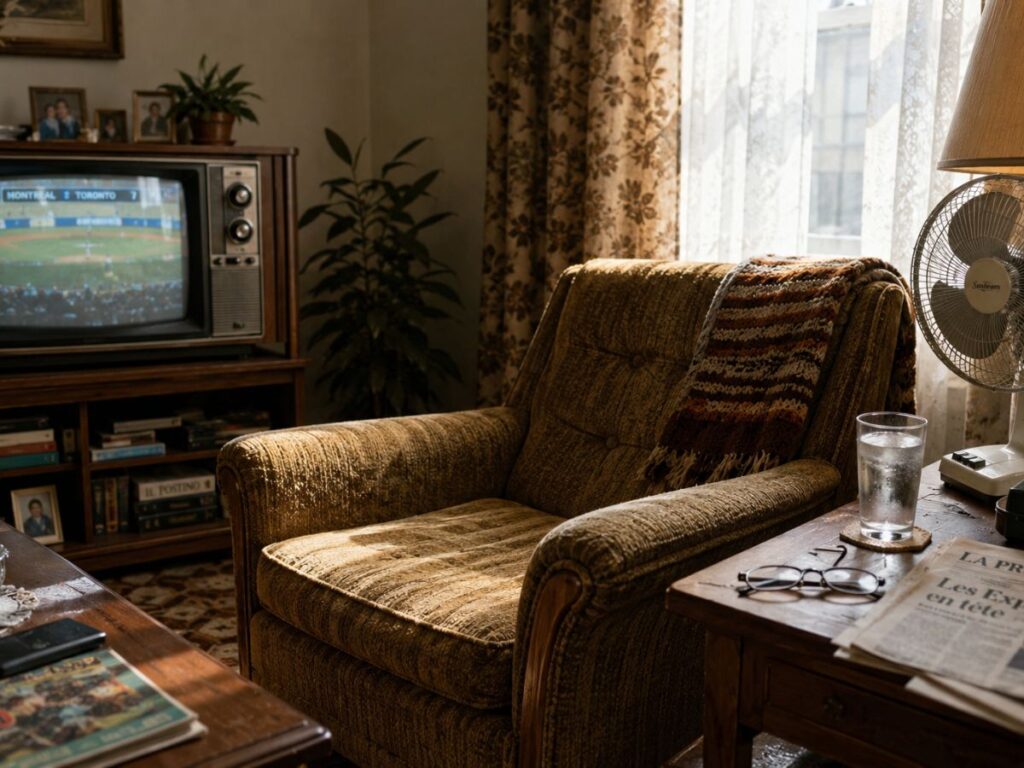
My grandfather worked hard in the cool of the morning and stopped working entirely once the heat of the afternoon arrived. Television on, feet up, the whole rest of the day surrendered to staying still. He never connected this to Ferragosto. He probably never thought about it as a tradition at all — it was simply common sense, the same common sense an Italian farmer in Calabria would have recognized instantly, the same common sense that led an emperor two thousand years earlier to formally mandate exactly this kind of rest.
That is, in many ways, more interesting than if the holiday had survived intact. A specific date and a specific ritual are easy to lose in immigration — there is no infrastructure to support them, no shared calendar, no community large enough to make the closure mean anything. But an instinct about how to work with the heat rather than against it does not require any of that. It only requires a body that remembers, generation after generation, that the early afternoon in August is not the time to push.
I used to think his afternoon routine was just what older men did — retire to the chair, turn on the television, let the day pass. It took me years to understand it was not retirement from anything. It was a specific, deliberate, inherited response to August heat that predates Christianity, predates the Roman Empire’s conversion, predates almost everything else he carried with him from Calabria. He never explained it because there was nothing to explain. The body already knew.
This same pattern — an Italian instinct surviving in practice long after its formal name and occasion has faded — shows up across Italian-Canadian family life. The logic of why Italians don’t drink cappuccino after 11am survived the same way: not as an explained rule, but as an instinct nobody questioned. Ferragosto’s afternoon stillness belongs to that same family of inherited common sense.
How Italy celebrates Ferragosto today
In modern Italy, Ferragosto is part religious feast, part beach holiday, and entirely non-negotiable.
Italy Magazine describes the typical Ferragosto lunch as the central social event of the day — usually a barbecue or a large picnic with family and friends, often by the sea or in the mountains. Beach games, water balloons, bonfires, and dancing fill out the rest of the celebration, depending heavily on the region.
Religious observance runs alongside the secular celebration. As the Feast of the Assumption of the Virgin Mary, August 15 brings processions and ceremonies across Italy — Visititaly highlights the procession of the Vara di Messina, where a votive chariot dedicated to Our Lady of the Assumption is pulled through the city by 600 marksmen, one of the most striking examples of how the ancient and the sacred still share the same day.
And in towns across Italy, the ancient Roman instinct for competition and spectacle never fully disappeared either. Italy Magazine notes the Augustali celebrations once featured horse races across the empire — a tradition that survives almost unchanged today in events like Siena’s famous Palio dell’Assunta, run on August 16, the day immediately following Ferragosto.
The Rituals No One Named
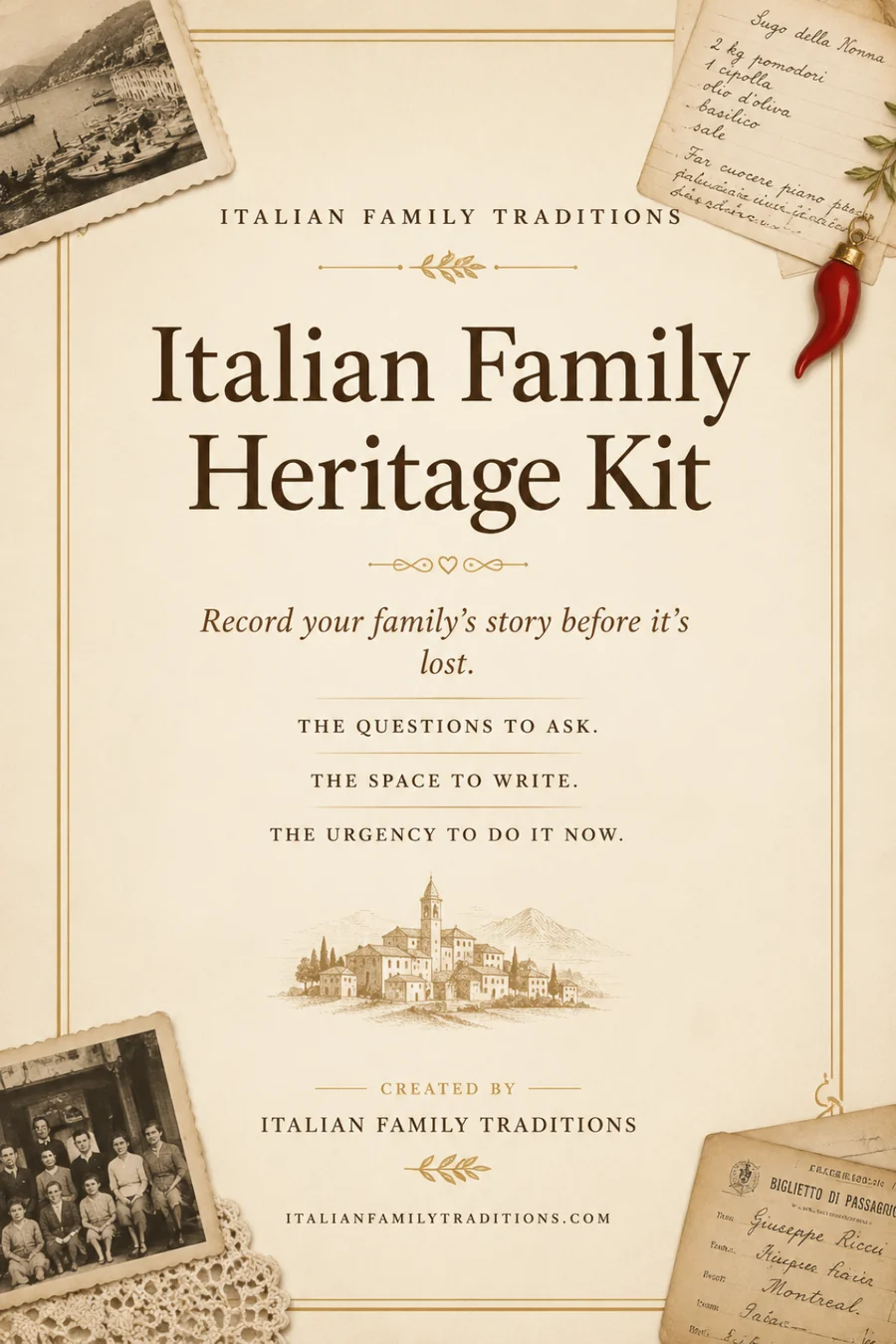
The unnamed August afternoon, the quiet devotions, the routines nobody explained but everybody followed — these are the traditions that vanish first. The Italian Family Heritage Kit gives you the prompts to record your family’s rituals, feasts, and beliefs before they’re lost.
Explore the Italian Family Heritage Kit →What Italians eat on Ferragosto: the summer feast
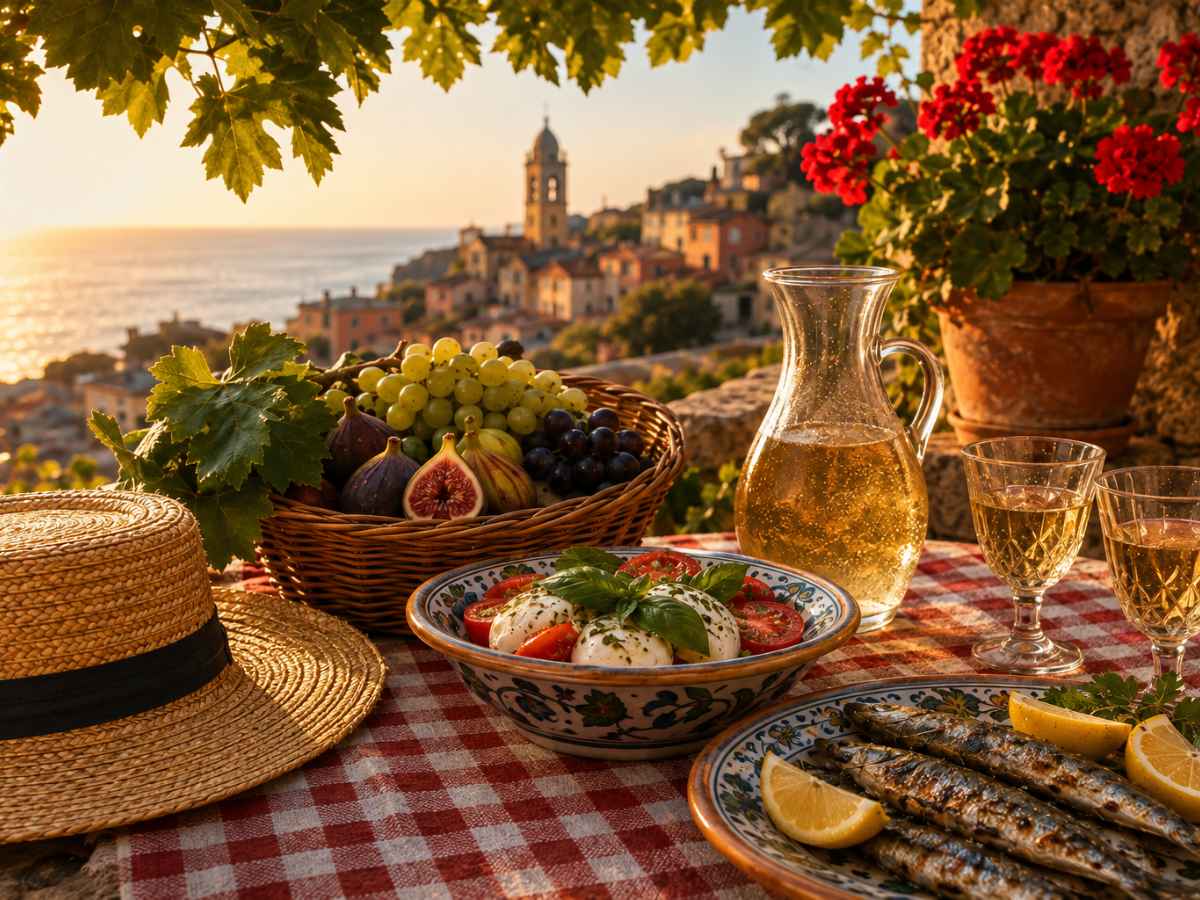
The Ferragosto meal is built for heat: cold, fresh, made ahead, and eaten slowly outdoors. Nobody spends August 15 sweating over a hot stove. The whole logic of the day — rest, not labour — extends to the food, which is why the classic Ferragosto table leans on dishes that can be prepared in the cool of the morning and served at room temperature under the sun.
There is no single national menu — Ferragosto food is regional, and every family has its own version — but the spirit is consistent everywhere: abundant, seasonal, unhurried. These are the dishes that show up most:
The Ferragosto Table
What Italians Eat on Ferragosto
The classic dishes of Italy’s great summer feast — cold, fresh, made ahead, eaten slowly outdoors. Tap a card to flip it.
There’s no single national menu — Ferragosto food is regional, and every family has its own. The real tradition isn’t a recipe; it’s the long, unhurried afternoon lunch itself.
The point of the Ferragosto meal is not any single dish. It is the length of it — the long, slow, multi-hour lunch that starts at midday and drifts into the afternoon, everyone at the table, nobody in a hurry, the heat outside making stillness the only reasonable option. If you want to mark Ferragosto with food, that is the real tradition to copy: not a specific recipe, but an unhurried afternoon meal, made ahead, eaten outdoors, stretched as long as the day allows. It is the same instinct behind the Italian Sunday dinner — the meal as the point of the day, not an interruption to it.
Visiting Italy on Ferragosto: what to expect
If you are travelling in Italy around August 15, Ferragosto will shape your trip whether you plan for it or not — so it is worth knowing what to expect. The single most important thing to understand: Ferragosto is when Italy takes its own holiday, and a country on holiday behaves differently from one at work.
- Cities empty out. Rome, Milan, Florence, and Naples grow noticeably quieter as residents leave for the coast and mountains. Many family-run shops, restaurants, and businesses close — sometimes for the day, sometimes for the surrounding week, occasionally for much of August. Look for “Chiuso per ferie” (closed for holidays) signs.
- The coast and lakes fill up. Beaches, seaside towns, and lake resorts are at their busiest and liveliest. If you want the festive side of Ferragosto — the crowds, the grigliate, the fireworks — that is where it is.
- Major attractions usually stay open. The big museums, monuments, and tourist sites generally operate, though sometimes on holiday hours. It is the local, everyday businesses that close, not the Colosseum.
- Book ahead. Restaurants that do open, plus coastal hotels and transport, fill quickly. Reserve in advance and don’t assume you can walk in on the day.
- Transport runs, but check schedules. Trains and buses operate on holiday timetables — fewer services, so confirm times if you are travelling on the 15th itself.
The honest traveller’s takeaway: don’t fight Ferragosto, join it. A city on August 15 can feel shuttered and empty; a beach town feels like the best party in Italy. Plan to be where the celebration is — the coast, a lake, a village festival — rather than expecting a normal working day in a major city. Hours and closures vary year to year, so confirm anything essential locally before you rely on it.
How to mark Ferragosto in your own home
You do not need an Italian beach or an empty city to observe the spirit of the day. You need one afternoon, deliberately surrendered.
This August 15, consider doing what my grandfather did without ever naming it: work hard in the morning, then genuinely stop in the afternoon. No errands. No projects. A real pause, not a guilty one. Gather the family for a long lunch — a barbecue or a proper sit-down meal — the way Ferragosto lunch works in Italy, with no rush to clear the table and move on to the next thing. A proper outdoor serving set — the kind built for a meal that is meant to last hours rather than minutes — makes the unhurried version of the day easier to commit to.
If you want to mark the day more specifically, look up whether your family’s region of origin has a local Ferragosto tradition — a specific dish, a specific saint’s day procession, a specific way the day was once observed before your family left. That regional specificity is often more meaningful than the generic version of the holiday, and it connects directly to what your family actually carried with them after immigration versus what got left behind entirely.
And the next time the August heat makes you want to quit early on a Tuesday afternoon, you might consider that you are not being lazy. You are participating in one of the oldest documented holidays in continuous human practice — one that an emperor, a church, and millions of Italian grandfathers across multiple continents all independently agreed was correct.
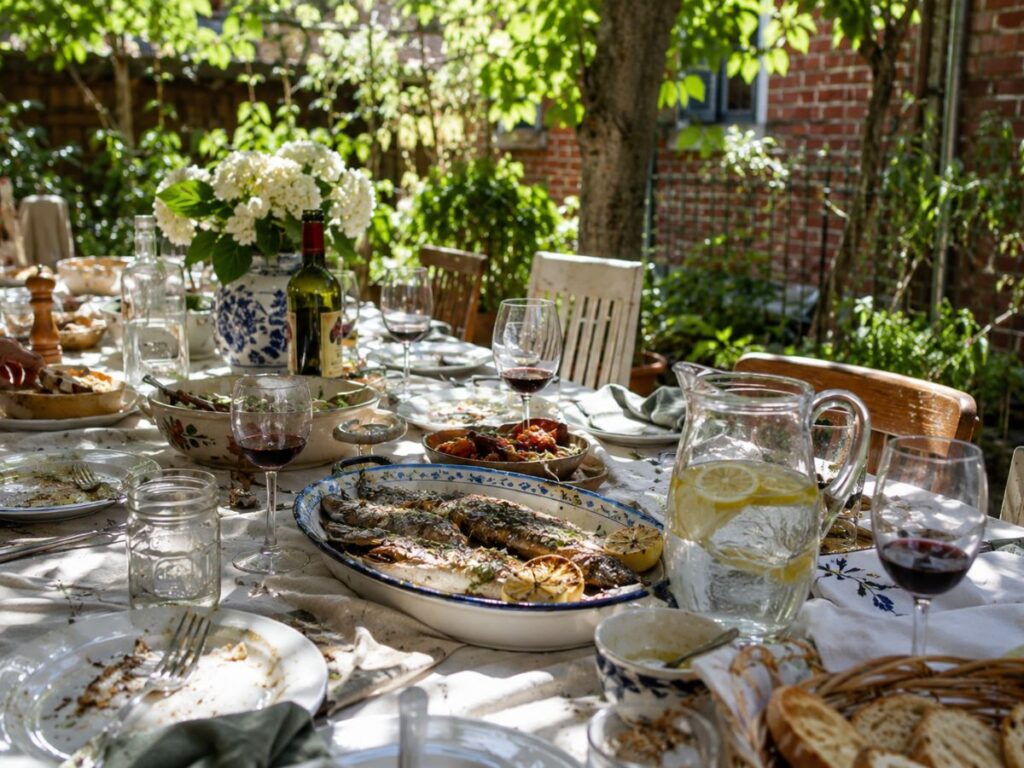
He never once said the word Ferragosto. But every summer, hard work in the morning, surrendered afternoon — television on, feet up, the heat outside doing exactly what it has always done to the will to work. He had no idea he was following a 2,000-year-old imperial decree. He just knew the afternoon was not for fighting. Some things do not need a name to survive. They only need a body willing to listen.
Ferragosto’s logic of rest connects to the broader Italian relationship with time and timing found in why Italians don’t drink cappuccino after 11am and the colpo d’aria. For the broader story of what Italian families carried after immigration and what was left behind, read Italian-American traditions: what changed and what stayed. And for the seasonal rhythm that filled the rest of the Italian summer, read about the Italian vegetable garden that this same August heat was busy ripening.
Before the Rituals Fade
Record the traditions your family never named.
The unnamed rituals, the feast days, the devotions, the summer routines — the Italian Family Heritage Kit includes 133 guided pages and more than 120 prompts to preserve your family’s traditions, names, saints, recipes, and stories.
Explore the Heritage Kit — $19.99Instant digital download. Print it and complete it with your family.
FAQ
What is Ferragosto?
Ferragosto is a public holiday celebrated on August 15 throughout Italy, combining ancient Roman origins with Catholic religious significance. Wikipedia describes it as originating from Feriae Augusti, the festival of Emperor Augustus, who made August a period of rest after weeks of hard agricultural labor. By the 7th century, the Catholic Church merged the date with the Feast of the Assumption of the Virgin Mary. Today, Ferragosto functions as Italy’s biggest summer holiday — cities empty out, beach towns and mountains fill up, and many Italians extend their vacation for the entire month around this date.
Why is Ferragosto on August 15?
The original Roman celebration, instituted by Emperor Augustus in 18 BCE, was centered on August 1. Visititaly explains that the Catholic Church later moved the date to August 15 specifically to make Ferragosto coincide with the religious celebration of the Assumption of Mary. This merger of the pagan rest holiday with the Christian feast day is why Ferragosto carries both secular and religious meaning simultaneously — a beach holiday and a Holy Day on the exact same date.
Why didn’t Ferragosto become a tradition in Italian-Canadian communities?
Ferragosto depends on collective, nationwide observance — an entire country agreeing, by shared custom, to stop at the same time. In Italy, this means empty cities and closed shops. For Italian immigrants in Canada, that infrastructure simply did not exist. Employers were not closing for the Assumption. There was no broader cultural calendar supporting an August 15 pause the way there was for Christmas or Easter. As a result, Ferragosto largely did not survive as a named, actively observed holiday in Italian-Canadian community life, even though many of the underlying instincts behind it — particularly around working with summer heat rather than against it — persisted quietly within individual families.
What do Italians traditionally eat on Ferragosto?
Italy Magazine describes the traditional Ferragosto lunch as the central event of the day — typically a barbecue or a large picnic, often held by the sea or in the mountains where many families are vacationing during this period. The meal tends to be relaxed and extended, reflecting the holiday’s core character as a day of genuine rest rather than ritual obligation. Regional variations exist throughout Italy, with specific dishes tied to local Ferragosto customs in different parts of the country.
Is everything really closed in Italy during Ferragosto?
Not entirely, though the warnings are not unfounded. Mama Loves Italy clarifies that not everything shuts down during Ferragosto, but enough does — particularly in smaller towns and cities that empty out as residents head to the coast or mountains — that travelers should plan ahead. Tourist areas, especially coastal towns and popular vacation destinations, tend to remain busy and open. The effect is most pronounced in major cities, which can feel noticeably quieter than usual as residents leave for the holiday period.
What is the Palio dell’Assunta and how does it relate to Ferragosto?
The Palio dell’Assunta is Siena’s famous historic horse race, run on August 16, the day immediately following Ferragosto. Italy Magazine connects this directly to the ancient Roman Augustali celebrations, which featured horse races organized across the empire as part of the original Feriae Augusti festivities. The Palio represents one of the clearest surviving examples of an ancient Ferragosto-era tradition continuing in something close to its original form, nearly 2,000 years after Augustus first instituted the holiday.
How can Italian-Canadian families mark Ferragosto today?
The simplest approach is to honor the day’s underlying spirit rather than recreate an Italian national holiday that depends on infrastructure most families do not have access to. Take a genuine afternoon off on August 15 — work in the morning if needed, then deliberately stop. Gather family for an extended, unhurried lunch, ideally outdoors. For families wanting a deeper connection, researching whether their specific region of origin in Italy had local Ferragosto customs — a particular dish, a particular procession or local saint’s day tied to the date — often provides a more personal and meaningful way to mark the day than the generic national version.
Did your family have an unnamed August ritual like this — a routine nobody explained but everybody followed? Leave a comment below. These quiet, unlabeled traditions are often the ones most worth writing down before they disappear entirely.
Marco Ricci is an Italian-Canadian writer and the grandson of Calabrian immigrants. He created Italian Family Traditions to document the customs, feast days, and family rituals Italian families carried from Italy to North America — and to understand what they actually meant. He is based in Montreal.