
Italian Family Traditions
How to Find Your Italian Town of Origin — Before the Last Person Who Remembers It Is Gone
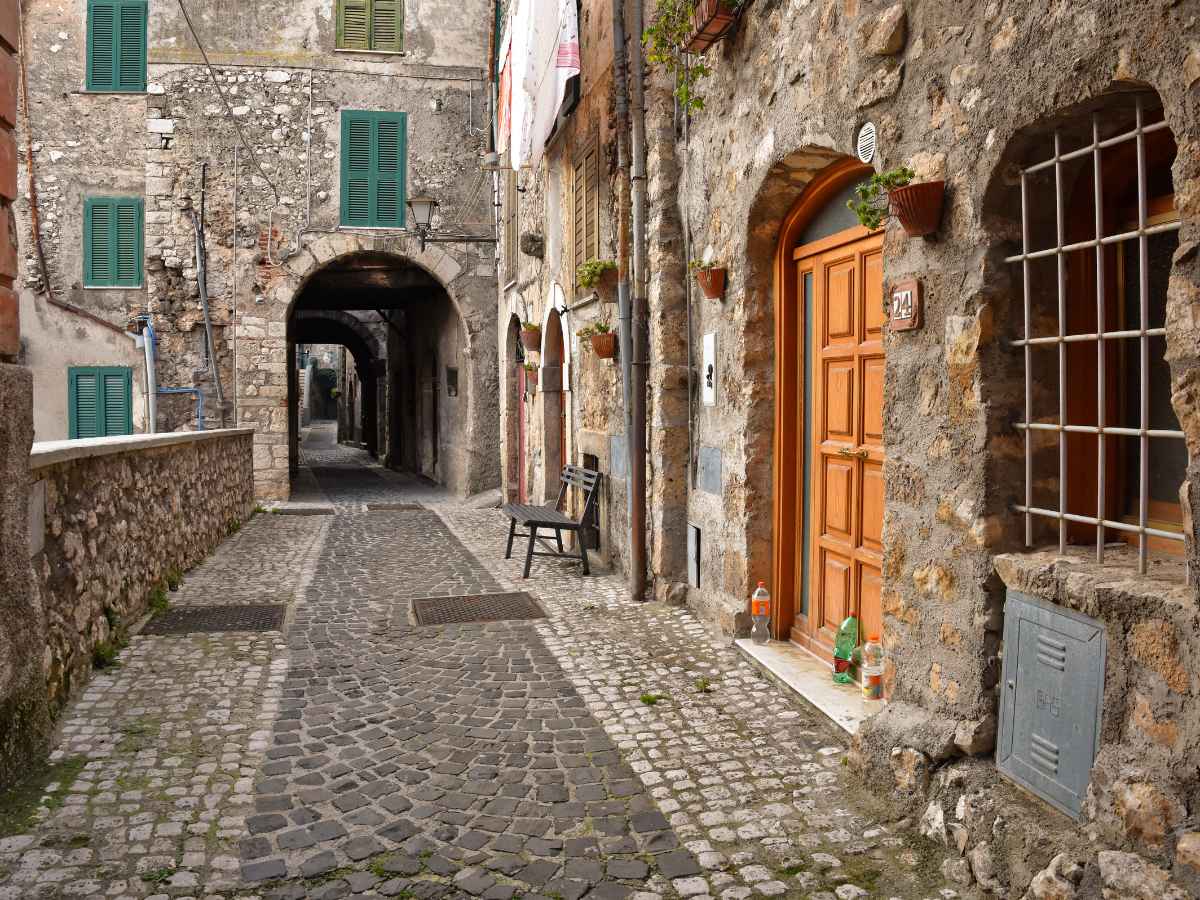
She left Calabria seventy years ago and has not walked those streets since. She can still give you the address — not the town, the address — the way you would recite your own phone number. Nobody ever wrote it down. Nobody thought they needed to.
There are good guides to finding your Italian town of origin. They are thorough, they are accurate, and they will walk you competently through ship manifests, naturalization petitions, census records, and the Portale Antenati. This article covers all of that too, because all of it works.
But every one of those guides begins in an archive. And the archive is almost never where the answer actually is. The answer is usually sitting in a living room, in a chair, drinking coffee, in a person who is getting older — and who nobody has thought to ask properly, because everybody assumes there will be a better weekend for it.
Two towns, fifteen minutes apart in the hills outside Cosenza. Carolei and Domanico. One was my grandmother’s. One was my grandfather’s. He passed recently, which is the reason I am finally doing this instead of continuing to intend to.
I have never been. Something held me back for years and I was never able to name it — not money, not time, not anything I could put into a sentence. Then he died, and whatever it was stopped holding, and what replaced it was an urgency I did not expect and cannot argue with.
Every guide to finding your Italian town of origin treats the archives as the primary source and the family as a pleasant supplement. It is the other way around. The archives will still be there in twenty years, indexed and digitised and patient. The woman who knows the address will not.
Start with the person, not the archive
This is not sentiment dressed up as method. It is genuinely the fastest route available to you. An afternoon with an elderly relative can hand you in ninety minutes what six weeks of manifest searching may never produce — because she does not only know the town. She knows the street. She knows which cousin lived where, what the family was called locally, and the three alternate spellings of your surname that will otherwise send you in circles through every database you touch.
She also knows things that exist in no record anywhere on earth. Which of the two towns the family actually considered home, when they were from one and married into the other. Why they left in the specific year they left and not the year before. Who stayed behind, and whether anyone kept writing to them. A record will give you a name and a date. She will give you the reason, and the reason is usually the part that turns out to matter.
And there is a specific failure here worth naming plainly, because it is the most common one. The address lives in one person’s head. Everybody in the family knows they could ask. Nobody asks, because asking feels like something that can happen any Sunday. Then it cannot. This is the identical pattern behind every lost recipe, every dialect word nobody wrote down, and every photograph in a drawer with no name on the back.
My grandfather knew his town the way my grandmother knows hers. I never sat down and asked him properly — not with a notebook, not with a recorder, not once in the way this article is telling you to do it. I assumed there would be a better weekend. There was not. Everything I now know about Domanico, I know because somebody else happened to remember it, and that is a permanently poorer version of what I could have had if I had simply asked while he was sitting right there.
Exactly what to ask
Ask concrete, physical questions rather than open ones. “Tell me about the town” produces almost nothing. “What was the street called” produces everything. Bring food. Sit down properly rather than asking in passing. Put your phone on the table face down and record the audio — not video, which makes people perform.
- What was the name of the town — and was there a different name people used locally?
- What province was it in? For Calabria this matters enormously — Cosenza, Catanzaro, Reggio, Crotone and Vibo Valentia are entirely separate archives.
- What was the street, or the address? Ask directly. You may be surprised what comes back.
- What was the church called? Parish records frequently survive in places where civil records did not.
- Who else from that town settled near you here? Immigrants clustered by village. The neighbours are a research lead.
- How was the surname actually spelled and said in Italy — before anyone on this side changed it?
- What year did they leave, and from which port? Naples, Palermo, Genoa — each narrows the search considerably.
- Who stayed behind, and did anyone keep writing to them? Letters mean envelopes. Envelopes mean a return address, handwritten by somebody who actually lived there.
That last question is quietly the most valuable one on the list. A shoebox of old letters is a primary source sitting in a closet, and most families have one without ever having read the envelopes. For the wider conversation this sits inside, read how to record family stories before they’re gone.
Love these Italian traditions?
Get new stories about Italian customs, folk beliefs, and family traditions — plus our free printable calendar of the Italian year.
Search your own house first
Before you pay for a single database subscription, search the drawers and boxes and closets in your own family. A startling number of people find the town name written on something they already owned and had never looked at closely.
Look for old passports and identity documents, funeral prayer cards, the backs of photographs, letters and their envelopes, marriage certificates, immigration paperwork, military discharge papers, and the family Bible if one exists. Italian funeral prayer cards in particular often list a birthplace, and almost every Italian family has a stack of them somewhere that nobody has been through in years.
Baptismal records are another strong lead. As Lo Schiavo Genealogica notes, baptismal records for the first North American–born children of an Italian couple sometimes name where the parents came from — particularly for families who did not intend to stay permanently and asked the parish priest to send a copy back to the home parish in Italy.
Where to look, and what each source gives you
Once the family and the house have been exhausted, the records come into play. They are not equally useful, and knowing which one is likely to name an actual town saves months.
| The source | What it usually gives you |
|---|---|
| Ship manifest | The strongest single record. Usually completed in Italy by Italian officials, so spellings are accurate. Often names the exact comune, plus the relative being joined on this side |
| Naturalization file (post-1906) | Frequently lists a town of birth. Comes in two parts — Declaration of Intention and Petition — so read the entire file, not the first page |
| Naturalization (pre-1906) | Usually filed with a local county court rather than federally. Less detail, but many are digitised on FamilySearch |
| Census records | Supporting evidence rather than proof. Gives year of immigration and naturalization status, which tells you which archive to search and roughly when |
| Death certificate | Inconsistent — but when a birthplace is recorded, it hands you the answer in a single line |
| Obituary | Often more specific than official paperwork, especially in local Italian-community newspapers |
| Parish baptismal record | May name the parents’ home parish in Italy, particularly for families who expected to return |
| Portale Antenati | Italian civil records — but only useful after you have a town, because everything is organised by place rather than surname |
That last row is the one that catches people out. Antenati is where the real Italian records live, and it is completely free — but it cannot help you at all until you already know where to look.
Your family’s surname and given names may have shifted at the border too — here’s how Italian names changed in English, and the dialect slang that pins down exactly which region they came from.
The ship manifest, and why it beats everything else
If one document is going to hand you the exact comune, it is almost always the manifest — and the reason is one most people have never considered. Manifests were typically filled out in Italy, before departure, by officials who were themselves native Italian speakers.
That single fact removes most of the spelling chaos that plagues documents created after arrival. The persistent story that surnames were mangled or changed at Ellis Island is largely a myth — manifests are frequently more accurate than anything produced on this side of the ocean, not less. A manifest can give you town of birth, last place of residence, final destination, marital status, and the name and address of the relative the passenger was travelling to join. That last field has broken open more dead ends than almost anything else in genealogy.
Search them free at FamilySearch and at the Statue of Liberty–Ellis Island Foundation database, which covers arrivals through the Port of New York between 1820 and 1957 — the route roughly 4.6 million Italians took. If ordinary searches fail, the advanced tools at stevemorse.org let you search by ancestral town, arrival year and approximate age rather than requiring an exact surname, which is invaluable when the spelling is uncertain.
Search phonetically. Say the surname out loud the way your grandparents said it, not the way it is spelled on your own birth certificate, and try every variation that sounds right.
Write It Down While You’re Asking
The town, the street, the church, the surname before it was changed, the names of everyone who stayed behind. The Italian Family Heritage Kit gives you structured pages for all of it — and more than 120 questions to ask while the person who remembers is still sitting in front of you.
Explore the Italian Family Heritage Kit →Once you have the name: the Italian records
The moment you have a confirmed comune, an entirely second archive opens up to you — and it is free.
Your first stop is the Portale Antenati, run by the Italian Ministry of Culture. No account required, no subscription, tens of millions of digitised images of original civil registration books — births (nati), marriages (matrimoni) and deaths (morti) — generally covering the early 1800s into the early 1900s, with more added continually.
One expectation worth setting before you start: Antenati is a digital library, not a search engine. Much of it is not name-indexed, which means you will usually be browsing scanned handwritten ledgers page by page, in Italian cursive, rather than typing a surname and getting a hit. Knowing the town and an approximate year is what makes that workable — which is precisely why everything earlier in this article comes first.
For records too recent for the state archives, or for certified copies, write directly to the Ufficio di Stato Civile of the comune. A short, polite, specific letter or email in Italian — full names, approximate dates, parents’ names where you have them — is standard practice and frequently answered. Parish archives are the other avenue, particularly for anything predating civil registration, and should be approached separately.
Much of the current surge in this research is driven by people pursuing Italian citizenship by descent, where requirements have shifted in recent years. If that is your goal, verify current rules through official Italian consular sources rather than relying on any article, including this one. The genealogy is identical either way — but the legal standards change, and they change without much warning.
What happens when you finally see the door
At some point in this process you will type an address into a map on your phone and find yourself looking at an actual doorway. That moment is stranger and considerably heavier than anyone prepares you for.
The technology is trivial. Street-level imagery now covers even very small Italian comuni, and the whole thing takes eleven seconds. What it reaches is not trivial at all. That is a real door, on a real street, that a real person walked out of one morning carrying everything they owned, and never came back through.
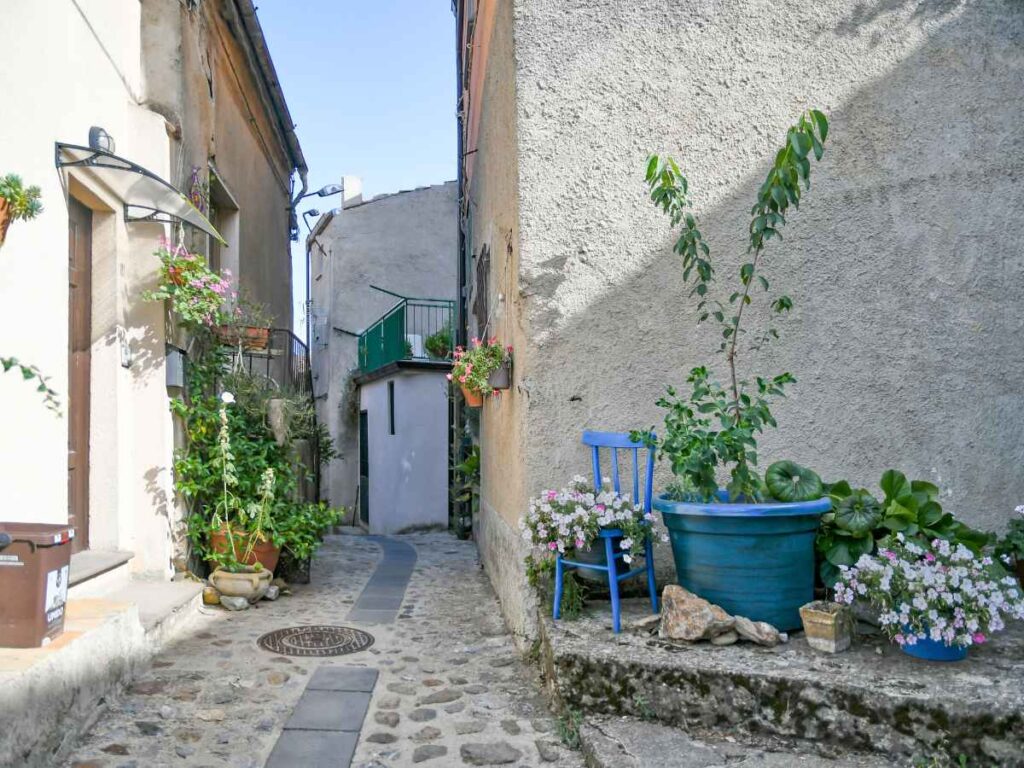
If the person who gave you that address is still alive, show them. Turn the screen around. Watch what happens to their face when they see a street they have not stood on in seventy years, rendered in daylight, sitting exactly where they left it. Record that, if you can do it without making it strange. There is no archive anywhere on earth that holds what is on their face in that moment.
I have looked at the door in Carolei. I have not stood in front of it. For years something I could never name kept me from booking the trip, and I have stopped trying to explain what it was, because whatever it was ended when my grandfather did. What is left is simpler and much more urgent: my grandmother still remembers the way. I would like to walk it with her memory while she is still here to correct me when I get it wrong.
And then, when you are ready, go. Not for the paperwork. Because standing on the street is the only part of this that cannot be done from a laptop — and because the people who left were never able to go back, and you can.
What the search is really about
The records matter. The manifests and the petitions and the ledgers in Italian cursive all matter, and this article has tried to be genuinely useful about them.
But the reason to do any of it is not the paperwork. It is that somewhere in your family there is a person who has been carrying a place inside them for sixty or seventy years — a street, a church, a door, a name for a hill that appears on no map — and has never once been asked to describe it in detail, because everybody assumed they would always be there to ask.
For the folk beliefs and household knowledge that came over in the same suitcases, read about malocchio and Italian protective traditions and the colpo d’aria. For what changed on this side of the ocean and what held, read Italian-American traditions: what changed and what stayed. And for the conversation this entire process depends on, read how to record family stories before they’re gone.
She left seventy years ago and can still give you the address. Nobody ever wrote it down, because she was always going to be there to remember it. That is the whole reason to start now, and it is the only part of this that has a deadline.
Who Still Knows the Way?
Record the town, the street, and the story before the last person who remembers is gone.
Which town did they come from? What was the church called? Who stayed behind? What was the surname before it was changed? The Italian Family Heritage Kit includes 133 guided pages and more than 120 prompts to preserve your family’s people, names, traditions, recipes, remedies, sayings, photographs, and memories.
Explore the Heritage Kit — $19.99Instant digital download. Print it and complete it with your family.
FAQ
How do I find my Italian ancestor’s town of origin?
Work in order of urgency rather than convenience. Begin by interviewing living relatives and recording what they say, because they are the only source in the entire process that can disappear. Then search your own family’s documents — passports, letters and envelopes, funeral prayer cards, baptismal records, the backs of photographs. From there move to ship manifests, which are usually the single most reliable record for identifying an exact comune, followed by naturalization files, census entries, death certificates and obituaries. Once you have a confirmed town name, Italian civil records through the Portale Antenati and the local comune become available to you.
Why is the ship manifest usually the best source?
Because manifests were generally completed in Italy, before departure, by officials who were themselves native Italian speakers — which removes most of the spelling and transcription errors common in documents created after arrival in North America. Manifests frequently record the exact town of birth or last residence rather than just a region, along with marital status, final destination, and often the name and address of the relative the passenger was joining. The widespread belief that names were arbitrarily changed at Ellis Island is largely a myth; manifests tend to be more accurate than later paperwork, not less.
What is the Portale Antenati, and is it free?
The Portale Antenati is the Italian government’s online archive of digitised civil registration records, operated by the Ministry of Culture. It is entirely free, requires no account, and contains tens of millions of scanned images of original birth, marriage and death registers, generally spanning the early 1800s through the early 1900s. Importantly, it functions as a browsable digital library rather than a searchable database — much of the collection is not name-indexed, so you typically need to know the comune and an approximate year and then read through scanned handwritten ledgers in Italian cursive.
What if I only know the region, not the town?
Knowing only a region such as Calabria or Sicily is extremely common and is not a dead end, but it does mean the town has to be narrowed down before Italian records become usable, since those records are organised by place rather than by surname. Ship manifests are usually the most productive next step because they tend to specify the actual municipality. Another underused approach is researching the immigrant community your family settled into locally — immigrants from the same town overwhelmingly clustered together in the same neighbourhoods, which means your grandparents’ neighbours are frequently a direct lead to the same comune.
How do I request records from an Italian comune?
Write to the Ufficio di Stato Civile of the comune, ideally in Italian, providing the full name of the person, an approximate date of the event, and the names of their parents if you have them. Requests by email are increasingly accepted, and a polite, specific, well-organised letter is far more likely to be answered than a vague one. For records predating civil registration, or where civil records were destroyed, the parish archive of the local church is the alternative avenue and should be approached separately.
Do I need to hire a professional genealogist?
Not to find your town of origin, in most cases. The core path described here — family interviews, household documents, ship manifests, naturalization files, then Antenati — is entirely accessible to someone working alone at no cost beyond time. Professional help becomes genuinely worthwhile in narrower situations: when records appear to have been destroyed, when a surname has been altered beyond recognition, when the research is being assembled to a legal standard for a citizenship application, or when you need certified and apostilled documents rather than simply the information itself.
What should I do first if my grandparents are still alive?
Stop reading and go ask them. Bring food, sit down properly, put your phone on the table face down and record the audio. Ask concrete physical questions — the name of the street, the name of the church, who stayed behind, how the surname was actually said in Italy — rather than open-ended ones like “tell me about the town,” which tend to produce very little. Everything else in this article can be done at any point over the next twenty years. That conversation cannot.

Marco Ricci is an Italian-Canadian writer and the grandson of Calabrian immigrants. He created Italian Family Traditions to document the customs, feast days, and family rituals Italian families carried from Italy to North America — and to understand what they actually meant. He is based in Montreal.