Italian Family Traditions
The Unwritten Rules of an Italian Kitchen
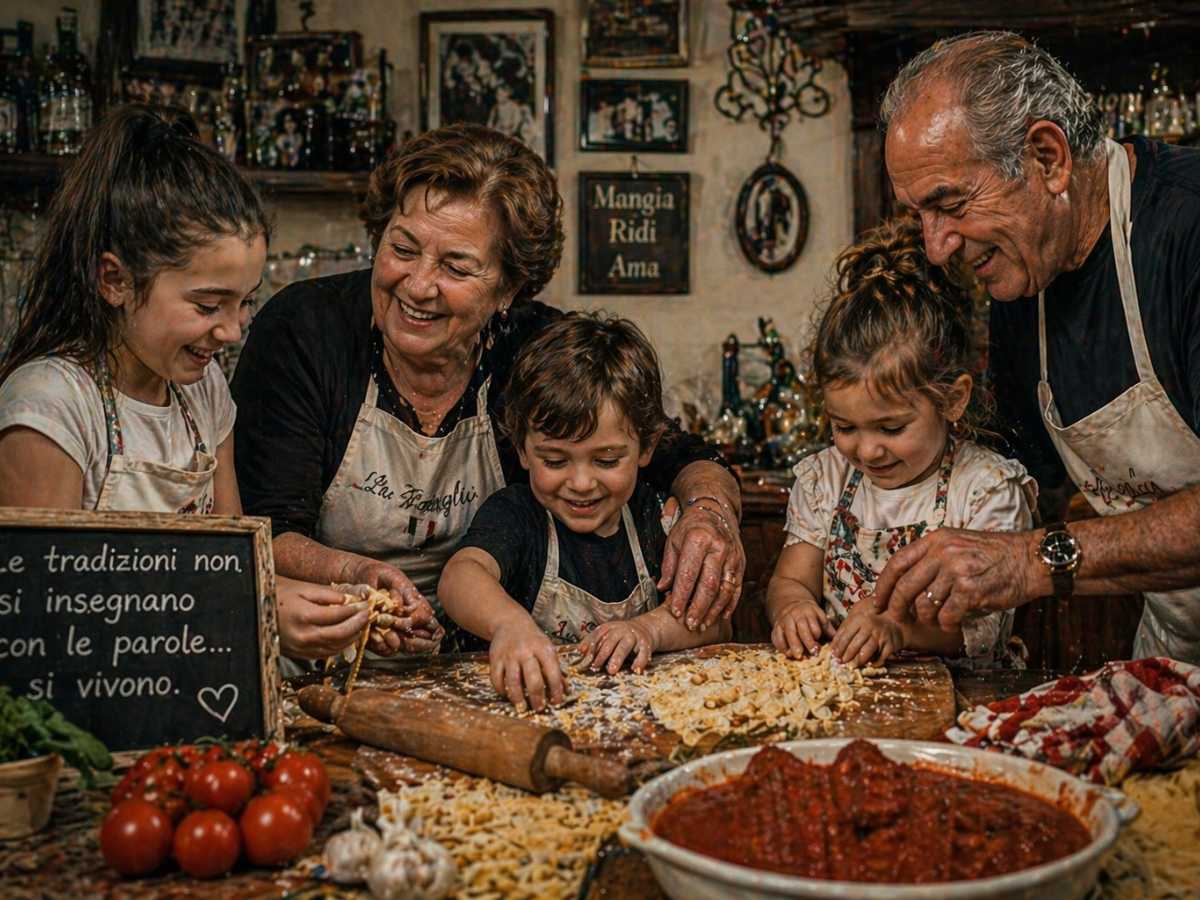
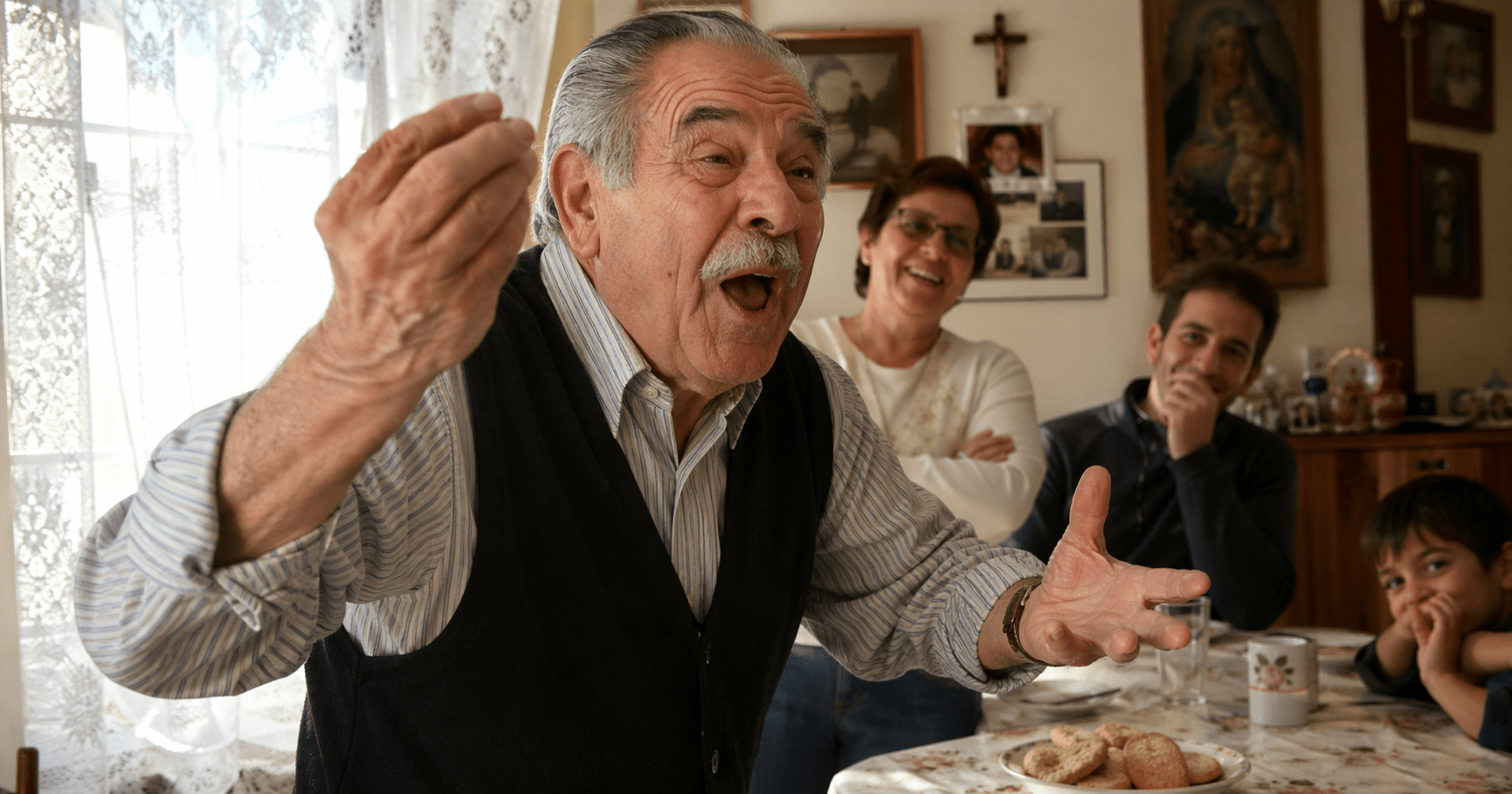
Nobody wrote them down. Nobody had to. The bread was always on the table. The sauce started at six in the morning. You sat where you were told and you did not get up. These were not preferences. They were the laws of a kitchen that had kept a family alive, and they crossed the ocean without losing a word.
8 minute read
On Sundays, the smell came first.
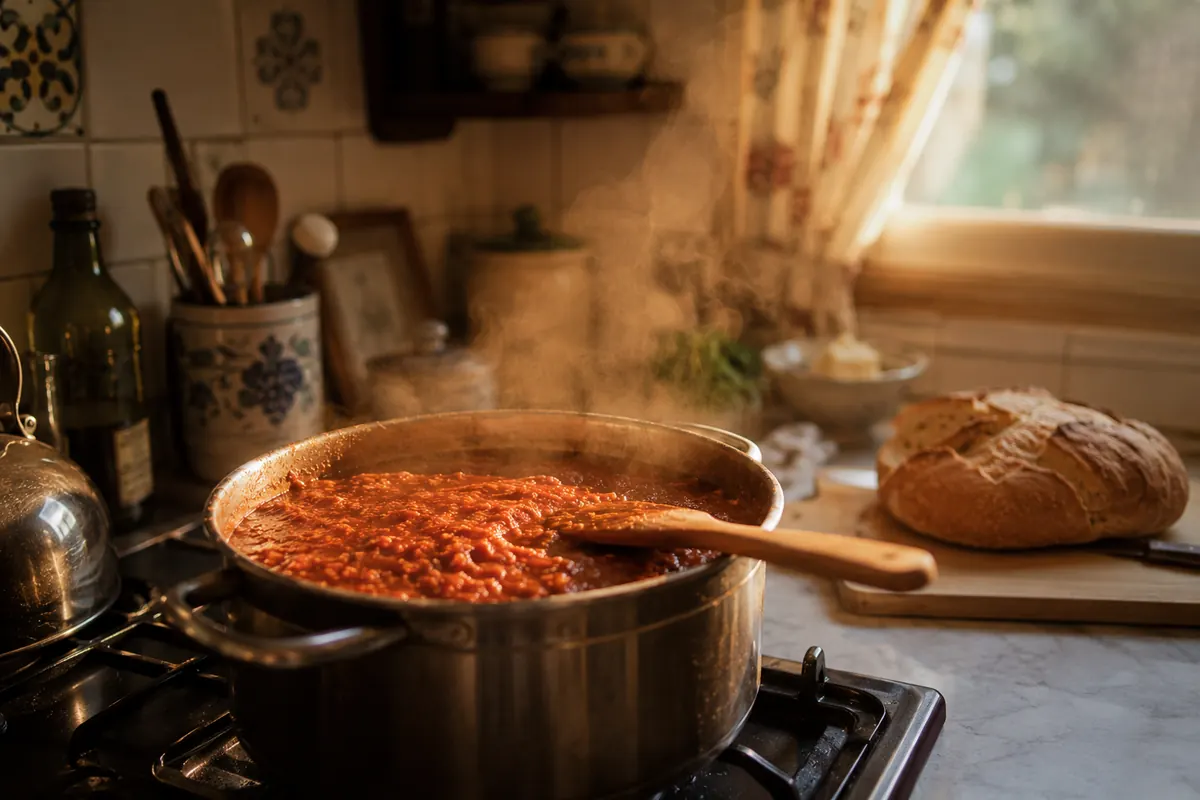
Before anyone was awake, before the house moved, before the light had fully come through the windows — the sauce was already on. My grandmother started it at six in the morning. Not because the recipe required it, though it did benefit from the hours. Because Sunday sauce was not a meal. It was an event, and it began in the dark, and it filled the entire house with a smell so specific and so deeply embedded in my memory that I could be blindfolded in any kitchen on earth and know immediately whether it was right.
Every Italian family had rules like this. Rules about food, about the table, about who touched what and when and how. They were never written down. They were never explained. They were simply enforced, with a consistency that bordered on religion, by people who understood — even if they never said it — that these rules were not about food at all. They were about survival, about respect, and about the world these people had come from.
The Short Version
The unwritten rules of an Italian kitchen — bread always on the table, assigned seats, no leaving until everyone is finished, nothing wasted, sauce started at dawn on Sunday — were not quirks. They came from a world where food was survival, where every jar preserved in the cantina was insurance against hunger, and where the table was the one place the family was whole. These rules crossed the ocean with the families who kept them, and they refused to soften.
What’s in this guide
- Where the rules came from
- Bread — always on the table, never wasted
- The Sunday sauce
- The table rules — sit down, stay down
- Nothing wasted — every last bite
- The cantina — jars, cans, and the art of preserving
- Who ruled the kitchen
- Pasta, cheese, and the things you never do
- What they carried across the ocean
- FAQ
Where the rules came from
To understand the rules of an Italian kitchen, you have to understand the world that made them — a world where food was not abundant, and wasting it was not a habit but a sin.
My grandparents came from Calabria, from a life built on the land. They grew what they ate. They raised what they could. They preserved what the season gave them because there was no guarantee the next season would give enough. Every tomato that became sauce, every pepper that was dried, every piece of pork that was cured into soppressata — these were not luxuries. They were the difference between eating in February and not.
When they left Italy and came to Canada, they brought almost nothing with them — my grandfather arrived with five dollars in his pocket. But they brought the knowledge. How to grow food in a small backyard. How to preserve it. How to stretch a meal. How to waste nothing. And they brought the rules that governed all of it — rules forged in scarcity, tested by generations, and enforced with an authority that did not need to explain itself because the reason was obvious to anyone who had ever been hungry.
That is the context for everything that follows. These rules were not about manners. They were about making sure no one at the table went without.
Bread — always on the table, never wasted
There was never a question about whether bread would be on the table. Bread was on the table. That was the law, and it preceded every other element of every meal.
Before the plates. Before the food. Before anyone sat down. The bread was there. It was not a side. It was not optional. It was the foundation of the meal — the thing you reached for first, the thing that soaked up the sauce, the thing that made sure you ate enough even if nothing else was plentiful that day.
And it was never, ever wasted. Stale bread became breadcrumbs. Hard bread got soaked and turned into something else. Throwing bread away was unthinkable — not because of some abstract value about waste, but because bread was sacred. Literally sacred. The body of Christ. You did not throw it away any more than you would throw away a prayer. And if a piece of bread accidentally fell on the floor, you picked it up and you kissed it. That was the rule.
Using bread to wipe the last of the sauce from the plate — fare la scarpetta, making the little shoe — was not rude. It was respect. It meant the food was good enough to chase, and the plate was clean enough to prove it.
The bread was not a side dish. It was a promise — that no one at this table would go without.
Love these Italian traditions?
Get new stories about Italian customs, folk beliefs, and family traditions — plus our free printable calendar of the Italian year.
The Sunday sauce
Sunday sauce was not a recipe. It was a ritual — one that began in the dark and ended only when every person at the table had eaten their fill.
My grandmother started it at six in the morning. The pot went on, the tomatoes went in, and the house began to fill with a smell so deep and so slow it seemed to come from the walls themselves. By the time the family gathered for Sunday lunch, the sauce had been on the stove for hours — unhurried, patient, building in richness the way only time can build.
Nobody rushed it. Nobody was allowed to rush it. And nobody touched it while it was cooking — that was the cook’s domain, and the cook’s authority over that pot was absolute. You could stand in the doorway and breathe it in, but you did not lift the lid. You did not stir unless told. You waited.
The Italian Sunday dinner was the centrepiece of the week — the one meal where every seat was filled, every dish was serious, and the table became the place where the family proved, without saying it, that it was still together and still whole.
The sauce started at six. By noon, you could smell it from the street. By the time it reached the table, it had been loved for hours.
The table rules — sit down, stay down
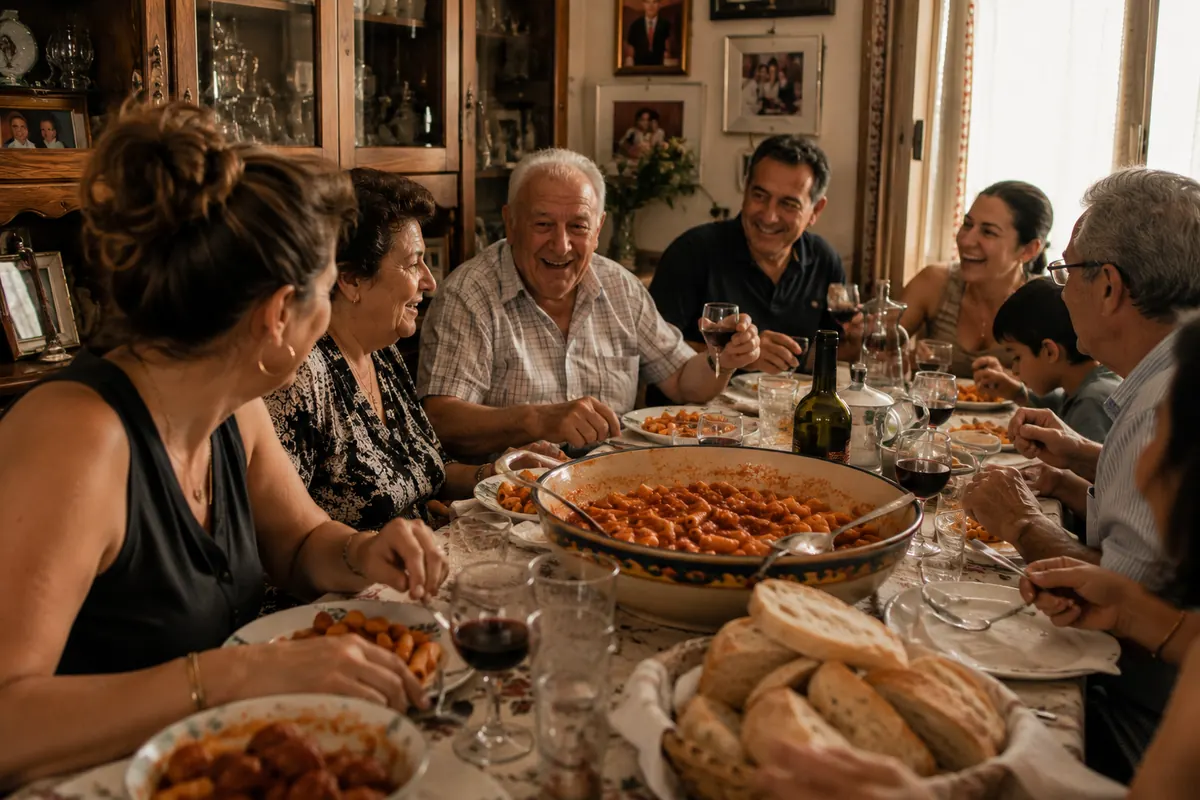
In an Italian home, the table was not a place you visited. It was a place you stayed — and where you sat was not up to you.
Everyone had a seat. Not vaguely, not approximately — an actual, assigned position that did not change. My grandparents sat where they always sat. My parents sat where they always sat. I sat where I was told. There were practically name tags. This was not a seating chart for a wedding. It was the daily architecture of a family table, and it was not negotiable.
And once you sat, you stayed. You did not get up. You did not leave before everyone was finished. You did not take a phone call, grab something from the other room, or excuse yourself unless the house was on fire and possibly not even then. The meal was not a task to complete. It was a commitment to be present, and leaving early was an insult — to the food, to the cook, and to the family sitting around you.
This was the rule I remember most clearly because it was the one I most wanted to break as a child, and the one I now understand most deeply as an adult. They were not keeping me at the table for discipline. They were keeping me at the table because the table was where the family existed. Leave the table and you leave the family — even for five minutes. And that was not allowed.
Nothing wasted — every last bite
Waste was not a habit an Italian kitchen tolerated. It was the enemy — and every leftover, every scrap, every ageing vegetable was a battle to be won.
My grandparents looked for ways to save pennies the way other people look for shortcuts. Not because they were cheap — they were extraordinarily generous — but because they came from a world where nothing was guaranteed, and wasting food was the same as wasting the labour that grew it, the hands that cooked it, and the luck that provided it.
Leftover bread became breadcrumbs or panzanella. Vegetable scraps went into broth. Overripe tomatoes became sauce. Meat bones simmered for hours. Nothing was thrown away that could be turned into something else, and the ingenuity of turning almost-nothing into a meal was itself a source of pride. This was not poverty cooking for the sake of aesthetics. This was cucina povera — the kitchen of the poor — and it was brilliant precisely because it had to be.
Every last bite was eaten. Every plate was cleaned. And if you did not finish, the question was not “are you full?” It was “what’s wrong?” Because in a home where food was love, leaving food on the plate was leaving love on the plate. And that was personal.
A note worth keeping — The Italian horror of waste was not moralism. It was memory. These were people — or the children of people — who had known what it felt like to not have enough. The rules about finishing your plate, saving every scrap, preserving every tomato were the scar tissue of that experience, hardened into habit and passed down as law.
The cantina — jars, cans, and the art of preserving
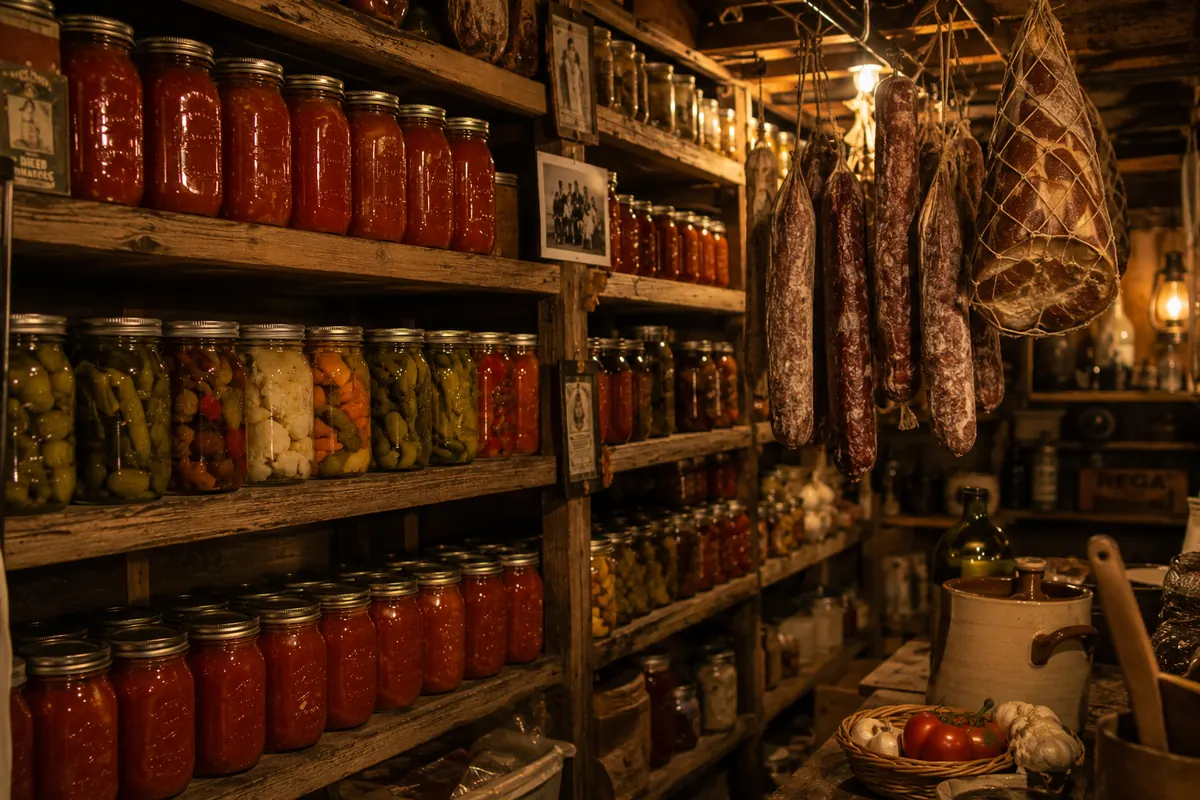
The cantina was not a room. It was a vault — a basement full of the year’s insurance against scarcity, lined with mason jars and hanging meats that smelled like patience.
My grandparents preserved everything. Tomato sauce in mason jars, sealed and stored by the dozens. Peppers roasted and packed in oil. Eggplant layered with garlic. Olives cured in brine. And hanging from the beams — the soppressata, the capocollo, the dried sausages that were my grandfather’s pride and obsession, tended daily with the same devotion he gave the garden.
This was the original pantry — the Italian dispensa — and it was stocked not from a store but from the land. The garden grew the tomatoes and peppers. The passata days in late summer turned crates of tomatoes into enough bottled sauce to last the winter. The curing season turned pork into salumi that hung for months, transforming slowly, watched over like children.
None of this was nostalgic when they did it. It was practical. It was how you made sure there was food in January. It was how you stretched a modest income into something that looked, on the table, like abundance. And it was the skill set they had brought from Italy — the extraordinary ability to live from the land, to grow and preserve and waste nothing — applied to a small backyard in Montreal with the same seriousness they would have brought to a farm in Calabria.
The cantina was not a pantry. It was proof — that a family who came with nothing could, through skill and stubbornness, build abundance from a backyard.
Who ruled the kitchen
In most Italian families, the kitchen belonged to the nonna. In mine, it belonged to my grandfather — and his authority over it was absolute.
This surprises people. The assumption is always that the Italian grandmother ran the kitchen and the grandfather sat at the head of the table and waited to be served. In my family, the nonno was the boss. He cooked with a passion and a precision that left no room for input. The sauce was his. The soppressata was his. The way things were done was his way, and if you wanted to help, you helped on his terms or you stayed out.
My grandmother cooked too — beautifully — but when my grandfather was in the kitchen, it was clear whose territory it was. He moved through it with the certainty of a man who had been doing this for decades, and every gesture — the way he stirred, the way he seasoned, the way he checked the meat — carried the weight of someone who took this work as seriously as any job he had ever held. More seriously, maybe. The port had been work. This was art.
The kitchen and the faith were never far apart. The same hands that stirred the sauce held the prayer cards. Our printable Italian saint prayer cards carry eleven of the saints these families turned to — each with a traditional prayer in Italian and English.
$9.49
Instant digital download
Pasta, cheese, and the things you never do
Every Italian kitchen had lines you did not cross — food rules so deeply held they felt less like preferences and more like natural law.
You did not put cheese on fish pasta. Ever. This was not a guideline. It was a boundary enforced with genuine alarm, as if adding Parmigiano to a plate of spaghetti alle vongole might cause the table itself to crack. The full explanation of why Italians never put cheese on seafood runs deep — it is about balance, about the integrity of the dish, and about respecting the ingredient enough to let it speak without drowning it.
Pasta was cooked al dente, always. Overcooked pasta was a failure of attention, and attention to food was not optional. In my family, pasta was broken in half for the children — a practical concession that horrified some Italian purists, but in our house it was simply what you did so a five-year-old could manage a plate of spaghetti without wearing most of it.
Everything was cooked with passion — not as a slogan, but as a visible fact. You could see it in the way food was handled, seasoned, tasted, adjusted. No one cooked carelessly. No one rushed. And if you were allowed to help — truly help, not just stand nearby — it was because you had earned the trust to take food seriously, and that trust was not given lightly.
What they carried across the ocean
The kitchen rules did not come from a cookbook. They came from Calabria, from Sicily, from Campania — from a life lived on the land, brought across the Atlantic in the minds and hands of people who had nothing else to bring.
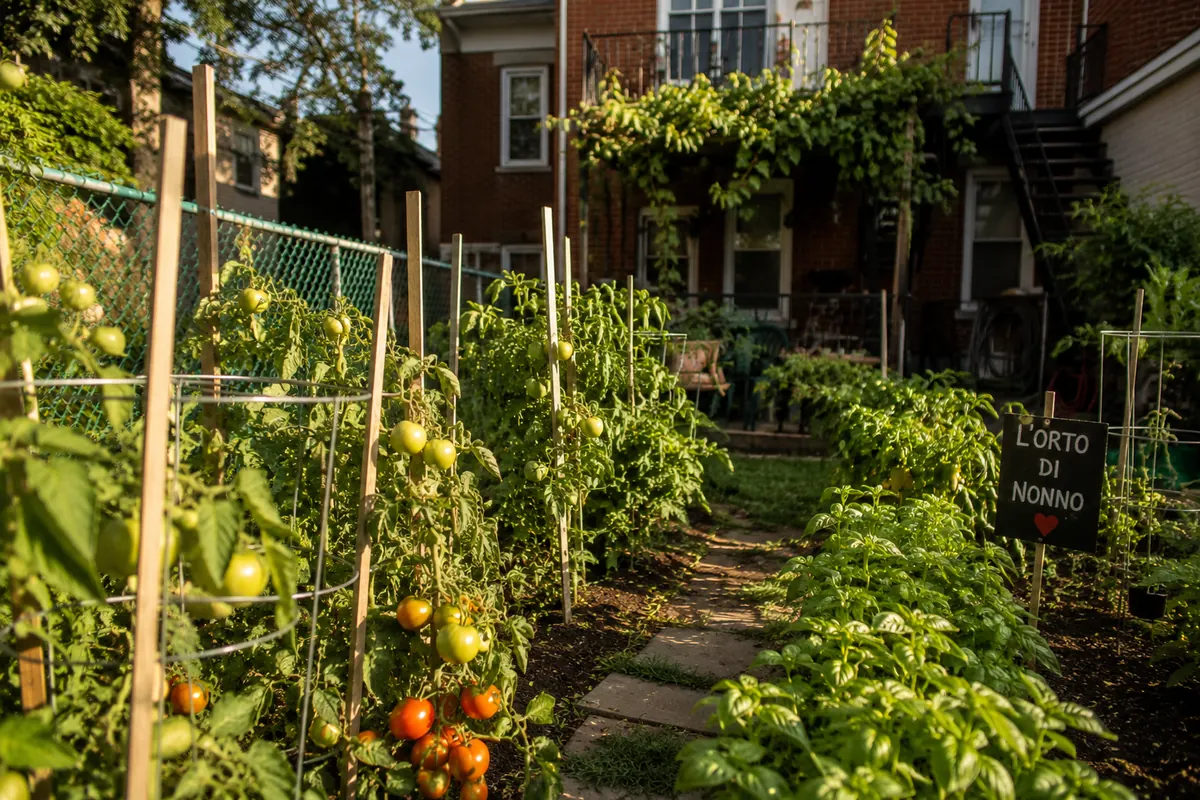
When my grandfather boarded a ship in 1956 with five dollars, he could not bring the farm. He could not bring the olive trees or the fig tree or the animals. But he brought the knowledge of how to grow food in a small space and preserve it to last. He brought the understanding that a garden is not a luxury — it is survival transplanted. And he brought the rules: how to cure meat, how to bottle sauce, how to stretch a meal, how to set a table that made a modest home feel like a kingdom.
These skills — this extraordinary ability to live from the land, to grow and preserve and transform — were the real inheritance. Not money. Not property. The knowledge that food could be grown from almost nothing, preserved against almost anything, and served with a pride that made scarcity look like abundance. That was what they carried.
And the rules survived because they worked. They worked in Calabria and they worked in Montreal. They worked in a farmhouse and they worked in a duplex with a small backyard garden. The rules did not need Italy. They just needed a family that remembered why they mattered.
They could not bring the land. So they brought the knowledge of how to live from it — and they rebuilt it, jar by jar, in a basement in Montreal.
In Summary
- Bread was always on the table — first, sacred, never wasted
- Sunday sauce started at six in the morning — the centrepiece of the week
- Seats were assigned and you did not get up until the meal was finished
- Nothing was wasted — every scrap had a second life, every plate was cleaned
- The cantina was stocked from the garden and the curing season — insurance against scarcity
- The kitchen had a boss — in many homes the nonna, in mine the nonno
- Cheese never went on fish pasta and pasta was always al dente
- The rules came from the old country — survival skills carried across the ocean and kept alive in a backyard in Montreal
FAQ
Why do Italian families have so many food rules?
The unwritten rules of an Italian kitchen come from a culture where food was survival, not just sustenance. For generations, especially in southern Italy, families lived from the land with limited resources, and the rules — no waste, preserve everything, respect every ingredient — were how they made sure the family was fed. These habits were carried into immigrant households and maintained with the same seriousness, even once scarcity was no longer the reality, because the memory of it was still alive.
Why is bread so important in Italian culture?
Bread holds both practical and sacred significance in Italian families. Practically, it was the staple that ensured everyone ate. Spiritually, it represents the body of Christ, and treating it carelessly — placing it upside down, throwing it away — was considered both unlucky and disrespectful. Many Italian families still treat bread as the most important item on the table, present at every meal without exception.
Why can’t you put cheese on fish pasta in Italy?
The rule against cheese on seafood pasta reflects a deep Italian principle about respecting ingredients. Cheese, especially strong aged cheeses like Parmigiano, overpowers the delicate flavour of fish and shellfish. For Italians, adding cheese to a seafood dish is not a matter of taste preference — it signals a misunderstanding of the food itself. The rule is enforced with genuine seriousness in most Italian households.
What is cucina povera?
Cucina povera, meaning “the cooking of the poor,” is the Italian tradition of creating nourishing, flavourful meals from humble, inexpensive ingredients. It is not a style chosen for aesthetics but one born from necessity — families made the most of what they had, wasting nothing and transforming simple ingredients like bread, beans, vegetables, and offcuts into dishes that are now celebrated as some of Italy’s finest cooking. The ingenuity of cucina povera is one of Italian food culture’s greatest legacies.
Why do Italians preserve so much food?
The tradition of preserving — bottling tomato sauce, curing meats, packing vegetables in oil, making jams and pickled goods — comes from the need to make seasonal harvests last through the winter. In Italy and in Italian immigrant homes, the cantina (basement or cellar) was stocked each year as a form of food insurance. The practice continues today in many families not from necessity but from pride, tradition, and the desire to eat food made by their own hands.
What were the unwritten rules in your family’s kitchen? The seat you always sat in, the thing you were never allowed to do, the rule nobody had to explain because everyone already knew — share it in the comments. These are the rules worth passing down.

Marco Ricci is an Italian-Canadian writer and the grandson of Calabrian immigrants. He created Italian Family Traditions to document the customs, feast days, and family rituals Italian families carried from Italy to North America — and to understand what they actually meant. He is based in Montreal.