Nonnamaxxing · Italian Family Traditions
Nonnamaxxing Is a Trend. Your Actual Nonna Is Not.
The internet wants to live like your grandmother. Walk more. Cook from scratch. Put the phone down. Tend a garden. Sit at the Sunday table for three hours and call it health. They are calling it nonnamaxxing—and they are not entirely wrong. They are simply missing the most important part.
My grandmother did not know she was practising longevity. She was practising Tuesday.
She walked because the market was close enough to reach on foot and because the car was for Sundays, appointments, and emergencies. She cooked from scratch because that was not a lifestyle choice. That was dinner. She spent three hours at the table on Sunday because the meal was not finished when the plates were empty. The meal was finished when the fruit had come out, the espresso had been made, somebody had started the same argument from last week, and everyone had finally said everything they did not need to say.
She tended the garden because she had carried the memory of Calabrian soil across an ocean and planted it behind a house in Montreal. The tomatoes were not a mindfulness exercise. They were a matter of honour. She wrapped what needed protecting, saved what could be saved, and treated a failed crop as a personal insult from nature.
She wore slippers because the floor was cold and the colpo d’aria was real. She reduced her screen time through the highly effective method of never having owned a screen. She did not wake up trying to optimize herself. She woke up and lived the day in front of her—repetitively, practically, socially, and without needing anyone on the internet to tell her that this was good for her nervous system.
Nonnamaxxing is a lifestyle trend. Your actual nonna is not a lifestyle. She is a specific person—with a specific name, a specific town, a specific recipe she never wrote down, and a specific way of saying your name that exists nowhere in writing.
The trend will be replaced by another trend. The person will not be replaced at all.
This is the part of nonnamaxxing that matters: not whether living like an Italian grandmother can make modern life healthier, but whether the sudden cultural fascination with “the nonna lifestyle” will remind us to turn toward the real women who carried that life before their knowledge disappears.
For the wider story of what Italian families carried across the ocean—and what changed after immigration—read Italian-American traditions: what changed and what stayed the same.
The Short Version
Nonnamaxxing is a viral wellness trend built around the daily habits associated with Italian grandmothers: cooking from scratch, walking, gardening, eating slowly, spending time with family, and living with less screen-driven urgency. Many of those habits are genuinely healthy. But the trend turns “the nonna” into a generic archetype while real grandmothers—with specific recipes, dialect words, migration stories, names, beliefs, and memories—are ageing. The most meaningful way to practise nonnamaxxing is not to imitate an aesthetic. It is to sit with the actual person, ask her everything, and preserve what she says.
Preserve the Real Nonna
Who was she before she was your grandmother? What was her maiden name? What did she leave behind in Italy? Which recipe lived only in her hands? The Italian Family Heritage Kit gives you the questions and space to record the person behind the traditions before the details disappear.
Explore the Italian Family Heritage Kit →What nonnamaxxing actually means—and why it arrived now
Nonnamaxxing combines nonna—Italian for grandmother—with the internet suffix “-maxxing,” meaning to optimize or maximize a particular quality. In practice, it means trying to live as much like an Italian grandmother as possible.
The basic rules are immediately recognizable: cook real food. Walk every day. Tend something living. Eat with other people. Stay connected to family and neighbours. Drink coffee without answering email. Put the phone away. Stop treating rest as something you have to earn.
The trend spread because modern wellness has become exhausting. There is always another metric to watch, another supplement to stack, another morning routine to copy, another device ready to tell you that you slept badly before you have even decided how you feel. Nonnamaxxing offers a gentler answer: perhaps health does not need to feel like a performance review. Perhaps the woman who cooked soup, walked to the shops, grew tomatoes, knew every person on the street, and sat down for lunch had already built a healthier life without calling it one.
That interpretation has appeared across major outlets, including HuffPost, Vice, and The Conversation. All three recognize why the idea has landed: people are tired of treating ordinary human life like a system that needs constant improvement.
My grandmother did not need a morning routine because morning already had a shape. Coffee. Open the shutters. Check the garden. Start whatever needed to be started for dinner. Call somebody. Complain about the weather. Continue living. The routine worked because it belonged to a life, not because it had been designed to optimize one.
Nonnamaxxing is appealing because it gives a name to something many people already suspected: that the older woman moving steadily through an ordinary day may have understood more about sustainable living than the culture that later tried to turn her habits into content.
That is true. But it is still only the surface.
Why the science behind nonnamaxxing is real
The habits associated with nonnamaxxing are not empty folklore. They align closely with the behaviours longevity and public-health researchers have studied for years: regular low-intensity movement, home-cooked food, plant-heavy meals, social connection, participation in family and community life, and a sense of purpose that continues into old age.
Italy is regularly counted among the world’s longest-lived countries, and Sardinia is one of the original regions associated with the Blue Zones idea. The pattern is not built around heroic workouts or perfect diets. It is built around lives that make movement, food, family, and community difficult to separate from one another.
The Conversation’s overview of nonnamaxxing points to the health value of home cooking, gardening, everyday movement, and meaningful social connection. None of these practices is dramatic. That is the point. They work because they are repeated for years inside a life that supports them.
The walk was rarely “exercise.” It was the way you reached the market, the church, your sister’s house, or the neighbour who had something you needed. The garden was not a wellness intervention. It was food, memory, pride, and a reason to go outside. The Sunday meal was not simply a Mediterranean-diet delivery system. It was a weekly declaration that the family was still a family because everyone had shown up.
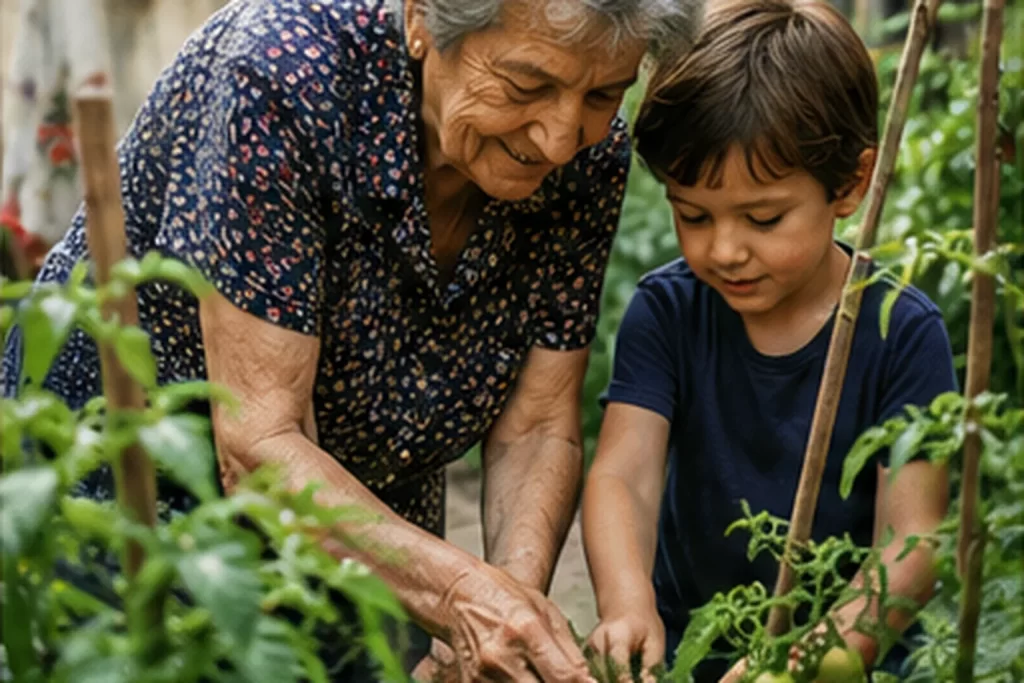
My grandmother did not walk for cardiovascular benefit. She walked to Maria’s house because Maria had tomatoes and my grandmother had basil, and there was an exchange to complete that had been completing itself every Tuesday for thirty years. The walk was incidental. The relationship was the point. A researcher might call that social connection. My grandmother would have called it Tuesday.
The same is true of the remedies Italian grandmothers used. Broth, chamomile, rest, warmth, food delivered to the sick person before they could ask for it—these were not isolated tricks. They belonged to a complete system of care built around presence.
And the Italian Sunday meal was never just about what was served. The table created continuity. Children listened while adults repeated stories. People argued and reconciled without officially doing either. Recipes were transmitted through watching. Family news travelled. The meal did not merely feed the body. It kept the family visible to itself.
The science confirms that these habits can support health. It does not fully explain why they mattered. The habits were effective because they were embedded in relationships, duties, memory, and belonging. Remove that context and you can reproduce the behaviour without reproducing the life.
The Nonnas movie—and the difference between celebrating and preserving
Nonnamaxxing did not appear in a cultural vacuum. It arrived alongside renewed affection for the Italian-grandmother figure, helped by the 2025 film Nonnas, starring Vince Vaughn, Susan Sarandon, Lorraine Bracco, and Talia Shire.
The film is based on the story of Jody Scaravella and Enoteca Maria, the Staten Island restaurant known for bringing real grandmothers into the kitchen to cook the food of their own families and regions. The emotional centre of that story is not simply that grandmothers cook well. It is that food carries a person, and once the person is gone, recreating the flavour can become a form of searching for them.
That is why the film and the nonnamaxxing trend speak to people. They offer a warm, generous vision of grandmotherly life: the kitchen, the authority, the stubbornness, the abundance, the feeling that food can hold a family together for one more meal.
The movie celebrates the idea of the nonna. The harder work begins after the credits, when you realize the real woman is still sitting at the table somewhere—with the recipe, the town name, the dialect, the story of the crossing, and no reason to believe anyone will ask before it is too late.
A culture can celebrate an archetype while losing the people who created it. That is the danger hidden inside the affection. We can admire “the nonna” in the abstract while failing to call our own.
What the trend misses—the specific nonna
Here is what bothers me about nonnamaxxing, and I say this as someone who grew up in a Calabrian family and writes about Italian heritage.
The trend turns the Italian grandmother into a concept. A set of behaviours. A soft-focus kitchen. A bowl of pasta. A linen apron. A lifestyle you can adopt.
But a nonna is not a category of woman. She is one woman.
She has a full name, including the maiden name that disappeared from most documents after she married. She came from an actual town—not “Calabria” or “Sicily” or “somewhere near Naples,” but a place with a church, a road, a view, and a word she used for home. She had a mother whose habits shaped her, a father whose sayings survived in her mouth, and a life before you existed that may be almost completely unknown to you.
She had a recipe that was never only a recipe. It was a sequence of movements: the way she held the knife, the moment she lowered the heat, the texture she looked for before deciding something was ready. She had a nickname that belonged to the family and made no sense outside it. She had words in dialect that nobody younger could spell. She had fears, rules, remedies, saints, griefs, and stories she may never have told because nobody asked the right question.
While the internet is busy optimizing a generic nonna lifestyle, the real nonnas are disappearing one at a time. Each one takes something different: a recipe nobody measured, a migration story nobody recorded, a saying nobody translated, a malocchio ritual nobody learned properly, a cornicello whose history nobody asked about, a photograph full of unnamed people.
Can you write your grandmother’s maiden name without looking it up?
Can you name the exact town she came from?
Can you make her sauce from written instructions that another person could follow?
Can you describe what her kitchen smelled like at six in the morning on Sunday?
Can you say your own name the way she said it?
These details feel permanent because they have existed for your entire life. They are not permanent. The voice softens first. Then the face loses its sharpness. Then the recipe becomes “something like this.” Then a whole person becomes “your great-grandmother”—a title instead of someone who once stood in a kitchen and knew exactly how much salt the pot needed.
A Note Worth Keeping
Every habit nonnamaxxing celebrates—the slow cooking, the garden, the walk, the Sunday meal—was never merely a practice. It was carried by a person. When the person is gone, the practice becomes a memory. When the memory is no longer attached to a name, it becomes an aesthetic. Preservation means keeping the name attached.
Love these Italian traditions?
Get new stories about Italian customs, folk beliefs, and family traditions—plus our free printable calendar of the Italian year.
The real nonnamaxxing—what the word should mean
If you genuinely want to practise nonnamaxxing, do not begin by copying the habits of a generic Italian grandmother. Begin by preserving the habits, recipes, stories, and voice of your own.
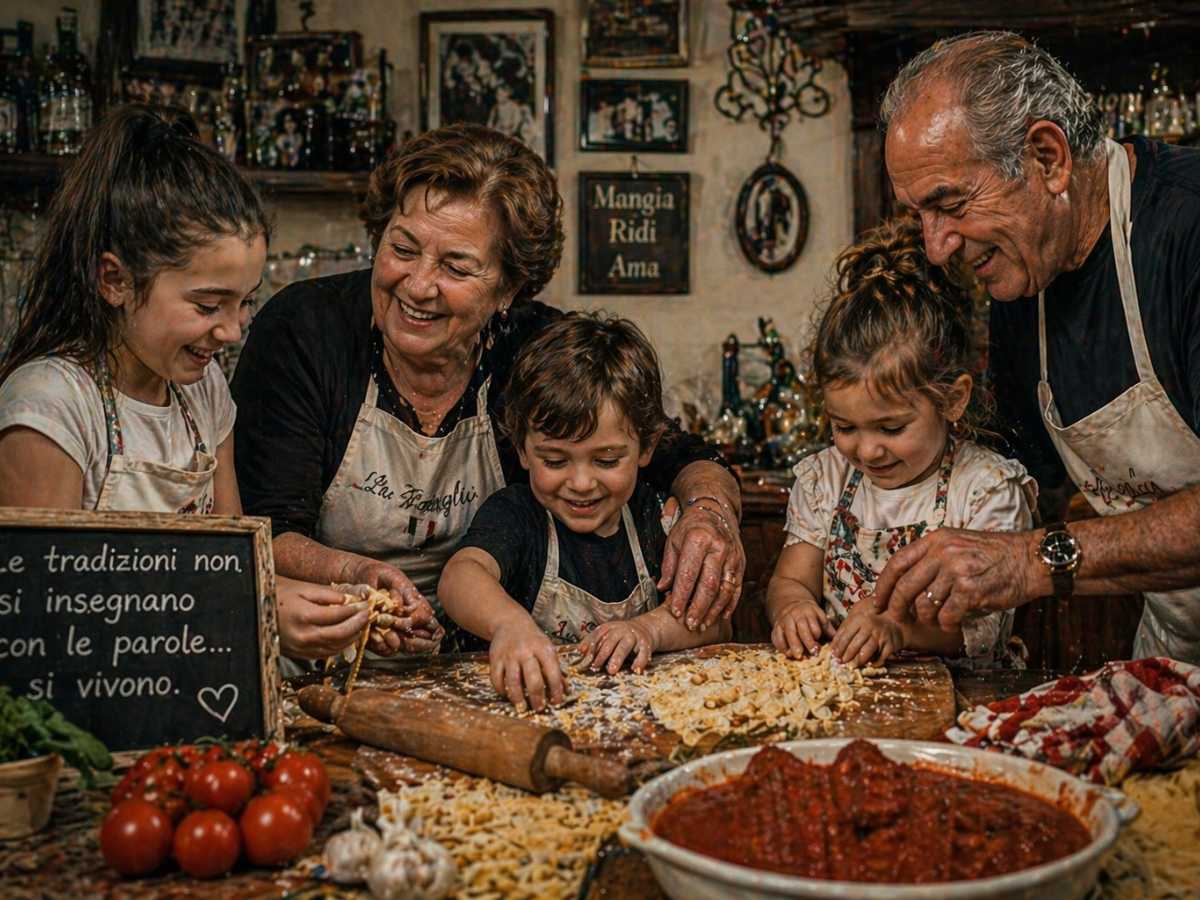
The real nonnamaxxing is not making pasta from scratch because the algorithm called it a longevity habit. It is standing beside the woman who made it your entire life and saying: Show me. Do not explain it from the chair. Let me watch your hands.
The real nonnamaxxing is not taking a passeggiata because you need more steps. It is walking with her at her pace and asking what the street in her town looked like, where she went as a girl, and what she still sees when she closes her eyes.
The real nonnamaxxing is not reducing screen time. It is using the phone differently—calling her, pressing record, setting it face-down on the table, and capturing the voice that your family will one day want more than any photograph.
The real nonnamaxxing is not gardening because it might reduce stress. It is asking what she planted first after immigration, what failed in the Canadian winter, what she wrapped in burlap every November, and why she refused to let it die.
The real nonnamaxxing is not recreating a three-hour Sunday lunch for the aesthetic. It is staying at her table long enough for the real conversation to begin—the one that only starts after the plates have been cleared, after the espresso, after an hour of talking about nothing.
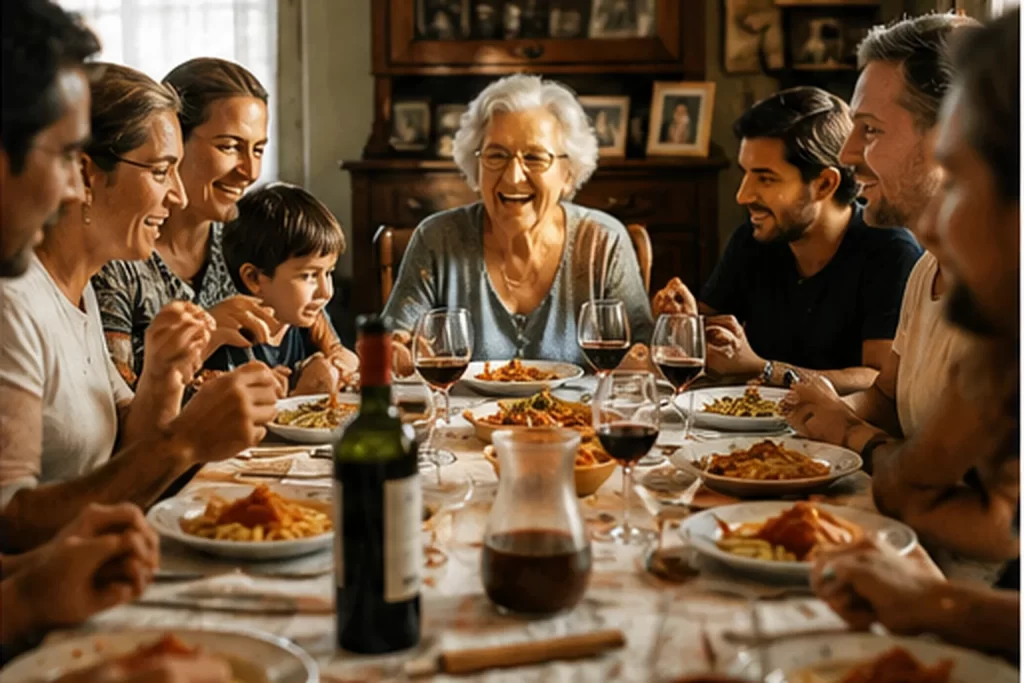
You do not inherit a family tradition by admiring it. You inherit it by being present while someone still knows how to do it. You watch. You ask. You repeat it beside them. You write down what they say. The tradition becomes yours because the person had time to give it to you.
The trend describes a life worth learning from. Heritage asks a harder question: who gave that life to you, and what will remain of her when imitation is no longer possible?
What to do this Sunday
If this article made you think of your nonna—or your mother, your zia, or whoever in your family holds the oldest stories—do not leave the feeling inside the article.
Call them. Choose a date. A real date, not “sometime soon.” Bring food, because an Italian does not sit down for something important without eating.
Bring your phone. Not to scroll. To record. Ask permission, press record, and place it face-down so the conversation can become natural again.
Begin with the easiest question:
What was the exact name of the town our family came from—and what did it look like?
Then let her answer. Do not rush. Do not correct the sequence. Do not fill every silence. The most valuable part of the story may be the thing that comes after the pause.
- Ask for her full name, including her maiden name
- Ask what she remembers about leaving—or what her parents told her
- Ask what her mother cooked when someone was sick
- Ask which tradition the family must never stop
- Ask her to show you one recipe instead of describing it
- Ask what nobody has ever asked her before
Then go home and write it down that night. Not tomorrow. You will lose details by tomorrow that feel perfectly secure right now.
For a complete list of prompts, use our guide to recording family stories before they disappear.
If Your Nonna Is Gone
Call your mother. Call your aunt. Call the oldest cousin. Each person holds a different piece of the same story. One remembers the recipe. One remembers the town. One knows the maiden name. One has the photograph with writing on the back. A family story can survive the loss of one person. It cannot survive nobody asking the next person to carry it.
My grandmother did not know she was practising longevity. She was practising Tuesday.
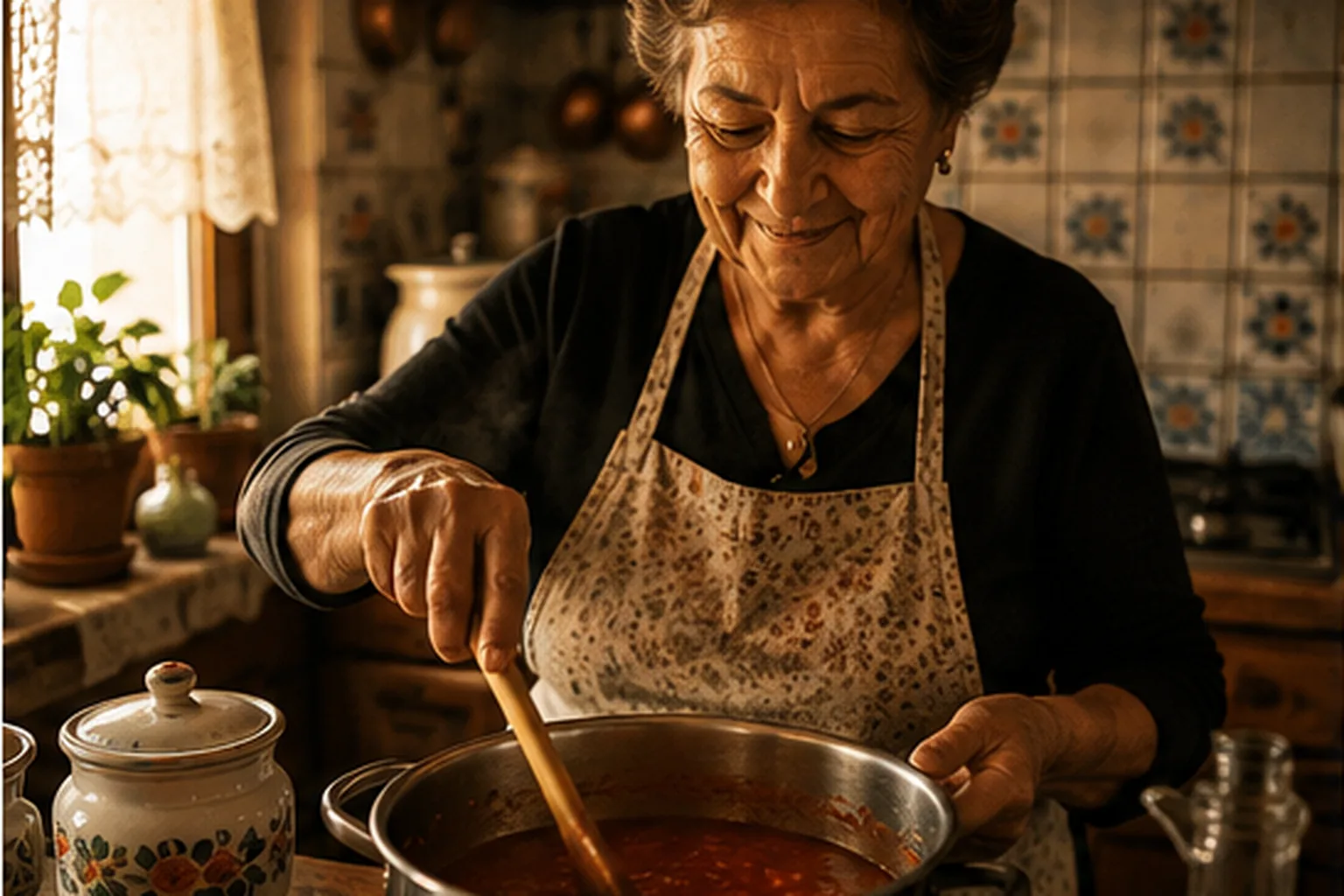
That is still the best answer to nonnamaxxing. The life was never powerful because it had been optimized. It was powerful because it had been repeated, shared, and carried by a specific person for long enough to become the shape of a family.
The garden mattered because she planted it. The sauce mattered because her hands knew it. The table mattered because she was sitting there. The walk mattered because there was somebody at the other end of it.
You can borrow the habits. You can recreate the meal. You can grow the tomatoes. You can put away the phone. Those may all be good things.
But first, call the woman.
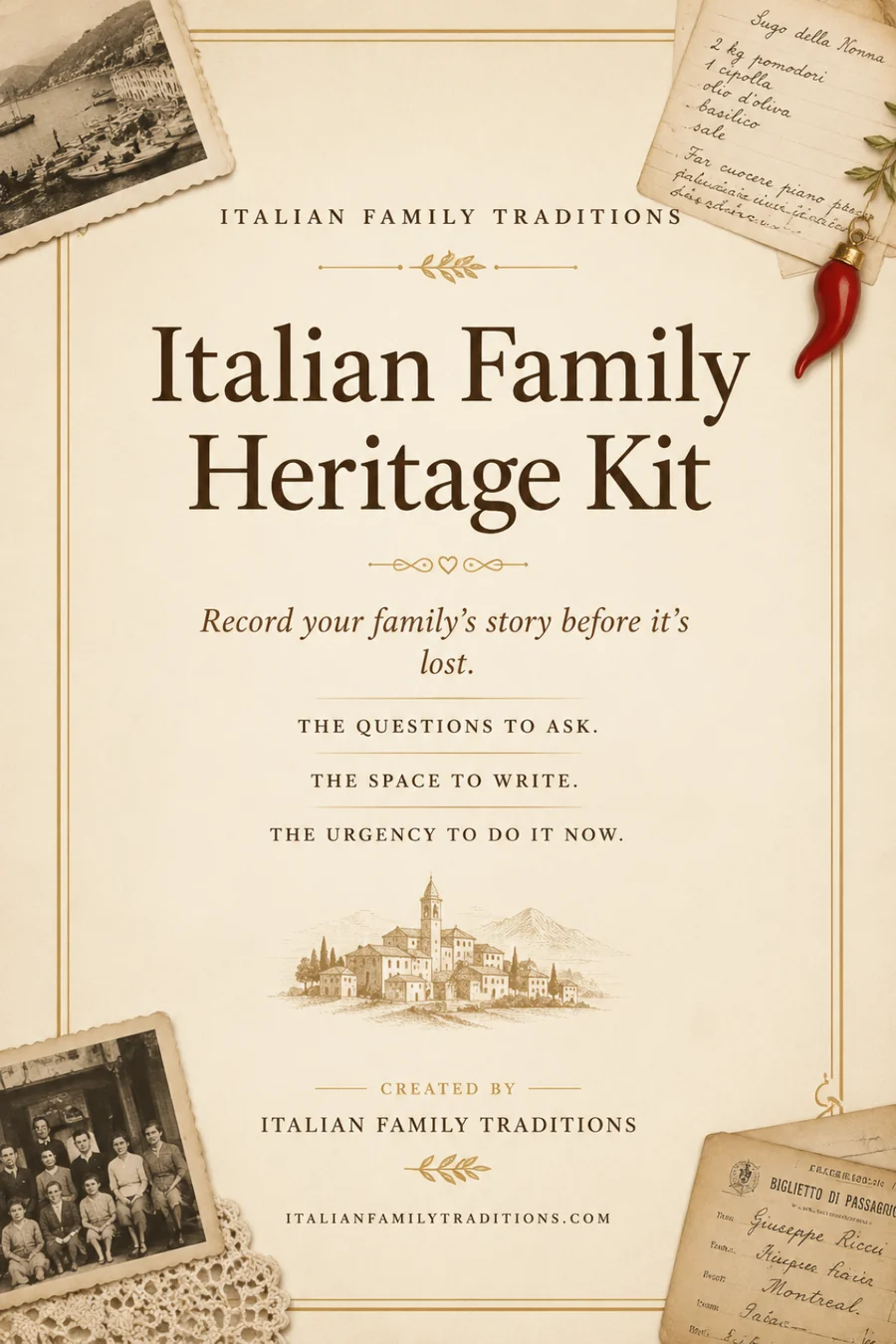
The Trend Celebrates a Lifestyle
This book preserves the person behind it.
The Italian Family Heritage Kit includes 133 guided pages and more than 120 prompts to preserve your family’s people, names, migration stories, recipes, traditions, remedies, sayings, photographs, and memories—plus a letter to the generation that comes next.
Explore the Heritage Kit — $19.99Instant digital download. Print it and complete it with your family.
For more on the real people and traditions behind the trend, read our portrait of the Italian nonna, the remedies she trusted, and the Italian superstitions families carried across generations.
FAQ
What does nonnamaxxing mean?
Nonnamaxxing combines nonna, the Italian word for grandmother, with the internet suffix “-maxxing,” meaning to maximize or optimize something. It describes adopting habits associated with Italian grandmothers, such as cooking from scratch, walking daily, gardening, eating long family meals, reducing screen time, and prioritizing community and real-world relationships.
Why did nonnamaxxing become popular?
Nonnamaxxing became popular partly because people are exhausted by highly optimized modern wellness culture. The trend offers a simpler alternative built around ordinary habits: real food, regular movement, family connection, gardening, rest, and less time online. Renewed cultural interest in Italian grandmothers, including the 2025 film Nonnas, also helped make the idea recognizable and emotionally appealing.
Is nonnamaxxing actually healthy?
Many habits associated with nonnamaxxing are supported by health and longevity research. Regular walking, home-cooked meals, plant-heavy eating, gardening, strong social ties, and continued participation in family and community life are all associated with healthier ageing. The important distinction is that these habits traditionally existed inside relationships and routines rather than as isolated wellness tasks.
Is nonnamaxxing only for Italian people?
The wellness habits are universal, and people from many cultures recognize a similar grandmother figure. But the traditions underneath Italian nonnamaxxing—the dialect, migration history, naming customs, feast days, recipes, malocchio beliefs, cornicello, and regional family practices—are culturally specific. Anyone can learn from the lifestyle. Italian families also have an opportunity to preserve the heritage behind it.
What is the difference between nonnamaxxing and the Mediterranean diet?
The Mediterranean diet focuses mainly on eating patterns. Nonnamaxxing is broader. It includes food, but also everyday walking, gardening, slower routines, family meals, intergenerational relationships, community connection, and less screen-centred living. It is closer to a whole pattern of life than a diet plan.
How can I practise real nonnamaxxing?
Begin with the actual older people in your family. Ask your grandmother, mother, aunt, or oldest relative about the family’s town, migration story, recipes, remedies, dialect, names, and traditions. Record the conversation with permission, watch them demonstrate recipes instead of only describing them, and write everything down while the details are fresh.
How do I preserve my nonna’s recipes and stories?
Ask specific questions, record audio with permission, photograph recipe cards and family documents, identify everyone in old photographs, and write down the story the same day. The Italian Family Heritage Kit provides more than 120 guided questions and structured pages for recipes, people, names, traditions, remedies, sayings, photographs, and a letter to the next generation.
What if my nonna has already passed away?
Talk to your parents, aunts, uncles, and older cousins. Each person may remember a different part of the story. Look for photographs, letters, passports, prayer cards, recipe notes, recordings, and writing on the backs of photographs. An imperfectly remembered story is still worth preserving, especially when several relatives can help reconstruct it together.
Marco Ricci is an Italian-Canadian writer and the grandson of Calabrian immigrants. He created Italian Family Traditions to document the customs, feast days, and family rituals Italian families carried from Italy to North America — and to understand what they actually meant. He is based in Montreal.