Italian Family Traditions
Italian Prayers Every Family Knew (in Italian and English)
The prayers said before meals, at bedside, and around the rosary — the Ave Maria, the Padre Nostro, and more, in Italian and English, the way families passed them down.
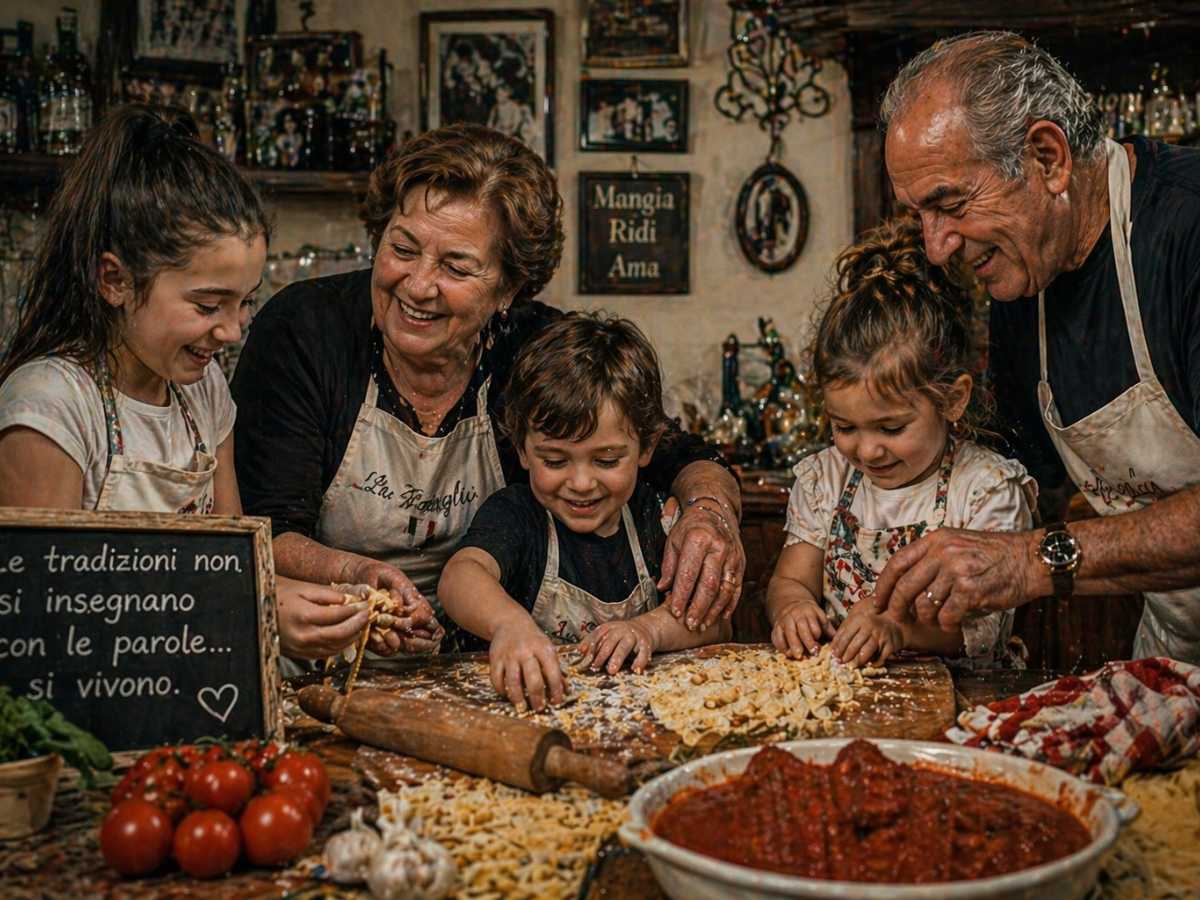
Before anyone in an Italian family could read, they could pray. The Italian prayers came first — learned by ear, in the rhythm of a grandmother’s voice, long before they were ever seen on a page. The Ave Maria murmured over rosary beads. The Padre Nostro said together before Sunday lunch. The quick segno della croce made passing a church, or before a long drive, or when the ambulance went by. These were not occasional prayers. They were the soundtrack of daily life, and they were handed down the way everything important was handed down: by repetition, by example, and by heart.
For many in the diaspora, these prayers are among the most powerful links back to who our families were. Here are the Italian prayers every family knew — in Italian and in English, side by side — so you can pray them, teach them, and keep them.
The Prayers Families Knew By Heart
Common Italian Prayers
The prayers said before meals, at bedside, and around the rosary — in Italian and English, side by side.
Wordings vary by region and family — these are the most widely known forms. Say them the way your family did.
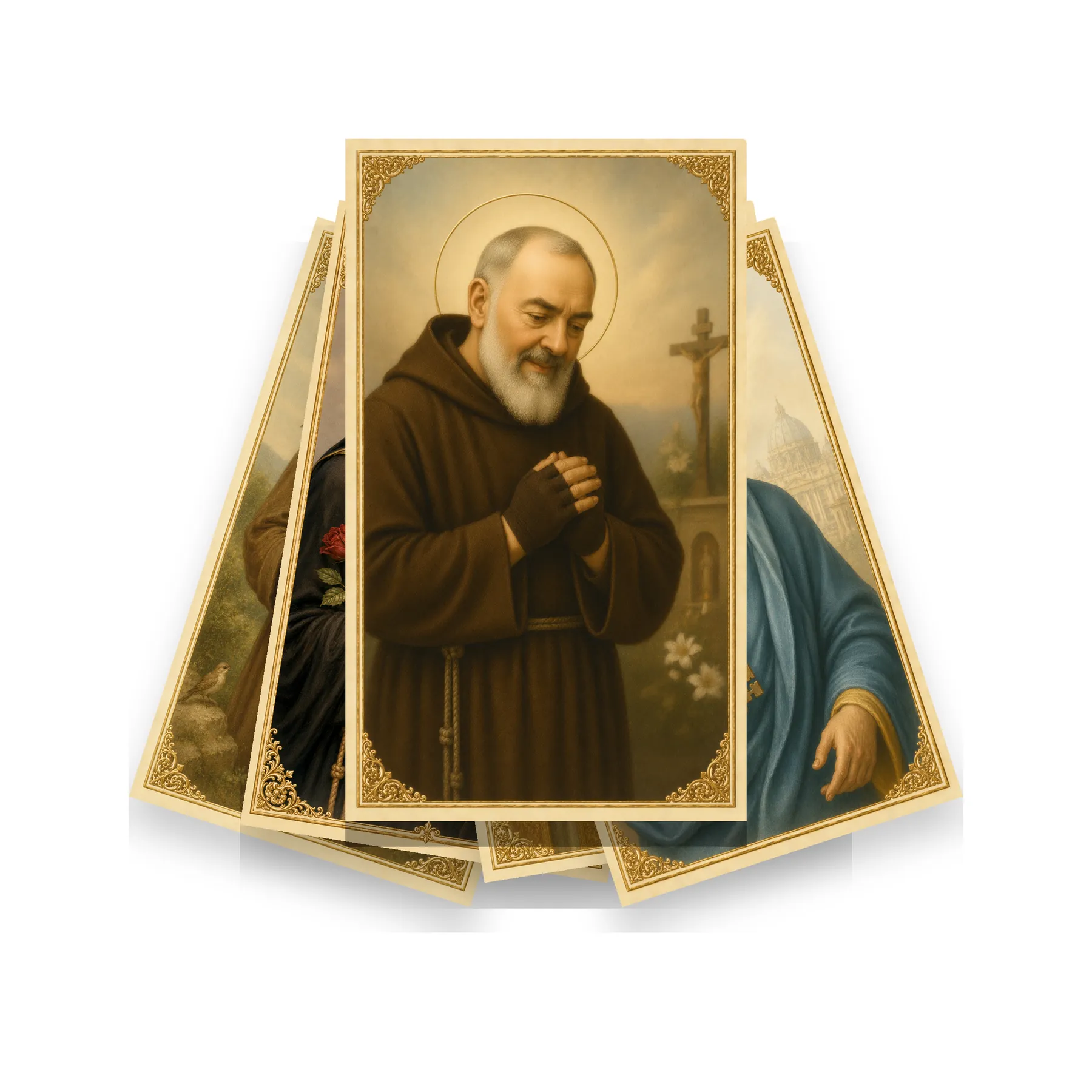
Keep the Prayers Close
Italian Saint Prayer Cards
Printable prayer cards to keep in your missal, teach your children, or give as a gift.
See the Prayer Cards — $9.49 →The prayers at the heart of Italian family life
A handful of prayers formed the backbone of Italian devotion, repeated so often they became second nature:
- The Segno della Croce (Sign of the Cross) — the beginning and end of every prayer, and a reflex in a hundred daily moments.
- The Padre Nostro (Our Father) — the prayer Christ himself taught, said at table, at Mass, and on the rosary.
- The Ave Maria (Hail Mary) — perhaps the most beloved of all in Italian homes, repeated on the beads and whispered in every kind of need.
- The Gloria (Glory Be) — the short prayer of praise that punctuates the rosary.
- The Angelo di Dio (Guardian Angel prayer) — the first prayer many children learned, said at bedtime.
- Grace before meals — the blessing over food, especially at the Sunday table.
Before anyone in the family could read, they could pray. The prayers came first — learned by ear, in the rhythm of a grandmother’s voice.
The rosary: the prayer of the Italian home
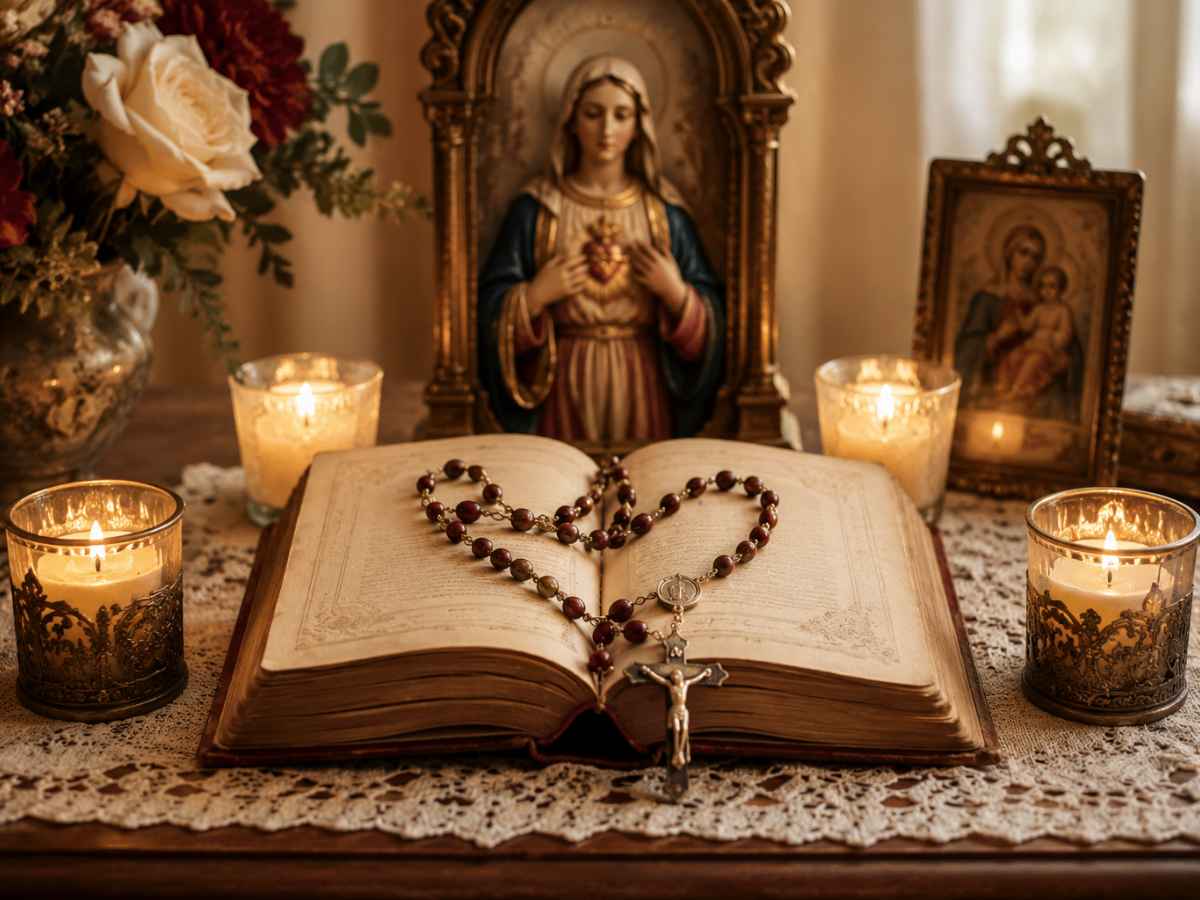
No devotion was more central to Italian family life than the rosary (il rosario). Led most often by the grandmother, prayed in the evening, during Lent, in the month of May (Mary’s month), and at every wake, the rosary strung the great prayers together — the Padre Nostro, ten Ave Marias, the Gloria, repeated through five decades. For many, the sound of the rosary in Italian, voices overlapping slightly, is the single most vivid memory of family faith. It was prayer as rhythm, as gathering, as the family turning toward God together. The rosary was also central to Italian prayers for the dead, prayed at the bedside and the wake.
Keep the Prayers Close
Italian Saint Prayer Cards
A printable set of the best-loved Italian saints and their prayers — beautifully designed to keep in your missal, teach your children, or give as a gift. The prayers your family knew, ready to print.
Get the Prayer Cards — $9.49 →Instant digital download — print at home.
Passing the prayers on
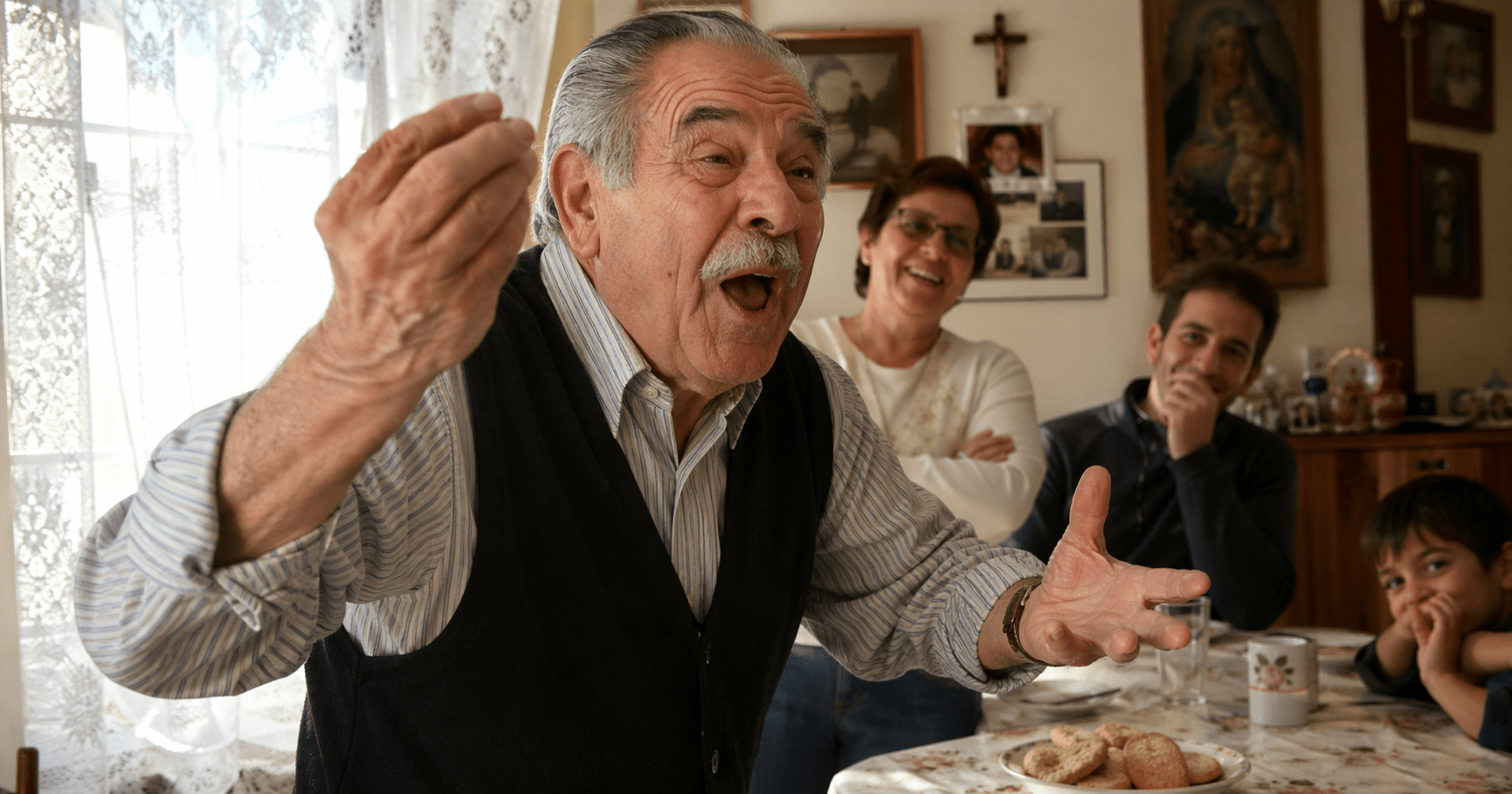
These prayers survived centuries not because they were written down, but because they were said — parent to child, grandmother to grandchild, generation to generation. That is also how they can be lost: in a single generation that never quite learned them. If you grew up hearing the Ave Maria in Italian but never learned the words, or want your own children to know the prayers your grandparents knew, the side-by-side text above is a place to begin. Learn them in English, learn them in Italian, and say them often enough that they become, once again, something known by heart. You might also explore the patron saints your family prayed to, and the saints every Italian family knew.
Free Printable
The saints, the feast days, the whole Italian year.
Join the list for a free printable Italian family calendar — every patron saint and feast day, mapped across the year.
The prayers came first, before reading, before everything — learned by ear in the voice of someone who loved you. They are among the truest things our families handed down. Learn them, say them, teach them to your children in Italian and in English, and keep the words alive in the family the way they were always meant to be kept: by heart.
More on the faith and devotions of Italian families: the patron saint finder, the Italian saints every family prayed to, Italian prayers for the dead, the name-day tradition (onomastico), and the Italian feast day calendar.
FAQ
What are the most common Italian prayers?
The most common Italian prayers are the Segno della Croce (Sign of the Cross), the Padre Nostro (Our Father), the Ave Maria (Hail Mary), the Gloria (Glory Be), the Angelo di Dio (Guardian Angel prayer), and grace before meals. These were said daily and form the core of the rosary.
What is the Ave Maria in English?
The Ave Maria is the Hail Mary: “Hail Mary, full of grace, the Lord is with thee. Blessed art thou amongst women, and blessed is the fruit of thy womb, Jesus. Holy Mary, Mother of God, pray for us sinners, now and at the hour of our death. Amen.” The full Italian and English texts are side by side above.
How do you say the Our Father in Italian?
The Our Father in Italian is the Padre Nostro, beginning “Padre nostro, che sei nei cieli, sia santificato il tuo nome…” The complete Italian text with the English translation is provided in the prayer cards above.
What prayers are said on the Italian rosary?
The rosary strings together the Padre Nostro (Our Father), the Ave Maria (Hail Mary, said ten times per decade), and the Gloria (Glory Be), repeated across five decades, along with the Sign of the Cross and other prayers. It was the central family devotion in Italian homes.
Why learn Italian prayers if I don’t speak Italian?
For many descendants of Italian families, these prayers are a direct link to their grandparents and heritage. Learning them — even just the Ave Maria or Padre Nostro — in Italian keeps a family tradition alive and connects you to the way your ancestors prayed. The side-by-side English helps you learn the meaning as you go.
Marco Ricci is an Italian-Canadian writer and the grandson of Calabrian immigrants. He created Italian Family Traditions to document the customs, feast days, and family rituals Italian families carried from Italy to North America — and to understand what they actually meant. He is based in Montreal.