Italian Family Traditions
The Italian Saints Every Family Prayed To
Every Italian home had them — the faces on the wall, the names whispered in worry, the saints a family turned to when there was nowhere else to turn. These are the Italian saints people loved most, and the reasons why.
9 minute read
In my grandparents’ house, there was a wall.
Not a large one, and nothing anyone would have called a shrine. Just a stretch of wall near the kitchen where, over the years, the saints had gathered. The Sacred Heart in a gold frame. A small Madonna. A worn holy card of Sant’Antonio tucked into the corner of the mirror. A palm frond from some long-ago Palm Sunday, gone dry and pale behind San Giuseppe.
To a visitor it might have looked like decoration. It was not. That wall was a list of who my family called on, and for what. When something was lost, my grandmother spoke to Sant’Antonio. When someone was sick, other names came out. The saints were not distant figures in a book. They were, in a very real sense, part of the household — relatives you could not see, but could always reach.
The Short Version
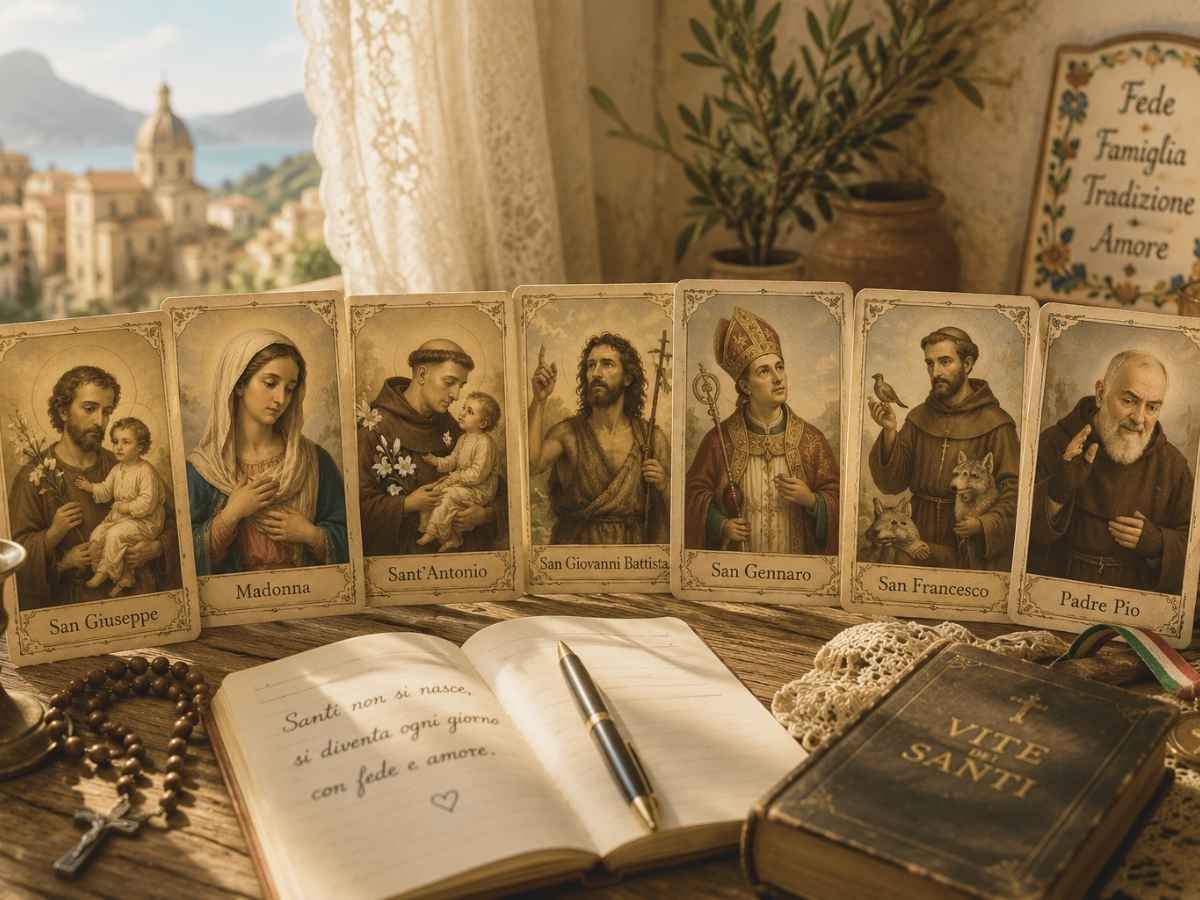
Italian devotion centers on a handful of beloved saints, each with a role in daily life: San Giuseppe for fathers and family, La Madonna above all, Sant’Antonio for lost things, San Giovanni Battista and San Gennaro as great town patrons, San Francesco for Italy itself, and Padre Pio, Santa Lucia, and Santa Rita for comfort, light, and hopeless causes. To Italian families, these saints were not symbols. They were help.
At a glance
| Saint | Patron of | Feast day |
|---|---|---|
| San Giuseppe | Fathers, workers, family | March 19 |
| La Madonna | The Blessed Mother | December 8 |
| Sant’Antonio | Lost things, the poor | June 13 |
| San Giovanni Battista | Many towns; midsummer | June 24 |
| San Gennaro | Naples; protection | September 19 |
| San Francesco | Italy, animals, nature | October 4 |
| Padre Pio | Comfort, prayer | September 23 |
| Santa Lucia | Eyes, light | December 13 |
| Santa Rita | Impossible causes | May 22 |
That’s the quick list — but each of these saints carries a story Italian families lived inside for generations. Here’s who they were, and why they mattered so much.
What’s in this guide
- Why saints mattered so much in Italian life
- San Giuseppe — the father
- La Madonna — the mother
- Sant’Antonio — the finder of lost things
- San Giovanni Battista — the great feast
- San Gennaro — the protector of Naples
- San Francesco — the patron of Italy
- Padre Pio, Santa Lucia & Santa Rita
- How to find your own saint
- FAQ
Why saints mattered so much in Italian life
In Italian devotion, a saint is not someone you admire from a distance. A saint is someone you ask.
The idea at the heart of it is intercession. God is vast and far above; the saints are closer, more human, more approachable. They lived, they suffered, they understand. So you bring them your small, specific troubles — a lost ring, a sick child, a hopeless situation — and you ask them to carry the request forward.
Each saint had a specialty. This is the part outsiders often find surprising: Italian families didn’t pray to saints in general. They prayed to the right saint for the problem at hand. Lost something? Sant’Antonio. Trouble with your eyes? Santa Lucia. A situation with no way out? Santa Rita. It was less like worship and more like knowing exactly which relative to call for which kind of help.
[IMAGE 1 — a wall or corner of an Italian home with framed saints, a Madonna, a palm frond, holy cards tucked into a mirror. Warm, lived-in, authentic. Optional — add when ready.]
San Giuseppe — the father
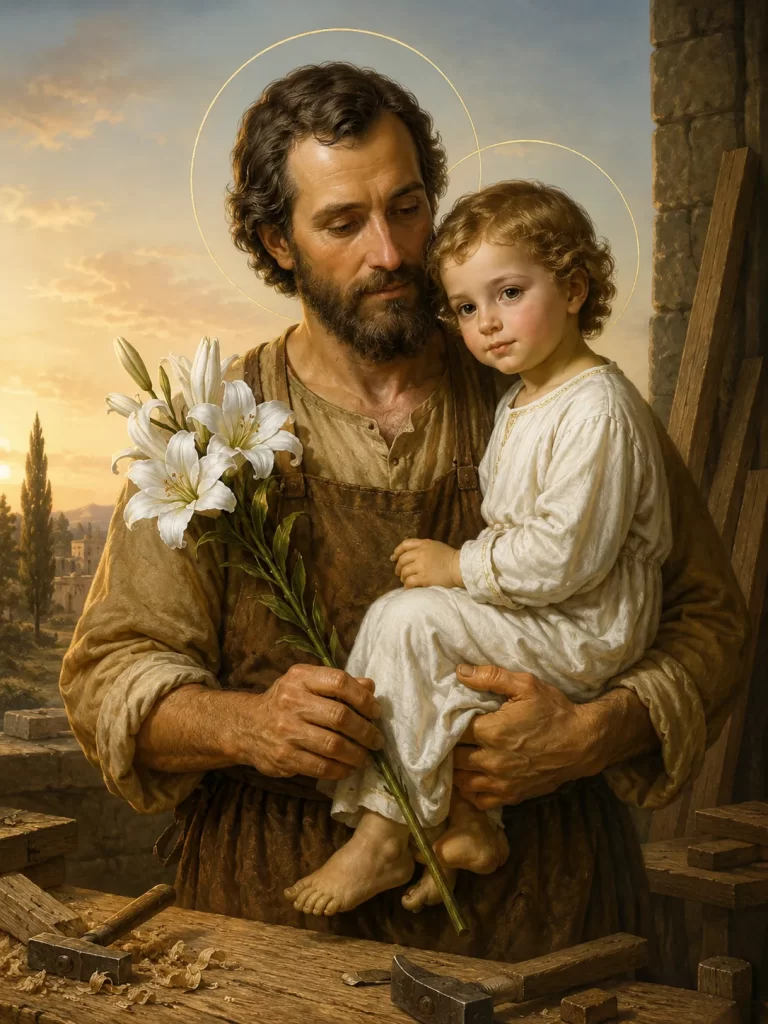
Patron of fathers, workers, and the family — the quiet guardian at the center of the household.
If the Madonna is the heart of the Italian home, San Giuseppe is its foundation. The earthly father of Jesus, the carpenter, the protector of the Holy Family — he stands for exactly the things an Italian family held sacred: work, provision, and the steady, unglamorous strength of the man who holds a household together.
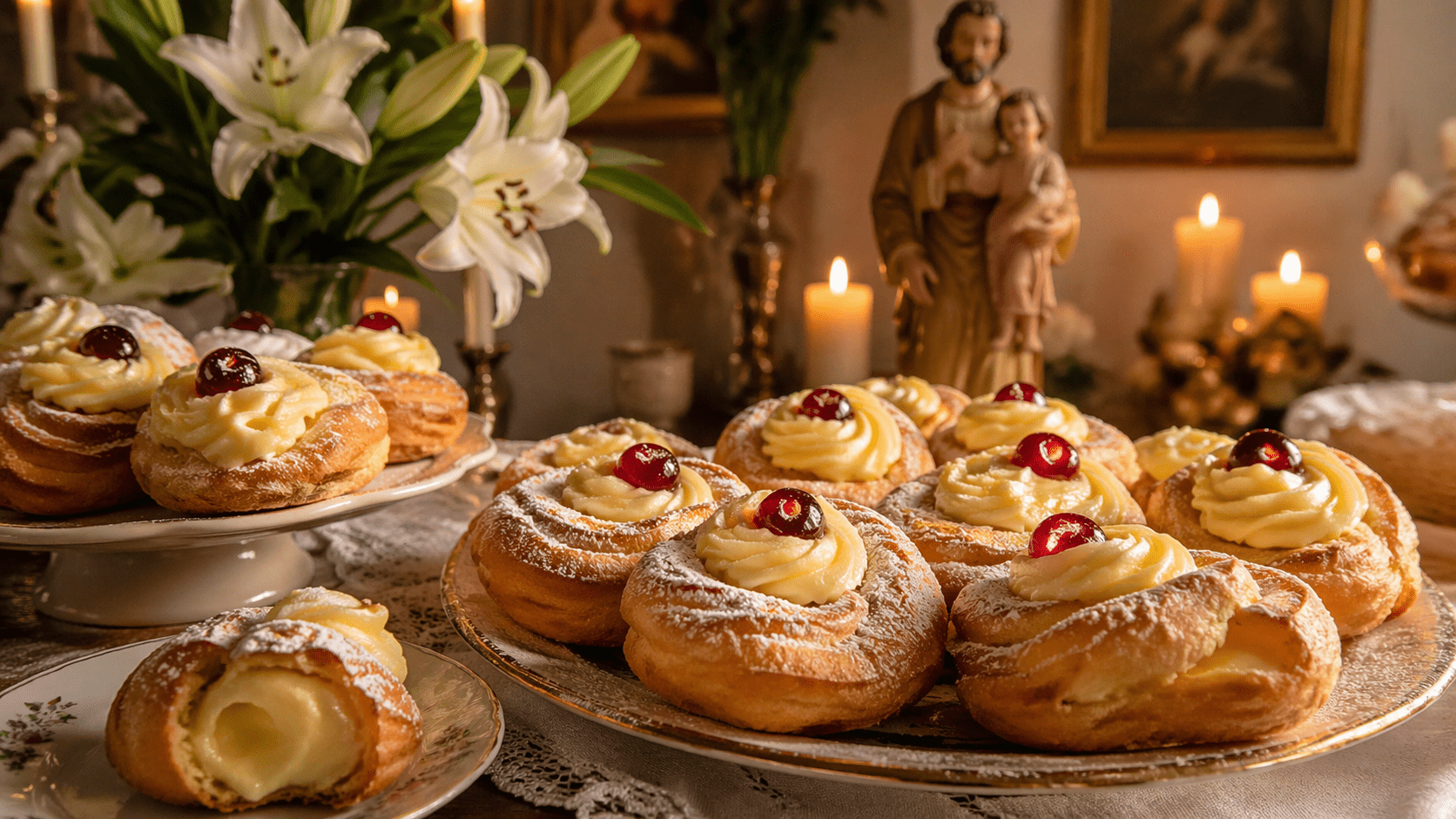
His feast on March 19 is one of the great days of the Italian year — La Festa di San Giuseppe, Father’s Day in Italy, marked with the famous zeppole and, in Sicily, with elaborate St. Joseph’s tables laden with food for the poor. To be named Giuseppe, Beppe, or Pina was to carry one of the most Italian names there is.Few feasts gathered a family like St. Joseph’s Day and the tavola di San Giuseppe, the table set in gratitude and shared with neighbours.
He asked for nothing and protected everything. That was the whole point of him.
Feast day: March 19 · Names: Giuseppe, Beppe, Pino, Pina
La Madonna — the mother
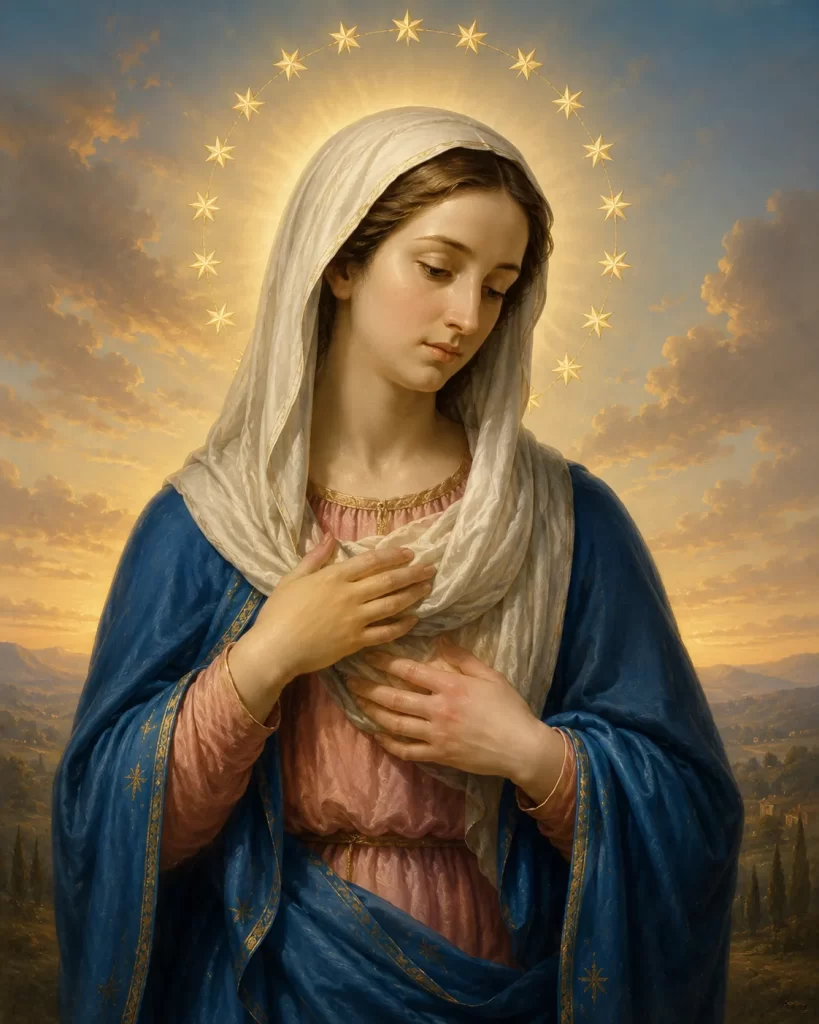
Above every saint stands the Blessed Mother — the one an Italian family turned to first, and last.
La Madonna is not one devotion but many. The Immaculate Conception on December 8. The Madonna del Rosario. The Madonna del Carmine. Regional Madonnas beloved to particular towns, carried through the streets on their feast days on the shoulders of the faithful. Whatever her title, she was the mother — and in a culture built around the mother, that made her supreme.
She was the one you prayed to in the dark. The Hail Mary was the prayer that came without thinking, worn smooth by repetition. When an Italian grandmother was frightened for someone she loved, it was almost always the Madonna she reached for first.
The Madonna’s greatest feast, the Assumption, falls on August 15 — the day Italy keeps as Ferragosto.
Every other saint you asked for a favor. The Madonna you simply trusted.
Feast day: December 8 (Immaculate Conception) · Names: Maria, Concetta, Immacolata, Carmela, Rosaria
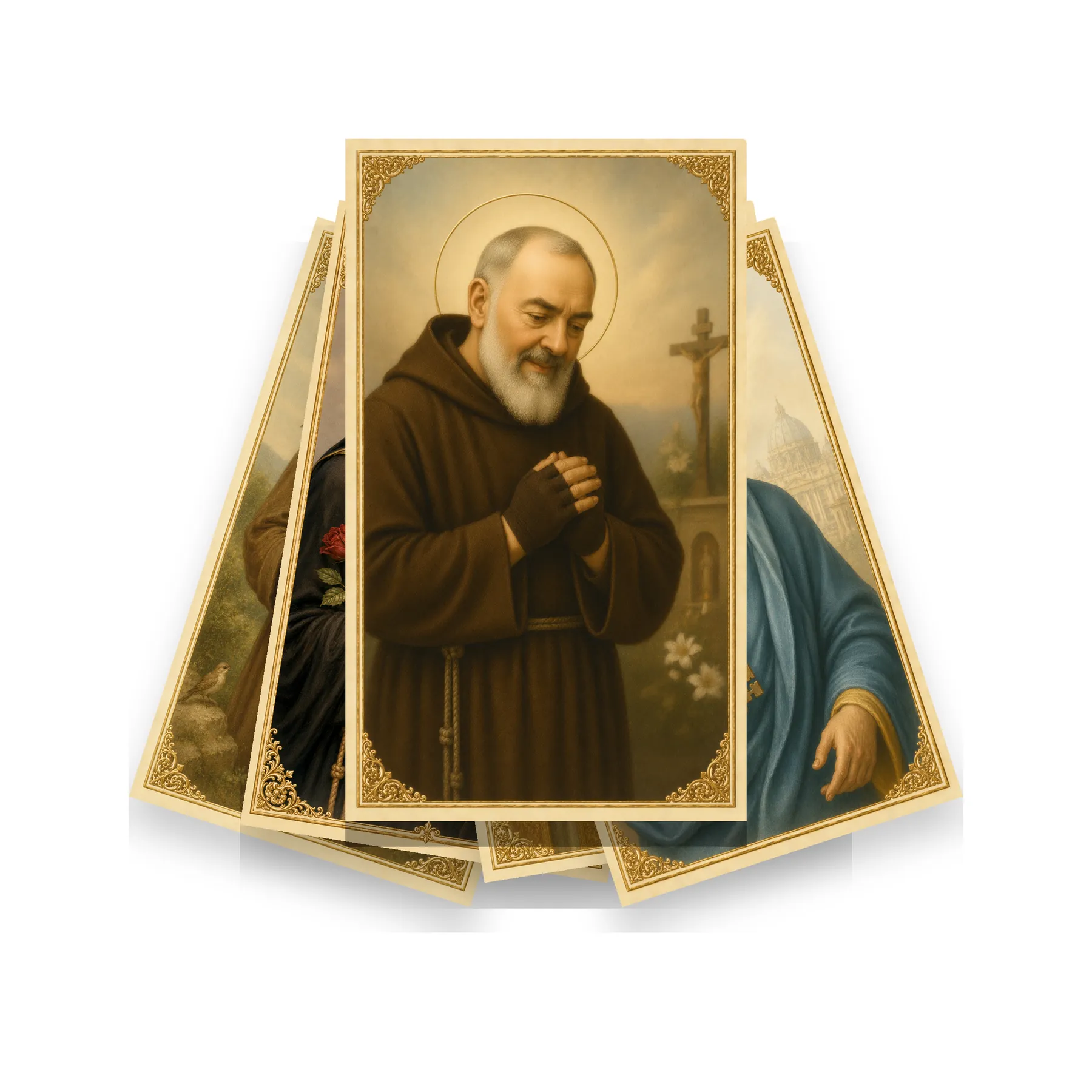
Keep the saints close
Our printable set of Italian Saint Prayer Cards brings eleven of these beloved saints together — each with a traditional prayer in Italian and English, and the names tied to them. Perfect to keep, or to give on someone’s onomastico.
$9.49
Instant digital download
Sant’Antonio — the finder of lost things
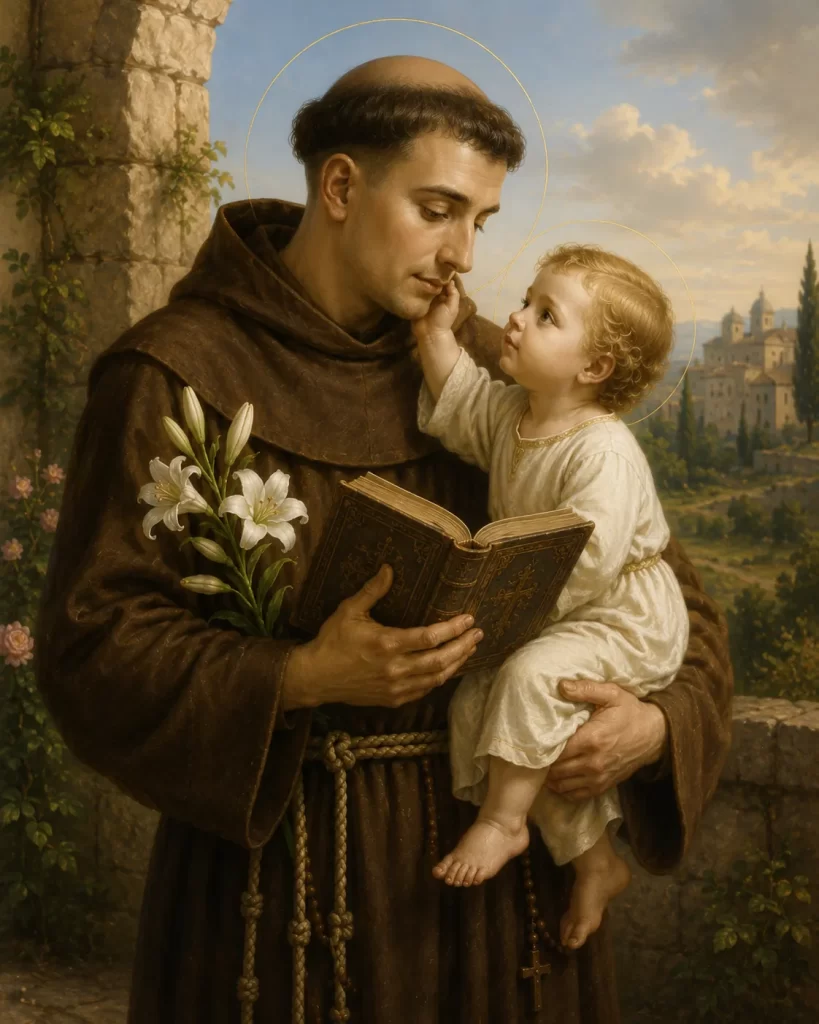
Patron of lost things and small miracles — the most called-upon saint in everyday Italian life.
No saint was invoked more often, or more casually, than Sant’Antonio di Padova. Lose your keys, your ring, your glasses, and an Italian would mutter to him almost before thinking — a quick, practiced appeal to the saint who finds what is lost. There was even a little rhyme for it, passed between generations: Sant’Antonio, Sant’Antonio, fammi trovare quello che ho perso.
But he was more than a finder of keys. Sant’Antonio was the patron of the poor, of the young, of those who had lost their way in larger senses too. His feast on June 13 is celebrated across Italy and by Italian communities everywhere, and his image — a young friar holding the child Jesus and a lily — is one of the most familiar in any Italian home.
His story runs deep in Italian family life — the full one is in the guide to the Feast of Sant’Antonio.
Feast day: June 13 · Names: Antonio, Tony, Antonietta, Nino
San Giovanni Battista — the great feast

The Baptist, patron of countless Italian towns, and the reason for one of the most magical nights of the year.
San Giovanni Battista holds a special place, because his feast on June 24 sits at the height of summer, wrapped in traditions that feel older than the Church itself. The night before is a night of magic in Italian folk belief — of bonfires, of dew gathered at dawn, of the famous acqua di San Giovanni, water left out overnight with herbs and flowers to bless the year ahead.
He was the patron of towns beyond counting across Italy, his feast marked with processions, fireworks, and the whole community pouring into the streets. Where Sant’Antonio was the saint of the quiet, personal plea, San Giovanni was the saint of the great public celebration.
The full story of the night, its magic, and its traditions is told in the guide to the Feast of San Giovanni.
Feast day: June 24 · Names: Giovanni, Gianni, Gianna, Vanni
San Gennaro — the protector of Naples
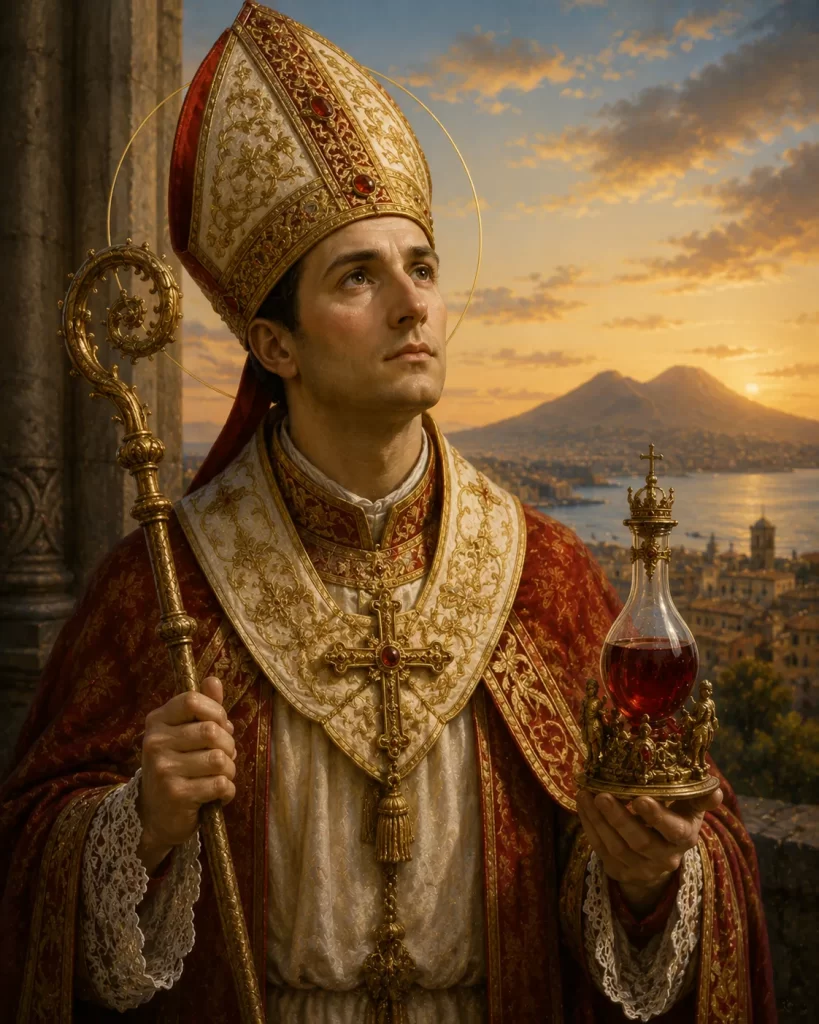
The patron of Naples and of southern Italian families everywhere — the saint of the famous miracle.
For Neapolitans and their descendants across the world, no saint stands higher than San Gennaro. Three times a year, in the cathedral of Naples, a vial of his dried blood is said to liquefy — a miracle watched by thousands, taken as a sign of the city’s fortune for the months to come. When it fails, the city holds its breath.
He is the protector against the great dangers of the Neapolitan world — eruption, plague, misfortune — and for the millions of southern Italians who left for the Americas, he became a saint of identity itself. To honor San Gennaro was to remember exactly where you came from.
To carry San Gennaro across the ocean was to bring Naples with you.
Feast day: September 19 · Names: Gennaro
San Francesco — the patron of Italy
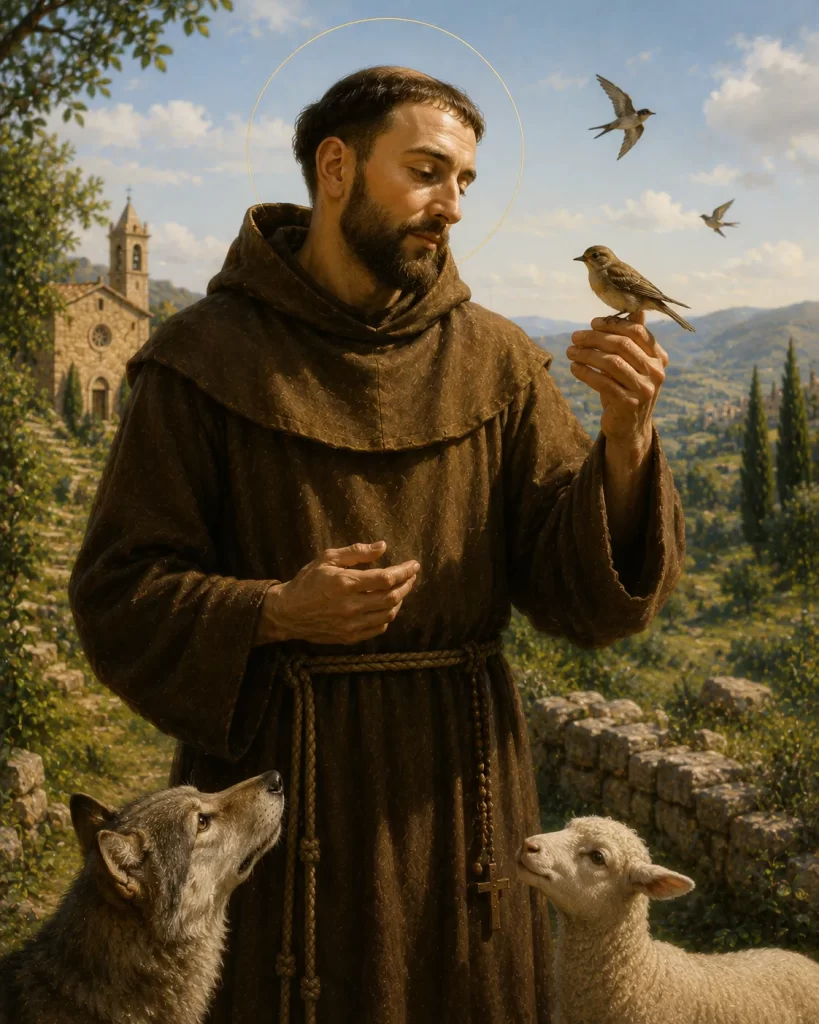
Patron saint of Italy itself — the gentle friar who gave up everything and is loved by everyone.
San Francesco d’Assisi is not only a saint but a symbol of Italy — its patron, alongside Santa Caterina. The wealthy young man who gave away his riches to live in poverty, who spoke to birds, who asked only to be an instrument of peace. He is perhaps the most universally loved of all the Italian saints, admired even far outside the faith.
His prayer — make me an instrument of your peace — is among the most beloved in the world. For Italian families he stood for gentleness, humility, and a love of the created world, the saint who reminded everyone that holiness could look like kindness.
Feast day: October 4 · Names: Francesco, Franco, Francesca, Franca
Padre Pio, Santa Lucia & Santa Rita
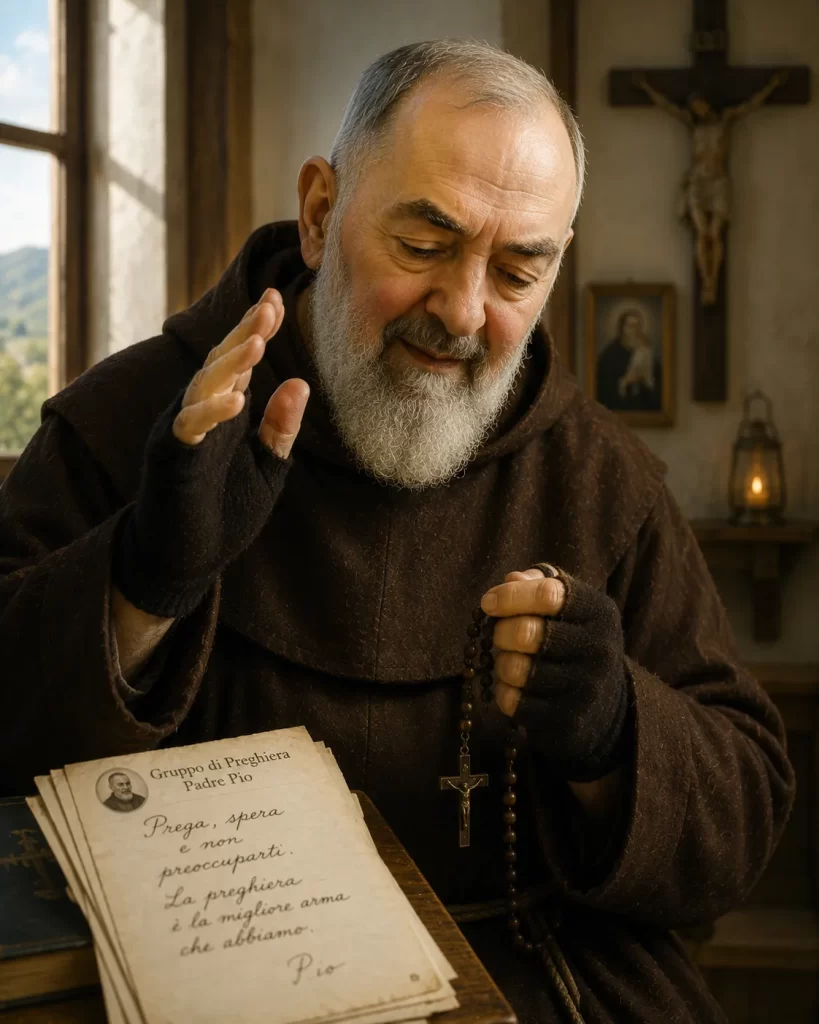
Three more saints no Italian home was without — for comfort, for light, and for the causes that seemed lost.
Padre Pio is the most beloved modern saint in Italy — a humble Capuchin friar who bore the wounds of Christ and heard confessions for hours on end. His photograph hangs in more Italian homes today than almost any other saint’s. To an Italian family, Padre Pio was proof that holiness was not only ancient history; it had lived within memory. Feast day: September 23 · Names: Pio, Pietro
Santa Lucia carries the light. Patron of the eyes and of sight, her December 13 feast falls in the darkest part of the year, and in parts of Italy she — not Santa Claus — is the one who brings gifts to children. Her name means light, and that is exactly what she was asked to protect. Feast day: December 13 · Names: Lucia, Lucy, Luciano
Santa Rita is the saint of the impossible. When a cause was hopeless, when every other door had closed, it was Santa Rita you called — the advocate of desperate cases, beloved especially by women carrying burdens too heavy to name. Feast day: May 22 · Names: Rita, Margherita
How to find your own saint
In Italian tradition, the saint who shares your name is yours — and their feast day is your onomastico.
If your name is Giuseppe, San Giuseppe is your saint, and March 19 is your day — your onomastico, the Italian name day, celebrated in Italy sometimes more warmly than a birthday. It is a quietly beautiful idea: that you carry a protector in your very name, and that once a year, that saint’s day is yours to keep.
Love these Italian traditions?
Get new stories about Italian saints, customs, and family traditions — plus our free printable calendar of the Italian year. Enter your email below to join.
My grandparents are gone now, and the wall came down long ago. But I still catch myself, when something goes missing, saying his name under my breath — Sant’Antonio — the way I heard it said a thousand times. The saints outlast the walls they hang on. That, in the end, was always the point of them.
To find the right saint for any need, use the patron saint finder. And to keep these devotions alive, learn the prayers every family knew, how to pray the rosary, and the many names of the Madonna.
In Summary
- La Madonna and San Giuseppe anchor the Italian home as mother and father
- Sant’Antonio is the most called-upon saint — for lost things and small mercies
- San Giovanni and San Gennaro are the great town patrons, tied to feast and identity
- San Francesco is the patron of Italy itself
- Padre Pio, Santa Lucia, and Santa Rita carry comfort, light, and hope for lost causes
- The saint who shares your name is yours — their feast day is your onomastico
FAQ
Who is the patron saint of Italy?
The patron saints of Italy are San Francesco d’Assisi (St. Francis) and Santa Caterina da Siena (St. Catherine of Siena), named co-patrons of the nation. San Francesco is the more universally known of the two, beloved for his humility, his devotion to the poor, and his love of the natural world.
Which saint do Italians pray to for lost things?
Italians pray to Sant’Antonio di Padova (St. Anthony of Padua) to find lost things. He is one of the most invoked saints in everyday Italian life, called upon quickly and often for anything from misplaced keys to larger losses. A traditional short appeal asks him simply to help find what has been lost.
Why is San Gennaro so important to Italians?
San Gennaro is the patron saint of Naples, famous for the miracle in which a vial of his dried blood is said to liquefy several times a year in the Naples cathedral. For Neapolitans and the millions of southern Italians who emigrated, he became a powerful symbol of protection and of cultural identity, honored with major feasts both in Italy and abroad.
What is a patron saint?
A patron saint is a saint regarded as a special protector or intercessor for a particular person, place, profession, or need. In Italian tradition, families turned to specific saints for specific concerns — Sant’Antonio for lost things, Santa Lucia for the eyes, Santa Rita for impossible causes — believing the saint would carry their prayers forward.
How do I find my Italian patron saint?
In Italian tradition, your patron saint is usually the saint who shares your name, and their feast day becomes your onomastico, or name day. If your name is Lucia, your saint is Santa Lucia and your day is December 13. Many Italians celebrate their onomastico as warmly as their birthday.
Which saint did your family turn to? The one on your nonna’s wall, the name she said in worry — share it in the comments. These are the devotions worth remembering.

Marco Ricci is an Italian-Canadian writer and the grandson of Calabrian immigrants. He created Italian Family Traditions to document the customs, feast days, and family rituals Italian families carried from Italy to North America — and to understand what they actually meant. He is based in Montreal.