Italian Family Traditions
Italian First Communion: The Rite of Passage We Can’t Let Fade
The white dresses, the whole class at the same Mass, the enormous family feast after — what the Italian First Communion was, why it mattered so much, and how to bring that meaning back for the next generation.
In the ’90s, for my First Communion, I wore a black suit. Not the white you might picture — a proper black suit, because that’s how the boys in my family did it, and being dressed like that, at that age, told you something: today was serious. Today was big. My whole class was there at the same Mass — all my school friends, the same morning, the same church, every one of us scrubbed and dressed up and nervous, making our First Communion together. And then, afterward, my uncle’s restaurant, and food everywhere, and the whole family, so proud, so loud, so happy. Bomboniere at the end. It was, without question, one of the biggest days of my childhood.
I think about that day now because I want it for my own kids — and I’m not sure it will be the same. Not because we don’t care, but because the world around it has thinned out. As families become less religious, the Communion is quietly slipping from a whole community’s shared rite of passage into something smaller, more optional, almost old-fashioned — as if it’s becoming ancient rather than living. And that would be a real loss, because it was never only about religion. It was about belonging: a whole generation of children, and their families, marking the same threshold at the same time, together.
So this is both things at once: what the Italian First Communion (la Prima Comunione) traditionally was — and, honestly, how to hold onto what mattered about it, even now, even if your family is less religious than your grandparents were. Because the ritual, the pride, the gathering, the sense of a milestone crossed together — that is worth keeping.
It was never only about religion. It was about belonging — a whole generation of children, and their families, marking the same threshold at the same time, together.
What is First Communion?
First Communion (la Prima Comunione) is the sacrament in which a Catholic child receives the Eucharist — the consecrated bread and wine — for the first time. It usually happens around the age of seven or eight, after a period of preparation (catechism), and it is one of the central milestones of a Catholic childhood, coming after baptism and before Confirmation. In Italian families, it was never just a religious formality. It was a genuine rite of passage — the day a child took a real, grown-up step into the faith and the family, marked with all the seriousness and celebration such a step deserved.
The preparation — the year before
First Communion did not simply happen; it was prepared for, usually over a year or more of catechism — weekly classes (catechismo) at the parish where children learned their prayers, the meaning of the sacrament, and how to make their first confession, which traditionally comes just before. This preparation was itself part of the rite: it signaled that the child was old enough to understand, to take something seriously, to be entrusted with something. Parents and godparents were involved; the whole thing built, week by week, toward the day. By the time it arrived, the child had earned it.
What the children wore
The clothing was central to the day, and it carried meaning. Girls traditionally wore white — a white dress, often with a veil or a small wreath, echoing a miniature bride, a symbol of purity and of the child’s union with the Church. Boys’ dress varied more by region, era, and family: many wore white or ivory, sometimes a little suit with a sash or armband; in other families and eras, boys wore a formal dark suit — in mine, in the ’90s, a black suit, sharp and grown-up. Whatever the colour, the point was the same: you were dressed with unusual care, marked out as important, and you felt it. Being dressed that way, as a child, is one of the clearest ways a family says: this day matters.
The Mass — and the whole class together
The heart of the day was the Mass, and one of the most powerful things about it — the thing I remember most — is that you did it together. The children of the parish, often a whole school class, made their First Communion at the same Mass, on the same morning, as a group. You processed in together, sat together, received together. Your friends were beside you, all of you dressed up, all of you crossing the same threshold at the same moment. That collective dimension is easy to overlook, but it was everything: First Communion wasn’t a private family event so much as a communal one, binding a generation of children to each other and to their community, all at once. It is precisely this shared quality that is hardest to recreate today — and most worth trying to.
The gifts — keepsakes for a lifetime
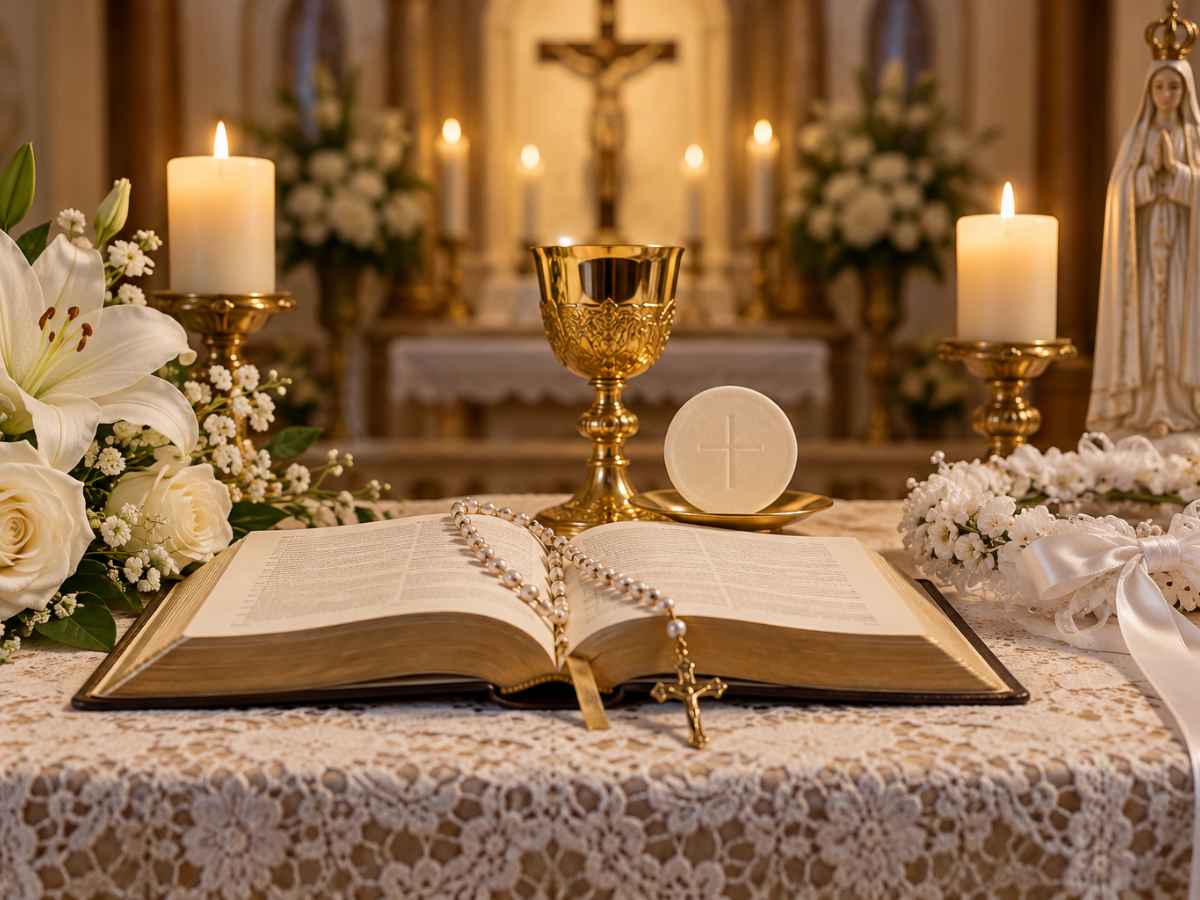
First Communion came with gifts, and traditionally they were not toys but keepsakes — things meant to last a lifetime and to mark the occasion. A first rosary. A gold cross or crucifix on a chain. A child’s missal or Bible, often inscribed with the date. Money in envelopes and small pieces of gold from godparents and relatives. Sometimes a first real watch — the classic “you’re growing up now” gift. These were gifts with weight and meaning, chosen to be kept and remembered, often for decades.
The Gifts That Meant Something
Traditional First Communion Gifts
What Italian families have always given for First Communion — gifts meant to last a lifetime, not a season.
The best First Communion gifts are keepsakes — something the child can keep for life and remember who gave it, and why.
A Keepsake Gift
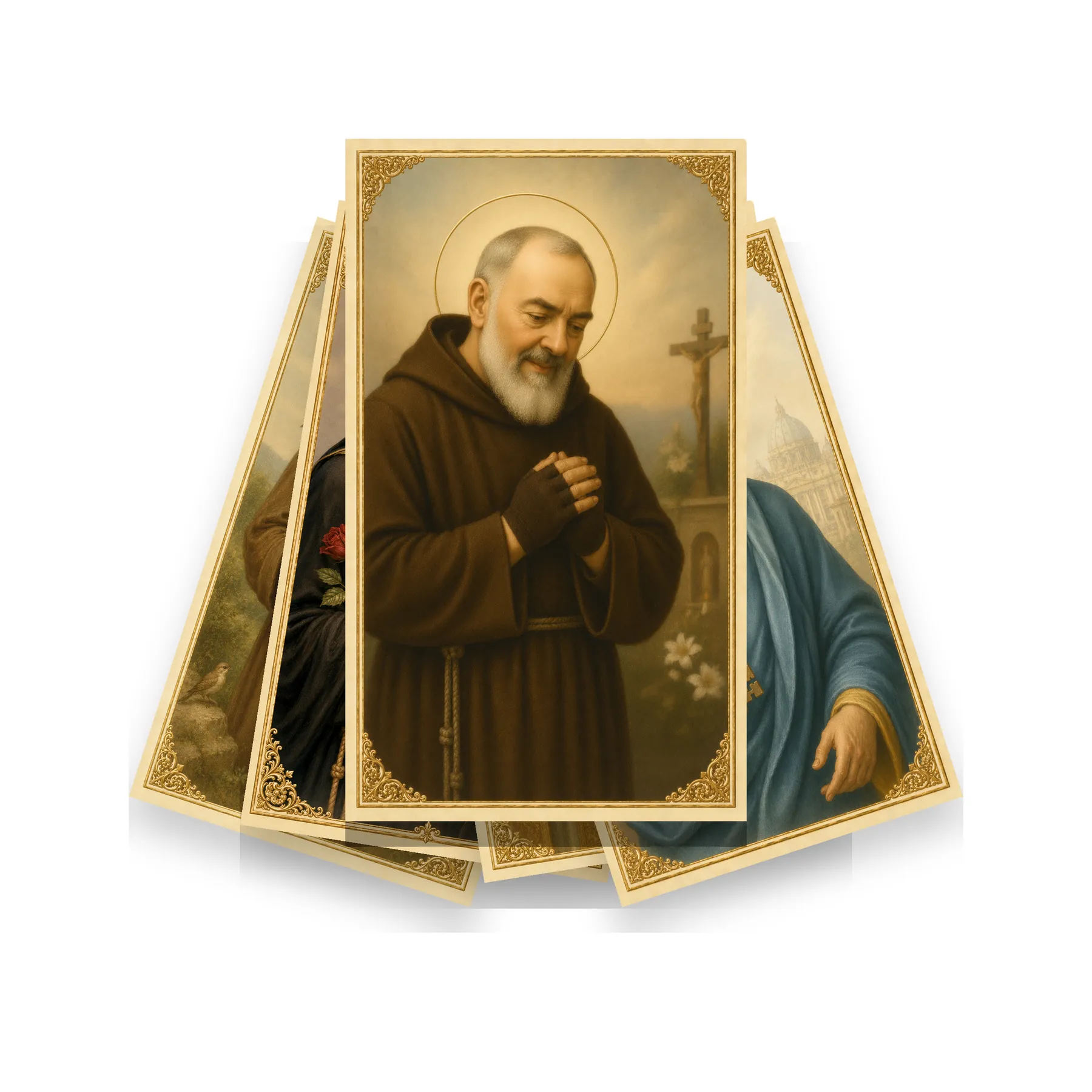
Italian Saint Prayer Cards
A meaningful, lasting First Communion gift — a printable set of the best-loved Italian saints and their prayers, to keep in a missal or by a bedside for years to come.
Get the Prayer Cards — $9.49 →Instant digital download.
The feast — the real celebration
Then came the part every Italian child remembers: the feast. After Mass, the family gathered — at home, or, as in my family, at a relative’s restaurant — and ate. And ate. First Communion lunches were enormous, joyful, hours-long affairs, in the full tradition of the Italian Sunday dinner raised to its highest celebratory pitch: antipasti, pasta, meat, dessert, coffee, more dessert, the whole extended family loud and proud around the child of the day. The godparents (compare and comare) had a place of honour. The child was the centre of it all. It was a party in the truest sense — the community celebrating one of its children stepping forward.
After Mass came the part every Italian child remembers: the feast. The whole family, so proud, so loud, so happy — the community celebrating one of its own stepping forward.
The bomboniere
At the end came the bomboniere — the keepsake favours the family gave to guests, as at every major Italian milestone. Traditionally a small gift paired with confetti (sugared almonds), often in odd numbers for luck, wrapped in tulle. The bomboniera sent everyone home with a token of the day, and it tied First Communion into the same family language as weddings and baptisms. Read more about the bomboniera tradition and how it marks every Italian rite of passage.
Free Printable
The whole Italian year, on one calendar.
Join the list for a free printable Italian family calendar — the feast days, sacraments, and milestones, mapped across the year.
Why it’s fading — and why that matters
Here is the honest part. As families become less religious, First Communion is quietly shrinking — from a whole community’s shared rite of passage into a smaller, more private, more optional event, if it happens at all. Fewer children do it; fewer do it together; the big communal Mass with the whole class is rarer. And with it goes something that was never really about doctrine: the ritual itself. The dressing-up. The preparation. The gathering. The pride. The sense of a threshold crossed, publicly, together, witnessed by everyone who loves you. Those things are human, not only religious — and children still need them. Every culture marks the passage from little child to older child somehow; ours did it this way, beautifully, and we are in danger of letting it thin into nothing.
How to bring the meaning back for your kids
You don’t have to be as religious as your grandparents to keep what mattered about First Communion. If your child is making theirs, or even if you simply want to mark this age with the weight it deserves, here is how to recover the ritual:
- Make it a real occasion, not a footnote. Dress the child with care. Take the photographs. Treat the day as one of the big days — because the child will remember exactly how big you made it.
- Gather the whole family. The feast is not the extra — it’s half the meaning. Get everyone in one room, loud and proud, the way it was meant to be.
- Give a keepsake, not a toy. A rosary, a cross, an inscribed book, something to keep for life — and tell the child who it’s from and why.
- Involve the godparents. Give the compare and comare a real role — it keeps that bond alive too.
- Write it down. Record the day — who came, what was worn, the restaurant, the gifts — so it becomes part of the family story, not just a fading photo.
- Keep the bomboniere. Send people home with a token. It costs little and it says: this was a day worth marking.
The faith is yours to keep or hold lightly as you choose. But the ritual — the care, the gathering, the pride, the sense of a child stepping forward while everyone who loves them watches — that you can give your children regardless. That is the part worth refusing to let fade.
First Communion across the ocean
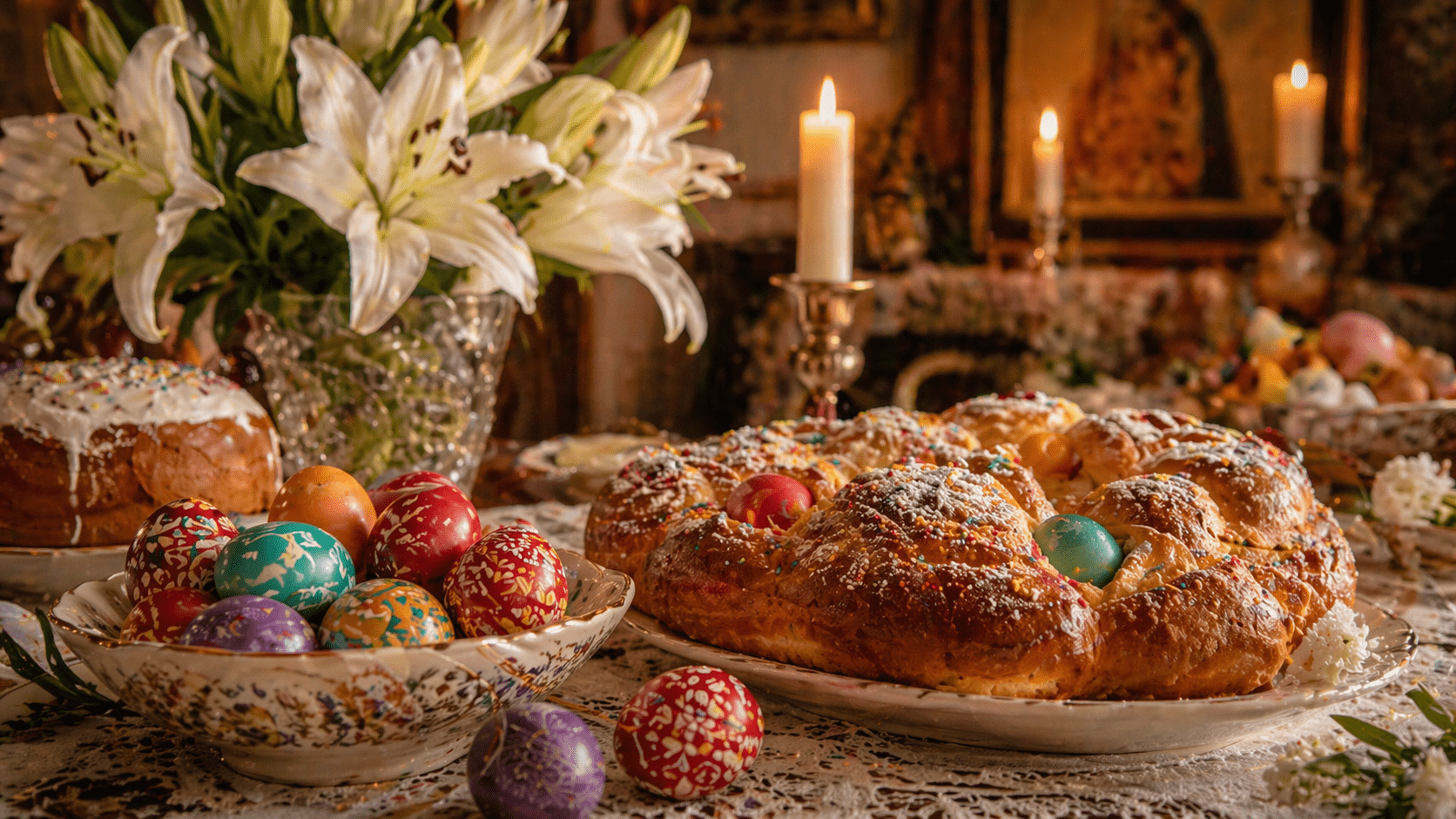
In Italian-Canadian and Italian-American families, First Communion often became more elaborate than in Italy, not less — a full-blown celebration that doubled as a statement of identity and belonging in a new country. The restaurant lunch, the crowd of relatives, the gold from the godparents, the professional photographs: for immigrant families, the child’s First Communion was a way of saying we are still who we are, and we are doing well. For many second- and third-generation families, it remains one of the last big religious-cultural milestones still widely kept — which is exactly why it’s worth keeping well.
The black suit, the whole class at the same Mass, the restaurant packed with proud relatives, the bomboniere at the end — First Communion was one of the great days of an Italian childhood, and it was never only about religion. It was about belonging. Give your children that day with all the weight it deserves, gather everyone who loves them, and refuse to let one of our best rituals quietly become ancient. Keep it living.
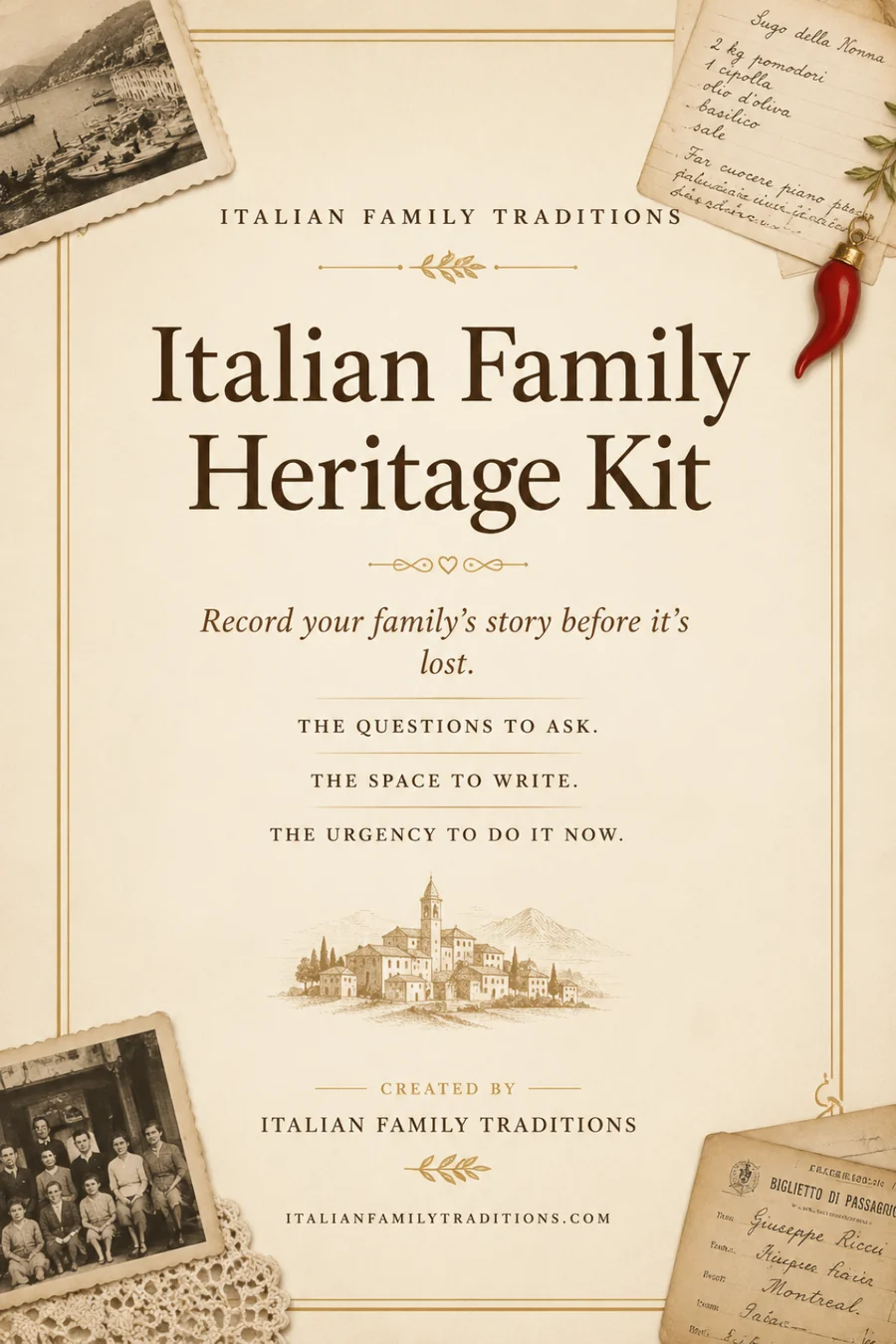
Keep the Day
Record your family’s milestones before they fade.
The Communions, the weddings, the feast days, the names — the Italian Family Heritage Kit gives you 133 guided pages to record your family’s traditions and milestones for the next generation.
Explore the Heritage Kit — $19.99Instant digital download.
More Italian milestones and family traditions: baptism traditions, baby naming traditions, the compare and comare (godparent) bond, the bomboniera, Italian heritage gifts, and how to pray the rosary.
FAQ
What age is First Communion in Italian families?
First Communion usually happens around age seven or eight, after a period of preparation (catechism). It follows baptism and comes before Confirmation in the sequence of Catholic sacraments.
What do children wear for First Communion?
Girls traditionally wear white — a white dress, often with a veil or wreath, symbolising purity. Boys’ dress varies by region and era: many wear white or ivory, while in some families and periods boys wear a formal dark or even black suit. The point is to dress the child with special care to mark the day.
What are traditional Italian First Communion gifts?
Traditionally keepsakes meant to last: a first rosary, a gold cross or crucifix, a child’s missal or Bible (often inscribed), money and small gold pieces from godparents, and sometimes a first watch. The idea is a lasting gift the child keeps and remembers, not a toy.
What happens after the First Communion Mass?
A large family feast — often at home or a restaurant — with the extended family, the godparents in a place of honour, and abundant food in the tradition of the Italian Sunday dinner. Guests are typically sent home with bomboniere (keepsake favours with sugared almonds).
How can I make First Communion meaningful if we’re not very religious?
Focus on the ritual, not only the doctrine: dress the child with care, gather the whole family, give a lasting keepsake and explain who it’s from, involve the godparents, keep the bomboniere tradition, and write the day down. The sense of a milestone crossed together is human, not only religious — and worth keeping.
Why is First Communion important in Italian culture?
It is a major rite of passage — the day a child takes a grown-up step into the faith and the family, marked by the whole community together. Traditionally the whole class received Communion at the same Mass, making it a shared, communal milestone that bound a generation of children to each other and their families.
Marco Ricci is an Italian-Canadian writer and the grandson of Calabrian immigrants. He created Italian Family Traditions to document the customs, feast days, and family rituals Italian families carried from Italy to North America — and to understand what they actually meant. He is based in Montreal.