Italian Family Traditions
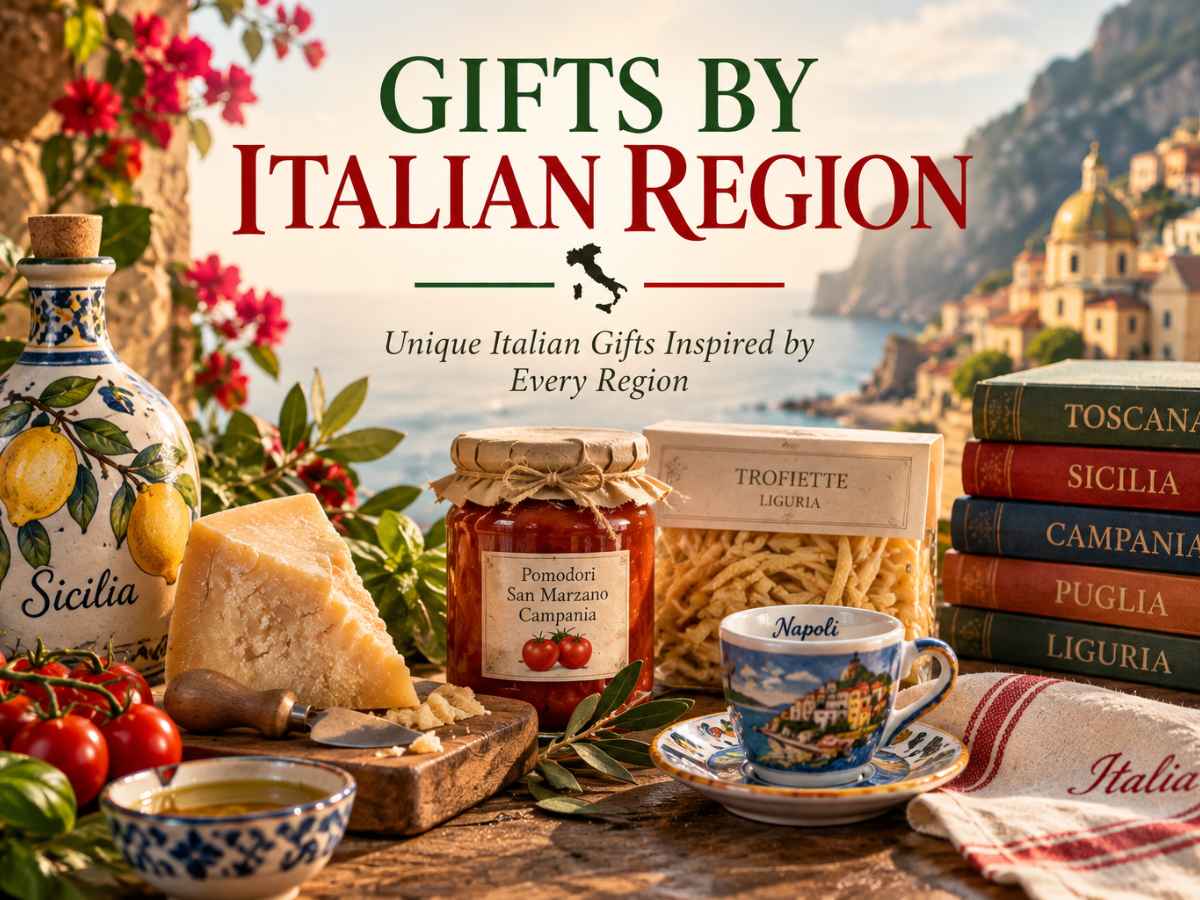
Italian Gifts by Region: Find a Meaningful Gift from All 20 Regions of Italy
“Italian” is usually too broad. A Calabrian grandmother, a Venetian family, a Sicilian host and a grandfather from Molise do not carry the same Italy. The best heritage gift starts where their family actually starts.
If you have ever searched for an Italian gift and found the same tricolor mugs, pasta jokes and “Mangia!” signs repeated across a hundred shops, this page is the alternative. Choose the region your family comes from and the finder below will recommend gifts that actually belong to that place — food, craft, home, faith, heritage and experience ideas across all twenty Italian regions.
Do not buy them “Italy.” Find their Italy.
Disclosure: Some shopping links on this page are affiliate links. As an Amazon Associate I earn from qualifying purchases. Recommendations are chosen for their fit with the region and the family tradition, not because they pay a commission.
The Italian Gift by Region Finder
All 20 Regions · One Family-Specific Gift Finder
Find a Gift from Your Family’s Italy
Choose the region, then filter by recipient, gift type and budget. The finder returns the three strongest regional matches — plus one way to make the gift belong to your family instead of merely to Italy.
Budget ranges are approximate and not live pricing. Regional traditions can vary town by town; if you know the exact comune, use that first.
Why the region matters more than “Italian”
Family identity in Italy has always been intensely local. Food changes from region to region and often from town to town. Saints belong to places. Dialects shift over short distances. Ceramics, textiles, woodwork, glass, paper and holiday traditions developed in specific communities. Even within one region, two families can remember different versions of what was supposedly “the Italian way.”
That is why a regional gift feels different. Bronte pistachios say Sicily in a way generic imported cookies cannot. A figure for a Neapolitan presepe says Campania in a way an Italian-flag ornament cannot. Fabriano paper, Deruta ceramics, Grottaglie pottery, Murano glass or a small bell tied to Agnone carry a place with them.
The principle is the same one behind the gift guide for Nonna and Nonno and the Italian Christmas gift guide: the strongest gift is usually not the most visibly Italian one. It is the one that could only have been chosen for this family.
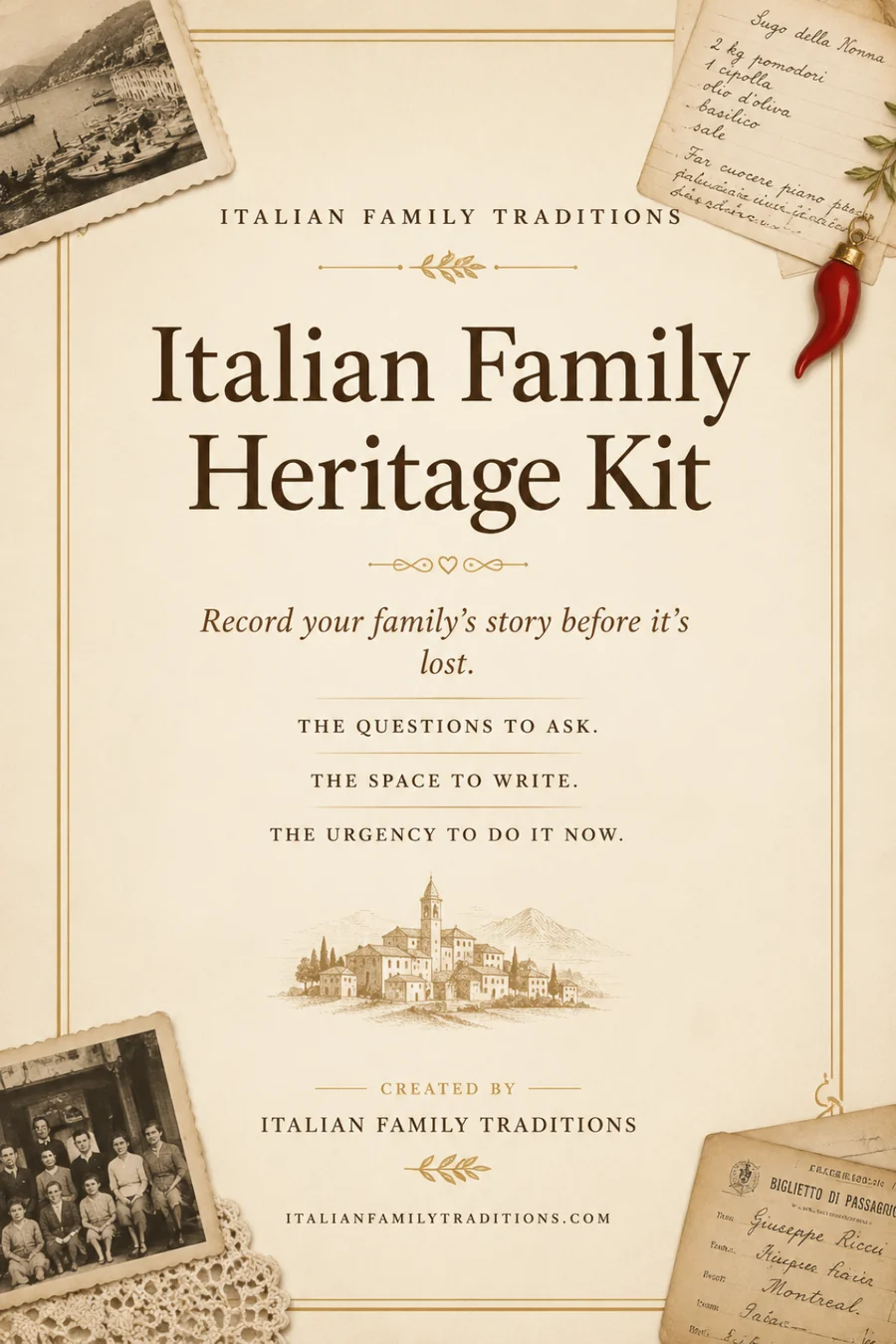
The Gift Behind Every Region
The object is regional. The story is only yours.
Which town? Which dialect? Which names? Which recipes? Which saints? The Italian Family Heritage Kit gives you 133 guided pages to preserve the details that make your family’s Calabria, Sicily, Campania, Abruzzo — or any other region — different from everybody else’s.
Explore the Heritage Kit — $19.99Gift ideas for all 20 regions of Italy
The finder above is the fast version. The sections below are the deeper version: four strong starting points for every region — 80 ideas in total — with an emphasis on gifts that are useful, edible, handmade, historically connected, or capable of starting a family conversation.
Abruzzo: Mountain traditions, Sulmona sweets, saffron and ceramics.
Abruzzo gifts work best when they feel grounded rather than glossy. Sulmona confetti, Castelli ceramics, saffron and a town-specific map all carry more meaning than generic Italian décor.
- Sulmona confetti gift box — A classic celebratory sweet from Abruzzo that is easy to share and easy to give. Choose a simple assortment rather than novelty packaging.
- Castelli ceramic serving piece — A bowl, plate or tile from the Castelli tradition gives the gift a clear regional identity. One useful piece is better than a decorative set.
- Abruzzo saffron pantry gift — A small amount of regional saffron can anchor a thoughtful pantry gift without creating clutter. Add a handwritten recipe if your family uses it.
- Arrosticini cooking set — For a family that still talks about Abruzzese grilling, a simple skewer-and-grill setup can turn the gift into an afternoon of cooking together. Include the family’s preferred seasoning or a handwritten note about who used to make them.
Make it family-specific: For an Abruzzese family, the province or mountain town can matter as much as the region. If you know whether the family comes from L’Aquila, Teramo, Chieti or Pescara, put that place into the gift. A Sulmona sweet becomes much more personal when the card explains who in the family came from nearby and why the food belongs on this table.
Basilicata: Matera bread, peperoni cruschi and the stone-town memory of Lucania.
Basilicata — still called Lucania in many family stories — rewards very specific gifts. Matera bread culture, Senise peperoni cruschi and town-based keepsakes all feel rooted in place.
- Matera bread stamp or bread-themed keepsake — Matera’s old bread-stamp tradition makes this a distinctive family-kitchen gift. Best for someone who bakes or has roots near Matera.
- Peperoni cruschi pantry set — Crispy dried peppers from Basilicata are region-specific and easy to build into a small food gift. Pair with pasta and a recipe card.
- Matera or hometown print — A restrained print of the Sassi or the actual family town can turn geography into family memory. Use the exact town whenever possible.
- Lucanian recipe-and-story box — A small box containing one regional recipe, a town map and a few written questions can turn a gift into a record of the family’s Lucanian story. Use both “Basilicata” and “Lucania” if the older generation still uses the historic name.
Make it family-specific: Basilicata is a good example of why family language matters. Some older relatives may say Lucania more readily than Basilicata, or identify first with Matera, Potenza or a small comune. Use the word they use. The gift should recognize the geography as they remember it rather than correcting the family into a modern label.
Calabria: Bergamot, estate olive oil, ceramics and family-table food.
Calabria is one of the easiest regions to gift well because the identity is strong. Bergamot, olive oil, passata and ceramics from Seminara or Squillace all feel unmistakably Calabrian.
- Calabrian extra-virgin olive oil — Excellent olive oil is useful immediately and belongs naturally on the family table. Sarafino’s Calabrian oils are products I have actually tried and enjoyed. See the Calabrian olive oils →
- Bergamot marmalade — Bergamot is closely tied to Calabria, making a small food gift feel immediately place-specific. Use it as the distinctive item in a compact gift basket. See the bergamot marmalade →
- Seminara or Squillace ceramic piece — Calabrian ceramic traditions give you a lasting object that still feels local rather than generic. Choose one strong serving piece.
- Calabrian peperoncino or ’nduja pantry gift — A small spicy pantry item gives a Calabrian basket another unmistakable regional note without making the basket oversized. Pair it with olive oil or passata and stop there; three strong products are enough.
Make it family-specific: Calabria is where a generic red-white-green gift can feel especially flat because family identity is often tied to a precise town, province and set of foods. If the recipient still says the name of a village whenever someone asks where the family is from, put that village on the card. The product is Calabrian; the explanation makes it theirs.
Campania: Neapolitan presepi, Vietri ceramics, coffee and Christmas tradition.
Campania has one of the strongest heritage-gift categories in Italy: the Neapolitan presepe. Add Vietri ceramics and coffee culture and the region gives you gifts that are both beautiful and usable.
- Neapolitan presepe figure — A handmade presepe figure connects directly to Naples and can return every Christmas. Match the scale of the recipient’s existing nativity. Read about the presepe →
- Vietri ceramic serving piece — A single bowl, plate or pitcher can live on the table instead of becoming decorative clutter. Choose a shape they will actually use.
- Tombola set — Tombola is a gift that can become the evening immediately, with children and grandparents playing together. Pair it with the Neapolitan smorfia story. Learn the tombola tradition → Shop on Amazon →
- Neapolitan cornicello keepsake — A small cornicello connects to the protective folk tradition that survived strongly in Neapolitan families and the diaspora. It is especially meaningful when given for a new baby, first home, car or another transition. Read the cornicello tradition →
Make it family-specific: Campania is much bigger than Naples, so do not automatically make every Campanian gift Neapolitan. If the family comes from Avellino, Benevento, Caserta or Salerno, that distinction may matter enormously. Use Naples-specific gifts when they fit; otherwise let the exact town, saint, pastry, ceramic tradition or family recipe lead.
Emilia-Romagna: Balsamic vinegar, Parmigiano Reggiano and serious kitchen culture.
Emilia-Romagna is almost unfairly easy to shop for. Aged balsamic vinegar, Parmigiano Reggiano and pasta traditions produce practical gifts with unusually strong regional identity.
- Aged balsamic vinegar of Modena — A small bottle of good balsamic feels luxurious without becoming impractical. Choose quality over bottle size. Shop on Amazon →
- Parmigiano Reggiano gift — A properly aged piece is celebratory and immediately useful at the table. Add a cheese knife only if they need one. Shop on Amazon →
- Fresh-pasta experience — A pasta-making class or afternoon together turns regional food into shared memory. Often better than another kitchen gadget.
- Tortellini-making afternoon — Instead of another kitchen tool, give the ingredients and a date for making filled pasta together. Write down the family’s filling and folding method while you work.
Make it family-specific: In Emilia-Romagna, food gifts can easily become expensive collections of famous products. Resist that. One excellent ingredient and one family recipe will often mean more than a luxury hamper. If the older generation has a specific way of making ragù, tortellini or another dish, the most valuable part of the gift may be recording that method.
Friuli-Venezia Giulia: San Daniele, gubana, mosaics and Triestine coffee culture.
Friuli-Venezia Giulia blends food and craft beautifully. San Daniele, gubana, mosaic traditions and Trieste’s coffee culture all give you gifts with a borderland identity that feels different from the rest of Italy.
- Gubana holiday cake — A regional sweet is seasonal, specific and easy to share. Especially good at Christmas and feast days.
- Small mosaic artwork or kit — The mosaic tradition gives you an art gift unlike the usual Italian ceramic recommendation. Keep it small enough to display easily.
- Trieste coffee gift — Coffee turns naturally into a social gift and fits Trieste’s identity. Pair it with time to drink it together.
- San Daniele food gift — A small regional food gift built around San Daniele gives a household something celebratory and immediately shareable. Use reliable refrigerated shipping where required and keep the rest of the basket simple.
Make it family-specific: Friuli-Venezia Giulia families may identify as Friulian, Triestine or with another local cultural layer before they identify with the region as a single block. That makes the exact family story particularly important. A Trieste coffee gift and a Friulian craft gift can both be right — for different families from the same modern region.
Lazio: Roman kitchen traditions, devotional gifts and the memory of Rome.
For Lazio, resist turning every gift into a Colosseum souvenir. The Roman table, devotional traditions and place-specific artwork usually feel more personal.
- Roman kitchen pantry set — Pecorino Romano, pasta and a few carefully chosen staples make a practical Lazio gift. Include one real family recipe if you have it.
- Devotional gift tied to a family saint — For a practicing Catholic family, saint-specific is more meaningful than generic Roman religious merchandise. Find the saint first, then choose the object. Find the family saint →
- Rome or hometown archival print — A vintage street, parish or neighborhood image can reopen migration stories. Use the exact neighborhood or town whenever possible.
- Neighborhood or parish-history gift — A map, old photograph or parish image from the family’s actual Roman neighborhood or Lazio town can be far more powerful than a landmark souvenir. Add the street name, parish or migration year if you know it.
Make it family-specific: A family from Lazio does not automatically need another image of the Colosseum. Rome itself is a city of neighborhoods, parishes and family routes, and much of Lazio lies outside Rome entirely. The more precisely you can locate the family story, the less the gift will feel like something bought for a tourist.
Liguria: Pesto, olive oil, slate and the narrow coast between sea and mountain.
Liguria’s gifts can be elegant and restrained: pesto, olive oil, slate from Val Fontanabuona and images of the family’s coastal town.
- Ligurian pesto kit — Pesto ingredients create a gift that can be cooked and shared rather than displayed. A mortar is only useful if they actually want one.
- Val Fontanabuona slate serving board — Liguria’s slate tradition makes a serving board or engraved piece unusually regional. Keep engraving subtle and family-specific.
- Print of the family’s Ligurian town — For families from the Riviera or inland villages, the exact town can carry enormous emotional weight. Old postcards work beautifully.
- Genoa or Riviera maritime map — A coastal or port map can connect a Ligurian family to the geography that shaped both work and migration. Choose the actual town or stretch of coast rather than a generic Riviera print.
Make it family-specific: Liguria’s narrow geography makes town specificity especially visible. A family from Genoa, Rapallo, Chiavari, La Spezia or a tiny inland village may have very different food and memory cues. Use pesto, slate and olive oil as starting points, then narrow the gift with the place name the family actually says.
Lombardy: Panettone, Como silk and Milanese design.
Lombardy works especially well for Christmas gifting because Milan gives you panettone, while Como gives you silk and the region’s design culture gives you a modern option.
- Excellent panettone — Panettone is Milanese in origin and feels both festive and culturally exact. Buy the version the recipient actually likes. See panettone vs pandoro → Shop on Amazon →
- Como silk scarf or pocket square — Silk is refined, regional and not dependent on obvious Italian symbols. Classic patterns age better than novelty motifs.
- Milan design object — For a modern recipient, a useful design object can represent Lombardy better than rustic clichés. Choose utility first.
- Cremona-style torrone Christmas gift — A regional confection gives you another seasonal Lombard option beyond panettone and is easy to share at the table. Use it as a small add-on rather than building another oversized sweets basket. Shop on Amazon →
Make it family-specific: Lombardy is useful for showing that an Italian heritage gift does not have to look rustic. Milanese design, Como silk and Christmas food traditions can all fit a family whose taste is modern and restrained. The goal is not to make the gift look old-world. The goal is to make its regional connection intelligible.
Marche: Fabriano paper, ceramics and craftsmanship that still feels personal.
The Marche are ideal for someone who appreciates craft. Fabriano paper, ceramics and instrument-making traditions create gifts built around making, writing and keeping.
- Fabriano paper journal or stationery — Fabriano paper becomes especially meaningful when used for family recipes, letters or stories. Write the first page yourself. Shop on Amazon →
- Marche ceramic piece — A hand-painted bowl, tile or serving piece connects to a regional ceramic tradition. Choose one practical object.
- Family recipe notebook on Italian paper — This combines regional craft with something only your family can supply: the recipes and handwriting. Start it with one recipe before giving it.
- Castelfidardo music keepsake — For a musical family, a small accordion-themed print, ornament or artisan keepsake gives the Marche a distinctive non-food direction. Choose this only when music genuinely matters to the recipient.
Make it family-specific: The Marche reward gifts that involve making: paper, ceramics, music, writing and recipes. That means the best version may be participatory. A Fabriano notebook becomes a heritage gift when the first pages contain your family’s names and recipes. The regional material gives the object provenance; the family supplies its content.
Molise: Agnone bells, small-town identity and gifts that reward specificity.
Molise is exactly the kind of region where a generic “Italian” gift feels inadequate. The exact village often matters enormously, and Agnone’s bell-making tradition gives you one exceptional craft direction.
- Agnone bell or bell ornament — A small bell or Christmas ornament connected to Agnone is specific, seasonal and easy to pass down. A small ornament is often more practical than a large decorative bell.
- Molise town map or parish print — For Molisan families, the exact village often carries more identity than the regional name. Add surnames and migration dates.
- Family-history interview gift — When the region is underrepresented in mainstream Italian-American culture, recording the family’s own version becomes even more valuable. Ask about the exact comune and frazione. Use the family-history questions →
- Molisan cheese or pantry gift — A carefully chosen cheese or pantry item gives Molise a place at the table without relying on generic southern-Italian products. If shipping is difficult, choose shelf-stable regional foods instead.
Make it family-specific: Molise may be the region on this page where asking the exact town pays off most. The family may speak about Agnone, Campobasso, Isernia or a village before they ever say “Molise.” A town map, church image or old postcard can therefore outperform a much more expensive gift simply because it recognizes the family’s real point of origin.
Piedmont: Gianduja, hazelnuts and elegant northern food gifts.
Piedmont is strongest as a food-gift region. Gianduja, hazelnuts and truffle traditions make it easy to give something refined but still usable.
- Gianduja chocolate box — Turin’s chocolate tradition gives you an instantly giftable regional product. Simple quality packaging beats oversized assortments. Shop on Amazon →
- Piedmont hazelnut gift — Hazelnut creams, roasted nuts or sweets are easy to share and strongly regional. Look for clearly identified origin.
- Truffle pantry gift — For a serious food person, one good truffle product can feel celebratory without creating clutter. Choose one excellent product rather than a novelty basket.
- Turin chocolate-and-coffee evening — Gianduja, coffee and a planned evening together turn Piedmont’s café culture into a gift with no permanent clutter. Put the date on the card so the experience actually happens.
Make it family-specific: Piedmontese gifts can feel polished without feeling impersonal. Chocolate, hazelnuts and truffle products work especially well when the recipient enjoys food but not decorative objects. If the family is from a smaller town rather than Turin, add that place to the note so the gift does not collapse the whole region into its capital.
Puglia: Grottaglie ceramics, olive oil and sun-washed table culture.
Puglia offers one of the best combinations of craft and food in Italy. Grottaglie ceramics, olive oil and pantry foods such as taralli create gifts that look beautiful but still earn their place at the table.
- Grottaglie ceramic bowl or pitcher — Grottaglie’s ceramic tradition makes a serving piece feel unmistakably Puglian and useful. One strong piece is enough.
- Puglian olive oil — Olive oil is a practical regional gift that can be opened the same day it is given. Include producer and place information.
- Taralli and pantry basket — Taralli and a few regional pantry items make an easy shared gift. Keep it Puglian instead of mixing all of Italy.
- Puglian olive-wood kitchen piece — A simple spoon, board or serving utensil connects naturally to the region’s olive culture while staying practical. Keep personalization subtle — surname, town or year rather than a generic slogan. Shop on Amazon →
Make it family-specific: Puglia has an unusually strong visual identity, which makes it easy to overdo. One Grottaglie bowl or one olive-wood piece is often enough. Then use the note to supply what the object cannot: Bari, Lecce, Taranto, Foggia, Brindisi, the smaller town, the grandparents’ names and the reason this particular piece belongs to the family.
Sardinia: Filigree, textiles, cork and a powerful island identity.
Sardinia deserves to be treated as its own world. Filigree jewelry, woven textiles and cork create gifts that feel rooted in Sardinian identity rather than simply Mediterranean.
- Sardinian filigree jewelry — Filigree can become a true heirloom when chosen well. Favor restrained pieces from identifiable makers.
- Woven Sardinian textile — A runner or small textile brings regional craft into daily family use. Choose a size that fits the recipient’s home.
- Cork serving or home object — Cork offers a practical alternative to jewelry or ceramics. A tray or coaster set is easier to use than a purely decorative object.
- Pane carasau pantry gift — A crisp regional bread product gives a Sardinian basket a specific edible anchor without turning it into a generic Mediterranean assortment. Pair with one other Sardinian pantry item and a note about the family’s town. Shop on Amazon →
Make it family-specific: Sardinia is one of the places where the phrase “Italian gift” can erase more than it reveals. Treat the island as its own cultural world. If the family uses a Sardinian place name, food word or identity marker, keep that language in the gift. Filigree, textiles and food are starting points; the island connection is the real center.
Sicily: Caltagirone ceramics, Bronte pistachios, Modica chocolate and theatrical craft.
Sicily may have the deepest bench of gift ideas on this page. Caltagirone ceramics, Bronte pistachios, Modica chocolate and the Sicilian puppet tradition all offer strong visual and cultural identity.
- Caltagirone ceramic piece — A pine cone, bowl, tile or other ceramic can carry real local meaning when chosen with restraint. If the family has a specific town, prioritize that tradition first.
- Bronte pistachio gift — Pistachios and pistachio products from Bronte are highly giftable and region-specific. Choose products where pistachio is the point, not just a flavoring. Shop on Amazon →
- Modica chocolate — Compact, easy to share and distinct enough to stand on its own. Perfect as one part of a three-item Sicilian basket. Shop on Amazon →
- Sicilian puppet-inspired keepsake — A small piece inspired by the Opera dei Pupi gives Sicily a storytelling gift that is completely different from food or ceramics. Choose an artisan-scale object or print that is easy to display.
Make it family-specific: Sicily is so culturally rich that the challenge is not finding a gift but choosing only one direction. Ceramics, pistachios, chocolate, puppets and religious traditions can all work. Start with the family’s province or town and the recipient’s personality. A Palermo family and a family from a small town near Catania do not need the same shorthand.
Tuscany: Leather, olive oil, terracotta and beautiful things that should still be useful.
Tuscany is heavily merchandised, so restraint matters. Good leather, olive oil, terracotta and place-specific artwork work better than generic Tuscan-script décor.
- Florentine leather accessory — A wallet, card case or small leather good can be useful and age well. Choose craftsmanship over branding.
- Tuscan olive oil — A bottle from an identifiable producer is a clean gift for a food-focused household. Include producer information if available.
- Town-specific Tuscan print — Florence is not the whole region. A print of the recipient’s actual town is more personal. Use parish, street or village imagery.
- Small Tuscan terracotta piece — A planter, serving piece or other restrained terracotta object gives Tuscany a practical home-gift option beyond leather and food. Choose a size the recipient can actually use.
Make it family-specific: Tuscany is another region where tourism imagery can overwhelm family history. Florence, vineyards and cypress roads are beautiful, but they may not be the recipient’s Tuscany. If the family comes from Lucca, Arezzo, Pisa, Siena or a smaller town, let that place replace the generic postcard version of the region.
Trentino-Alto Adige: Wood carving, Alpine Christmas craft and mountain food traditions.
This region is especially strong at Christmas. Wood carving, Alpine ornaments and food traditions make gifts feel seasonal without becoming generic holiday merchandise.
- Hand-carved wooden Christmas figure — A carved nativity or Alpine Christmas figure can become part of the family’s annual setup. One excellent figure is enough.
- Alpine Christmas ornament — An ornament is inexpensive, easy to give and gains meaning every year it returns to the tree. Choose wood or another regional craft material.
- Regional pantry gift — A small mountain-region food box suits people who prefer consumable gifts. Consider shipping and refrigeration.
- Speck-centered Alpine pantry gift — A small mountain-region food gift balances the page’s wood-carving ideas with something meant to be shared immediately. Check shipping requirements and keep the basket focused.
Make it family-specific: Here, language can be part of the gift. Trentino-Alto Adige/Südtirol contains communities with different linguistic and cultural histories, so use the place name and family wording the recipient recognizes. A carved Christmas figure can feel deeply regional, but the correct town or valley on the card can matter just as much.
Umbria: Deruta ceramics, olive oil and central-Italian table gifts.
Umbria works beautifully for the home and table. Deruta ceramics are the obvious craft anchor, while olive oil and regional pantry gifts give you edible options for people who do not need more objects.
- Deruta ceramic serving piece — Deruta’s ceramic tradition gives you one of Italy’s classic table gifts. A bowl or small platter is safer than a large set.
- Umbrian olive oil — A good bottle can go straight to the table and disappear through use rather than become clutter. Pair with bread or a recipe.
- Umbrian pantry gift — Chocolate, legumes, pasta or another region-specific pantry item can make a small gift feel complete. Keep it compact and usable.
- Perugia chocolate or Umbrian truffle add-on — A compact regional food lets you make a smaller gift feel finished without adding filler products. Choose either chocolate or a truffle product based on the recipient — not both by default.
Make it family-specific: Umbria is particularly good for people who prefer understated gifts. A Deruta bowl, olive oil and one family note can carry more meaning than a crowded hamper. If the family is from Perugia, Assisi, Orvieto or a smaller comune, use that place to narrow the story instead of presenting the whole region as one aesthetic.
Valle d'Aosta: Wood carving, Fontina and Alpine gifts from Italy’s smallest region.
Valle d’Aosta gifts should feel Alpine and specific. Wood carving, Fontina and mountain-town imagery work far better than broad northern-Italy clichés.
- Aosta Valley carved-wood object — A small carved bowl, spoon or object connects to Alpine craft and can be used or displayed. Look for identifiable artisan origin.
- Fontina-centered food gift — A regional cheese gift is excellent for a household that prefers things meant to be shared. Best for local delivery or reliable cold shipping.
- Alpine village print — A print of the actual valley or village can reconnect the family story to a distinctive landscape. Town specificity matters.
- Aosta Valley friendship-cup inspired keepsake — A small carved communal-cup inspired object can point toward the region’s Alpine social traditions while giving you a non-food option. Choose a practical or displayable size and include a note explaining the regional connection.
Make it family-specific: Valle d’Aosta is small enough that a regional gift can feel surprisingly exact, but the valley or town still matters. Mountain imagery, wood and Fontina make good anchors; the family’s village turns them into heritage. This is also a good region for bilingual place names, so preserve the wording your relatives actually use.
Veneto: Murano glass, pandoro and gifts with strong local craft identity.
Veneto gives you two very different directions: high-craft objects such as Murano glass or deeply seasonal food such as pandoro from Verona. Both work because they are attached to specific places.
- Small Murano glass object — A small vase, ornament or jewelry piece can feel special without overwhelming a room. Use a source that clearly identifies Murano production.
- Pandoro from Verona — Pandoro is a Christmas gift that gets eaten immediately and connects directly to Verona. For a divided household, bring panettone too. See panettone vs pandoro → Shop on Amazon →
- Burano lace keepsake — A small lace piece offers a light heirloom-style gift for someone who values textile traditions. Small framed or functional pieces are easiest to keep.
- Artisan Venetian mask or paper keepsake — A small workshop-made mask or Venetian paper object offers a craft direction beyond glass and lace. Avoid mass-produced carnival souvenirs; look for a clearly identified maker.
Make it family-specific: Veneto has famous products that can become clichés quickly. Murano glass and Venetian imagery are strongest when the family actually connects to Venice or the lagoon. For families from Verona, Vicenza, Padua, Treviso, Belluno or elsewhere, let the local town and family customs lead instead — pandoro may tell a truer story than a gondola.
If you know the region but not the town
Start with the region, but treat it as a doorway rather than the final answer. Ask one older relative for the exact comune. Look at baptism, marriage or immigration records. Check the back of photographs. Ask which nearby city people used when explaining where they were from. The answer may be a village that never appears on a “best Italian gifts” list — which is exactly why the eventual gift will mean more.
If you can identify the town, upgrade almost any gift on this page by making it town-specific: an old postcard, map, parish image, saint, food producer, artisan tradition, or a handwritten explanation of how that place connects to the family. If you cannot identify it yet, start with what to ask your grandparents about your Italian family history.
If your family comes from more than one region
Do not force a winner. Italian diaspora families are often mixtures: Calabria on one side, Abruzzo on the other; Sicily married into Campania; a northern grandparent in a mostly southern family. Build a two-region basket. Frame two small maps together. Give a child one object from each branch and explain who it came from. The point is not to simplify the family into one label. It is to make the complexity legible enough that the next generation can carry it.
Regional food gifts vs. regional craft gifts
Food is the safest gift when you do not know the recipient’s taste in décor. Olive oil, sweets, pantry products and regional specialties get used and disappear. Craft gifts can become heirlooms, but the bar should be higher: they should either be useful or have a real connection to the family.
The ideal combination is often one of each: one consumable regional product + one small lasting object + one family note. That gives the gift an immediate pleasure, a long-term reminder and an explanation.
Faith gifts: use the region, then narrow to the saint
Religious traditions in Italian families were often intensely local. Towns had patrons. Families carried saints’ names. Processions and feast days could matter more than a broad label such as “Catholic gift.” If faith is central to the recipient, use the region as the first filter and the family saint as the second.
The Italian Patron Saint Finder helps identify saints associated with different needs, while the onomastico guide connects names to feast days. For the little devotional cards older relatives often kept in wallets and prayer books, read what a santino is.
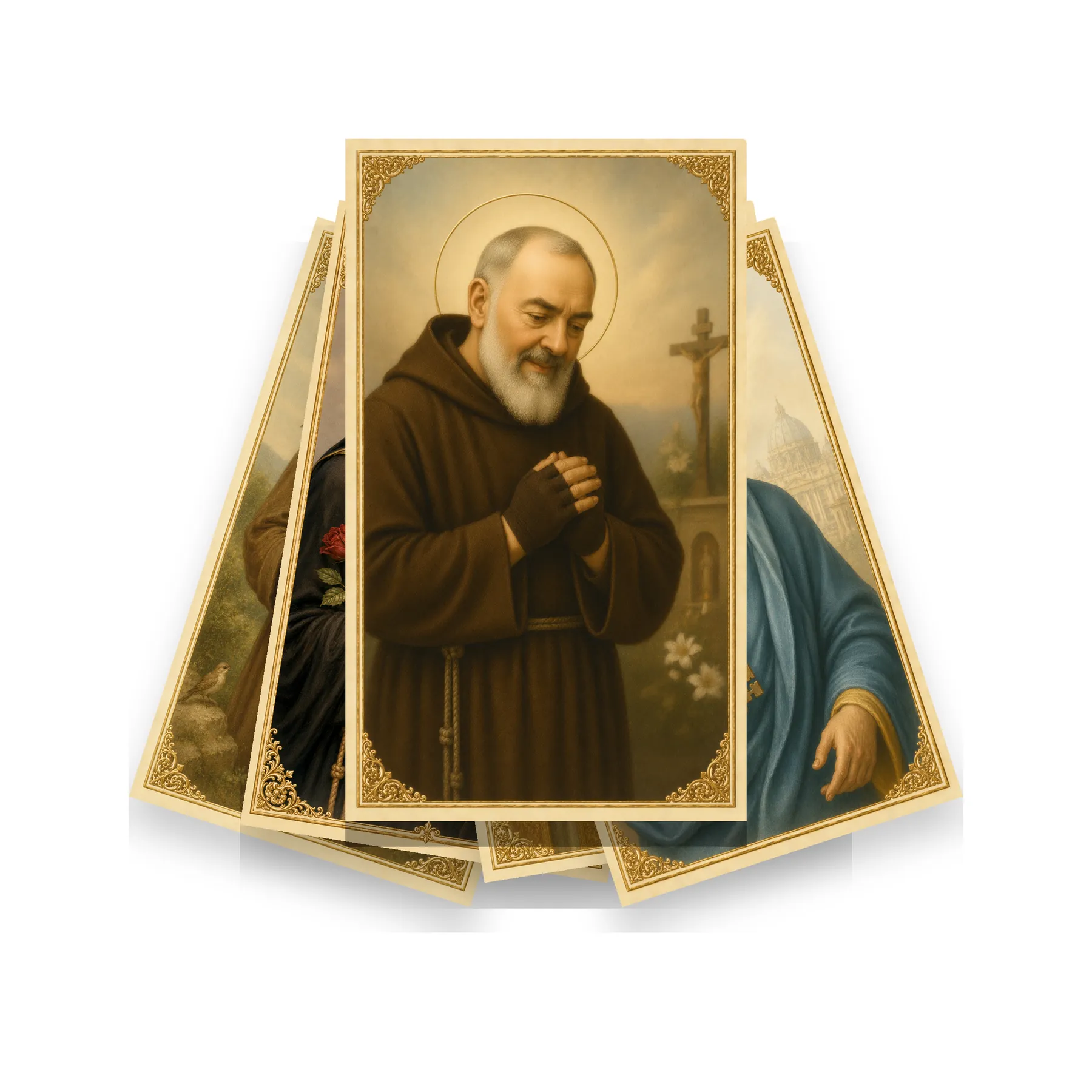
For the Family’s Saints & Names
Italian Saint Prayer Cards
Eleven beloved saints with traditional prayers in Italian and English. Give the full set, or choose the card connected to the recipient’s saint, name day or family devotion.
Get the Prayer Cards — $9.49Match the regional gift to the occasion
The region tells you what language the gift should speak; the occasion tells you how formal, lasting or practical it should be. That distinction keeps a regional gift from feeling forced. The same family from Calabria might receive olive oil at Christmas, a saint medal at a baptism, a ceramic serving piece at a wedding and a hometown print for a grandparent. The geography stays the same. The role of the gift changes.
| Occasion | Regional gift direction | Make it personal |
|---|---|---|
| Christmas | Regional food, holiday sweet, ornament, presepe piece or family game | Add the town and a Christmas memory or recipe |
| Baptism / new baby | Saint or devotional keepsake, small craft object, family-history piece | Connect it to the baby’s name, patron saint, godparents or grandparents’ region |
| Wedding | Ceramic, glass, textile, serving piece or heritage map | Use both family regions when the couple comes from different parts of Italy |
| Housewarming | Olive oil, serving ware, artisan kitchen object or town print | Choose something that will actually live in the new home |
| Grandparents | Hometown map, regional food, old photograph, saint gift or family-history project | Ask for the story while giving the gift |
| Host gift | Consumable regional food or one compact table object | Keep it easy to receive; no assembly or storage problem |
| Child / grandchild | Small ornament, game, book, craft or food tradition | Give the child a role in using it every year |
This is also why I would not try to make every regional gift expensive. A $15 food or paper item with the correct town and story can feel more considered than a $200 object chosen only because it was made somewhere in Italy. Price and specificity are different things. For heritage gifting, specificity usually wins.
For Italian-American and Italian-Canadian families, add the diaspora layer
A regional gift can become even more interesting after immigration because the family’s version of the region may have been preserved in a particular decade. The Calabria somebody remembers from a Montreal kitchen in the 1970s is not simply Calabria today. It is Calabria carried through grandparents, adapted to Canadian ingredients, spoken in a family dialect, mixed with the habits of a new city and repeated until those adaptations became traditions of their own.
That means the “most authentic” modern object is not automatically the most meaningful gift. The better question is: what did this region become inside this family? Maybe the answer is a particular Sunday sauce, a saint feast, a Christmas sweet, a pronunciation nobody outside the family recognizes, or an object that sat in every relative’s kitchen. A good regional gift can acknowledge both places at once — the old country and the family life built in Canada, the United States, Australia, Argentina or somewhere else.
This is where the gift becomes especially valuable for children and grandchildren. They may know they are “Italian” without knowing why one side of the family makes something differently from another. Giving them an object from the region, then telling them who it came through, turns an abstract identity into a chain of people. For the broader story of what changed after immigration and what survived, read Italian-American and Italian-Canadian traditions.
How to tell whether a gift is really regional
You do not need to become an expert in Italian craft law before buying a Christmas present, but a little skepticism helps. “Italian style,” “inspired by Tuscany,” or a tricolor ribbon tells you almost nothing about where an object was made or whether it has a real relationship to the region printed on the product page.
For food, look for a clearly identified producer and place of origin. For artisan objects, look for the maker, town, workshop or material tradition rather than only the aesthetic. For vintage material, the best provenance may simply be the place itself: the parish on the postcard, the street on the map, the town name printed on the back. You are not trying to build a museum collection. You are trying to avoid paying a premium for generic merchandise wearing a regional costume.
The strongest sellers usually make the connection easy to understand. They tell you who made the object, where it was made and why that place matters. When that information is absent, ask. A short message to an artisan or shop can tell you more than another hour of scrolling. And if the family connection is strong enough, even a reproduction can work — as long as you describe it honestly and the meaning comes from the family rather than from a false claim of provenance.
How to turn a regional gift into something the family keeps
The easiest upgrade costs almost nothing: document the gift. Put a card in the box with the region, town, family name and reason you chose it. If an older relative tells you a story after opening it, write that story down. Photograph the object in their hands. Save the maker or producer information. If it is a food gift, save the recipe you used it in. If it is a Christmas ornament, write the year on the box.
That small amount of context changes what happens twenty years later. Without it, somebody finds a beautiful ceramic bowl and says, “I think this was Nonna’s.” With it, they know it was given to her because her family came from Puglia, which town they came from, who gave it to her and on what Christmas. The physical object did not become more valuable. The information around it did.
This is the logic behind the Italian Family Heritage Kit throughout this page. You do not need to turn every gift into an archive project. You only need to preserve enough context that the next person understands why the object mattered.
The three-question test before you buy
- Could this gift come from any region? If yes, can you make it more specific?
- Will the person use it, eat it, display it with meaning, or tell a story because of it? If not, it may just be a souvenir.
- Can you explain in one sentence why this belongs to their family? If you can, put that sentence in the card.
The sentence is often the part people remember. “This olive oil comes from Calabria because that’s where Nonno’s family came from.” “This paper is from Fabriano; I want you to write down Nonna’s Christmas recipes in it.” “This is a little bell because our family is from near Agnone.” The explanation turns shopping into recognition.
Italy has twenty regions. Your family has one version of them. The region gives you the language of the gift — olive oil, ceramics, paper, glass, sweets, saints, wood, textiles. The family gives it meaning. Find the place. Ask the question. Write down the answer. Then buy the gift.
For occasion-specific ideas, continue with Italian Christmas gifts or gifts for Nonna and Nonno. For the stories behind the customs themselves, explore Italian-American and Italian-Canadian traditions.
FAQ
What is the best gift for someone from Italy?
The best gift is usually tied to the person’s actual region or town rather than to Italy in general. Regional food, artisan craft, a hometown map, a patron-saint gift, a family recipe project or a product from the family’s province will usually feel more personal than generic Italian merchandise.
How do I choose an Italian gift by region?
Start with the region, then choose a category the recipient genuinely likes: food, craft, home, faith, family history or an experience. Finally, make it family-specific by adding the exact town, surname, saint, recipe or migration story. The interactive finder above does the first two steps for all twenty regions.
What if I only know that my family is from southern Italy?
Do not guess if you can avoid it. Calabria, Sicily, Campania, Puglia, Basilicata, Abruzzo and Molise have very different food and craft traditions. Ask relatives or check family records for the exact town.
What are good Italian regional food gifts?
Examples include Calabrian olive oil and bergamot, Bronte pistachios or Modica chocolate from Sicily, balsamic vinegar and Parmigiano Reggiano from Emilia-Romagna, panettone from Lombardy, pandoro from Veneto, Puglian olive oil and taralli, and Piedmontese gianduja and hazelnuts.
What are good Italian regional craft gifts?
Strong regional craft gifts include Caltagirone ceramics from Sicily, Grottaglie ceramics from Puglia, Deruta ceramics from Umbria, Murano glass from Veneto, Fabriano paper from the Marche, Sardinian filigree, Ligurian slate, Calabrian ceramics and a bell or bell-inspired ornament connected to Agnone in Molise.
Can I use the region finder for Christmas, baptisms or weddings?
Yes. The tool is intentionally occasion-neutral. Use the region to choose the cultural direction, then adapt the gift to the occasion. Food and table gifts work well for Christmas and hosts; saint and devotional gifts can fit baptisms or name days; ceramics, glass, textiles and heritage gifts can work for weddings and housewarmings.

Marco Ricci is an Italian-Canadian writer and the grandson of Calabrian immigrants. He created Italian Family Traditions to document the customs, feast days, and family rituals Italian families carried from Italy to North America — and to understand what they actually meant. He is based in Montreal.