Italian Family Traditions
The Complete Guide to the Italian Feast Day Calendar: Every Tradition, Month by Month
My grandparents never owned a planner. They didn’t need one. The year was already mapped out for them — not by appointments, but by saints. Sant’Antonio in June meant something specific. San Martino in November meant something else entirely. The calendar wasn’t a grid of empty boxes waiting to be filled. It came pre-loaded with meaning, and every Italian family who left the old country brought a version of it with them.
⏱ 11 minute read
📋 What you will learn in this post
- How the Italian feast day calendar actually worked as a system, not a list of isolated holidays
- Every major feast day, organized month by month, with what each one actually meant
- The difference between national feasts, patron saint days, and personal onomastico
- Which traditions Italian-Canadian and Italian-American families kept — and how
- Direct links to the full story behind every tradition on this site
Table of Contents
- How the feast day system actually worked
- January to March — winter feasts
- April to June — spring into summer
- July to September — high summer
- October to December — the long approach to Christmas
- The local festivals that aren’t on any national calendar
- The full calendar at a glance
- What survived the crossing to Canada
- Common Italian name days — find your own onomastico
- FAQ
How the feast day system actually worked
The Italian feast day calendar was never a single list. It operated as three overlapping systems, all running at once.
Catholics and Cultures notes that only four of Italy’s major holidays are secular in origin — the rest, including Epiphany, Easter Monday, Assumption Day, All Saints Day, and Christmas, are Catholic feasts observed nationwide. But that national layer was only the beginning. Getting to Know Italy explains that in Italy, every town has a patron saint believed to protect it and intercede on locals’ behalf — and the patron saint’s feast day, la festa del santo patrono, functions as a local public holiday in that specific town, regardless of what is happening anywhere else in the country. Two neighboring towns can have completely different patron saints and completely different days off.
Layered on top of both the national calendar and the local patron saint calendar was a third, deeply personal one: the onomastico, or name day — the feast day of the saint you were named after, celebrated by Italian families with the same warmth as a birthday, sometimes more. A family’s actual lived calendar was the sum of all three systems at once: the national feasts everyone observed, the local patron saint days specific to their town or region, and the individual name days specific to each person in the household.
That is what my grandparents carried with them — not a single calendar, but three calendars folded into one rhythm, so completely internalized that no planner was ever required.
January to March — winter feasts
The year opens with two of the most beloved feast days in the entire Italian calendar — and they happen within five days of each other.
January 1 brings Capodanno, the Italian New Year, observed with its own specific food traditions and superstitions about starting the year correctly. Just days later, on January 6, comes the feast Italians arguably love more than Christmas itself in many southern households: La Befana, the Epiphany, when the old woman on the broomstick fills stockings with sweets for good children and coal for the rest.
February brings the movable feast of Carnevale, the pre-Lenten celebration of indulgence before the fasting season begins — read the full story in what is Carnevale. And in the depths of winter, an obscure but beloved folk tradition marks the supposed coldest days of the year: i giorni della merla, the days of the blackbird, a piece of weather folklore almost nobody outside Italy has ever heard of.
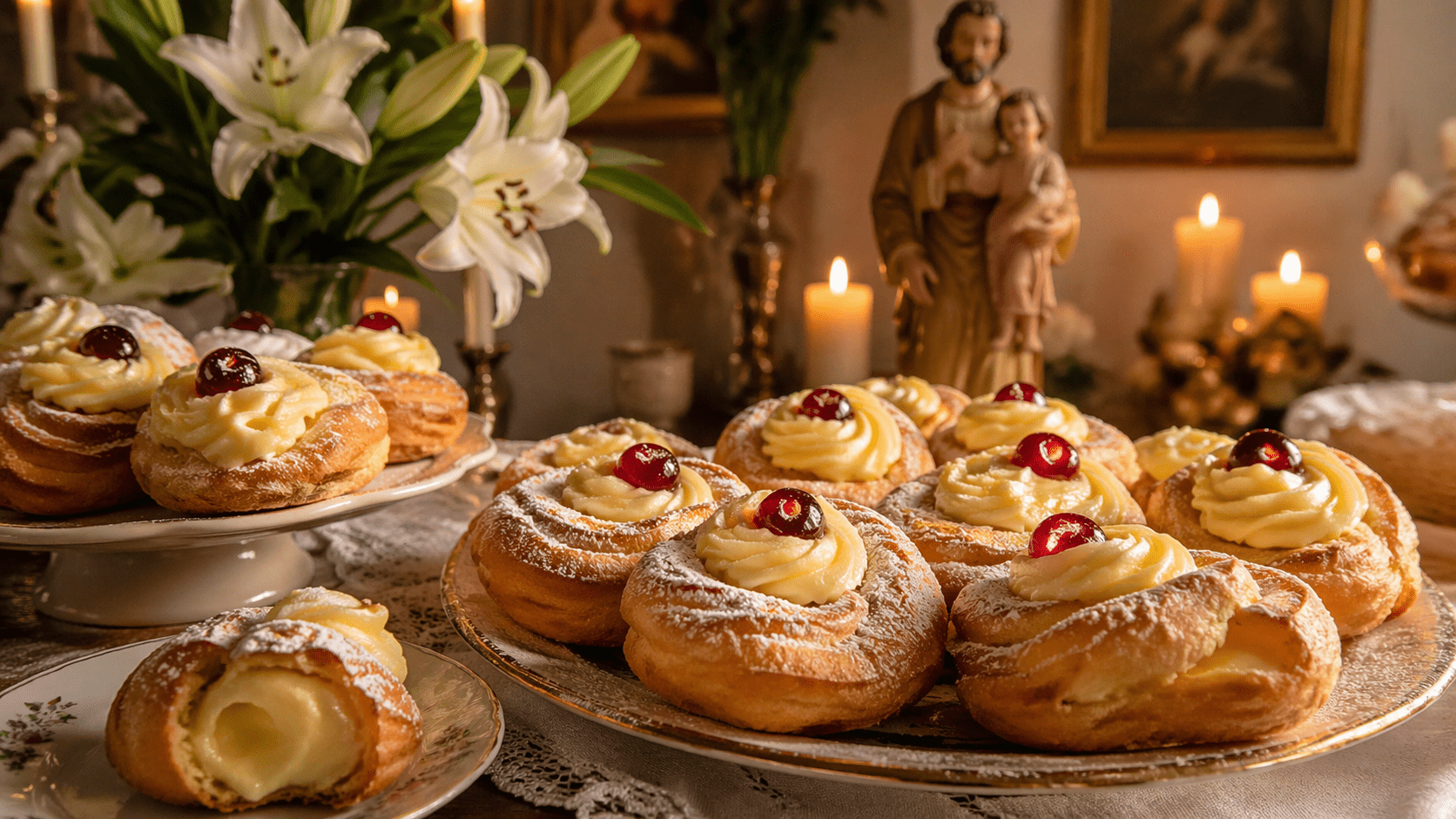
March brings San Giuseppe on March 19 — Saint Joseph’s Day, which doubles as Italian Father’s Day, complete with its own specific pastry traditions (the zeppole di San Giuseppe) found in nearly every Italian-American and Italian-Canadian bakery during the week of the feast.
April to June — spring into summer
Spring brings the most important feast in the entire Christian calendar, followed two months later by one of the most distinctly Italian summer traditions on this list.
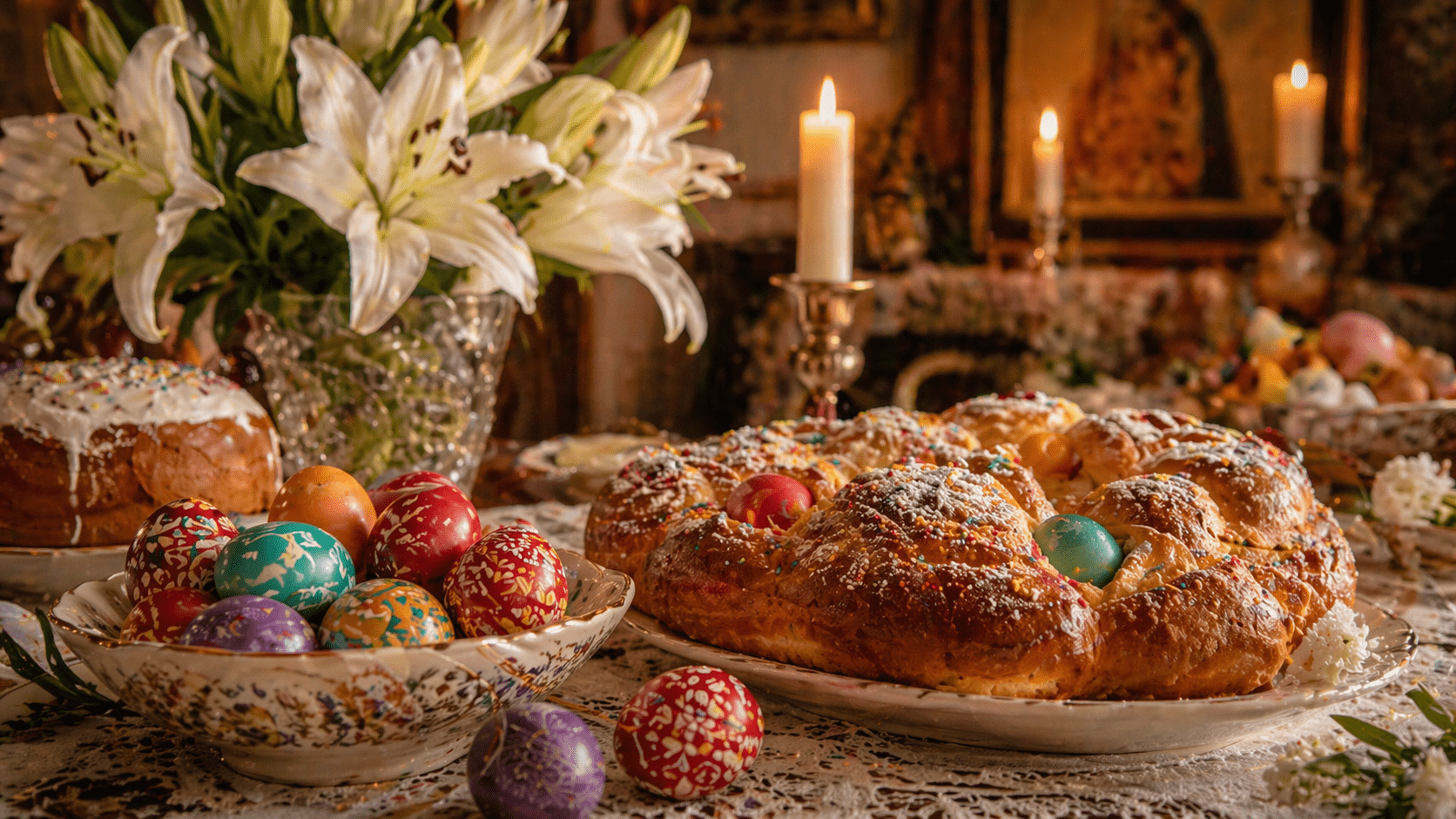
Easter — Pasqua — arrives as a movable feast in either March or April, and Italian families observe it with a depth and specificity that goes well beyond a single Sunday. Read the complete breakdown in Italian Easter traditions, including the specific foods, the Holy Week observances, and Pasquetta — Easter Monday — when Italian families traditionally head outdoors for a countryside picnic to mark the arrival of spring.
June carries two distinctly different feasts worth knowing. June 13 brings the Feast of Sant’Antonio, the saint Italian families call on when something is lost — read the full story of why losing your keys in an Italian household always meant one specific prayer. And June 24 brings the Feast of San Giovanni, tied to Acqua di San Giovanni — the midsummer tradition of leaving herbs and flowers in water overnight under the stars, a piece of Italian folk magic that predates Christianity entirely and simply absorbed the saint’s name along the way.
🇮🇹 Did you know? Italy Roundtable notes that when a religious feast falls on a Tuesday or Thursday, Italians often “fare il ponte” — make a bridge — by also taking the connecting Monday or Friday off, turning a single feast day into a four-day holiday.
July to September — high summer
August brings the single biggest pause button in the entire Italian calendar — a holiday so total it shapes how an entire country thinks about the month around it.
August 15 is Ferragosto — the ancient Roman rest day that merged with the Catholic Feast of the Assumption, now observed as the cultural high point of the Italian summer, when cities empty and beach towns fill. Read the complete history and why the holiday itself never fully made the crossing to Italian-Canadian communities, even though its underlying logic did.
September is quieter on the national feast calendar, but it is when regional patron saint celebrations — the local sagre and festas specific to individual towns and villages — reach their peak across Italy, as the harvest season provides the occasion for celebration before the colder months set in.
October to December — the long approach to Christmas
The final quarter of the year is the densest stretch on the entire feast calendar — five major observances in ten weeks, building steadily toward Christmas itself.
November 1 brings Ognissanti, All Saints’ Day, immediately followed by November 2’s Festa dei Morti, the Day of the Dead — when Italian families traditionally visit cemeteries to honor deceased relatives, a tradition treated with far more warmth and far less darkness than the English name suggests. Just over a week later, November 11 brings San Martino, the feast marking the new wine and historically the date families moved house — read the full story of why an entire Italian community used to relocate on the same single day every year.
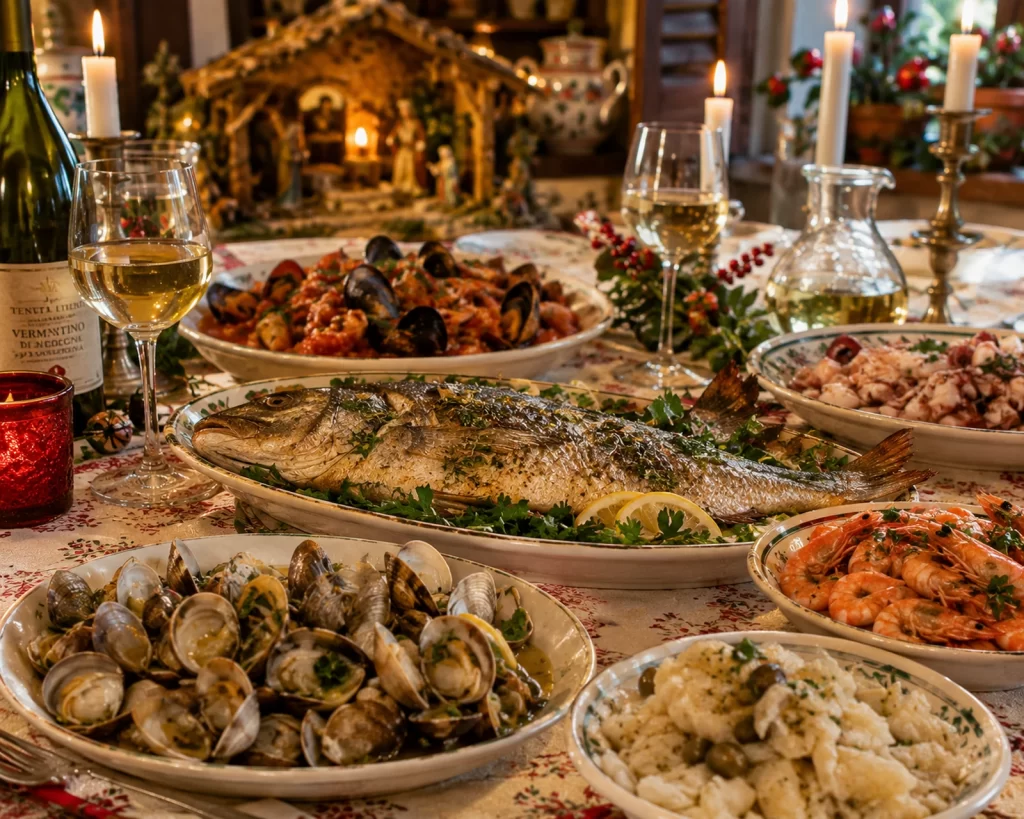
December opens with Santa Lucia on December 13 — a major feast in northern Italy with its own light-themed traditions, and in some regions, its own gift-giving figure who arrives before Christmas itself. Then the month builds toward the single most important night in the entire Italian family calendar: La Vigilia, Christmas Eve, built around the Feast of the Seven Fishes — a meal so significant it has its own dedicated companion piece on the rules governing what does and doesn’t belong on that table. The presepe, the elaborate Italian nativity scene, anchors the home throughout the entire season. And after the main meal comes tombola, the family number-calling game that closes out the night.
The year closes the way it opened — with one final celebration before the cycle begins again on January 1 with Capodanno.
The local festivals that don’t appear on any national calendar
Beyond the national feast days, the most deeply felt celebrations in Italy were often the ones specific to a single town — the festa del santo patrono.
Every Italian town has its own patron saint, and that saint’s feast day is celebrated locally with an intensity that often rivals or exceeds the national holidays. These local festivals — the feste and sagre — typically combine a religious procession, where a statue of the saint is carried through the streets, with an entirely secular celebration of food, music, fireworks, and community gathering that can stretch over several days. For the town in question, this is frequently the single most important day of the entire year.
This is the layer of the Italian feast day calendar most likely to be specific to your own family’s origins. While every Italian family observed Christmas and Easter, the particular saint your great-grandparents’ village honored — the specific procession, the specific dish made only for that day, the specific way the festival was celebrated — is the part of the calendar most likely to be uniquely yours. It is also the part most likely to have faded after immigration, since recreating a town-specific patron saint festival in Montreal or Toronto required a critical mass of immigrants from that exact same town, which did not always exist.
If you know which town or village in Italy your family came from, researching its patron saint and feast day is one of the most rewarding pieces of family history you can uncover — a celebration your ancestors almost certainly observed every single year, often for centuries, that may have quietly dropped out of your family’s calendar within a generation or two of arriving in Canada. For help capturing exactly this kind of detail before it disappears, read how to record family stories before they’re lost.
The full calendar at a glance
For quick reference, here is the entire Italian family feast calendar in one table — date, name, and what it actually means.
| Date | Feast | What it means |
|---|---|---|
| January 1 | Capodanno | Italian New Year, with its own food and luck traditions |
| January 6 | La Befana / Epiphany | The old woman who fills stockings — historically more significant than Christmas in southern households |
| Movable, Feb | Carnevale | Pre-Lenten celebration of indulgence before fasting begins |
| Late Jan | I Giorni della Merla | Folk tradition marking the coldest days of winter |
| March 19 | San Giuseppe | Saint Joseph’s Day and Italian Father’s Day, with zeppole pastries |
| Movable, Mar/Apr | Pasqua / Easter | The most important Christian feast, with its own specific Italian foods and Holy Week observances |
| June 13 | Sant’Antonio | The saint called on when something is lost |
| June 24 | San Giovanni | Tied to Acqua di San Giovanni, the midsummer herb-and-water folk tradition |
| August 15 | Ferragosto | Ancient Roman rest day merged with the Feast of the Assumption — Italy’s biggest summer pause |
| November 1 | Ognissanti | All Saints’ Day |
| November 2 | Festa dei Morti | Day of the Dead, honoring deceased family members at the cemetery |
| November 11 | San Martino | New wine, and historically the date families moved house |
| December 13 | Santa Lucia | Major northern Italian light-themed feast, sometimes its own gift-giving occasion |
| December 24 | La Vigilia | Christmas Eve, built around the Feast of the Seven Fishes |
| December 25 | Natale | Christmas Day itself |
| Personal, any date | Onomastico | Each family member’s own name-day feast, often celebrated alongside or instead of a birthday |
📅 Want the printable version of this calendar?
Get the complete Italian feast day calendar — every feast, every name day — as a free printable you can stick on your fridge. Enter your email below and I’ll send it straight to you.
What survived the crossing to Canada
Not every feast traveled equally well — and the pattern of what survived tells its own story about what immigration actually demands of a tradition.
The feasts that survived most completely in Italian-Canadian households were the ones that did not depend on an entire country stopping together. La Vigilia survived intact because it required only a family, a kitchen, and seafood — no civic infrastructure necessary. La Befana survived because it required only a stocking and a grandmother who remembered. Sant’Antonio survived as a prayer, portable and private, requiring no procession at all.
Ferragosto, by contrast, depended on an entire nation’s calendar stopping in unison — closed shops, empty cities, a shared cultural pause that simply had no infrastructure to replicate in Montreal or Toronto. The holiday’s name largely did not survive the crossing, even though, as explored in the full Ferragosto post, its underlying logic of working with summer heat rather than against it quietly did.
That pattern — portable, personal traditions surviving more completely than ones requiring collective civic participation — runs through this entire calendar and is one of the clearest lessons in how Italian-Canadian families chose, often without realizing they were choosing, what to keep and what to quietly let go. For the broader story, read Italian-American traditions: what changed and what stayed.
Common Italian name days — find your own onomastico
Almost every traditional Italian first name has its own onomastico tied to a specific saint’s feast day — here are the most common ones.
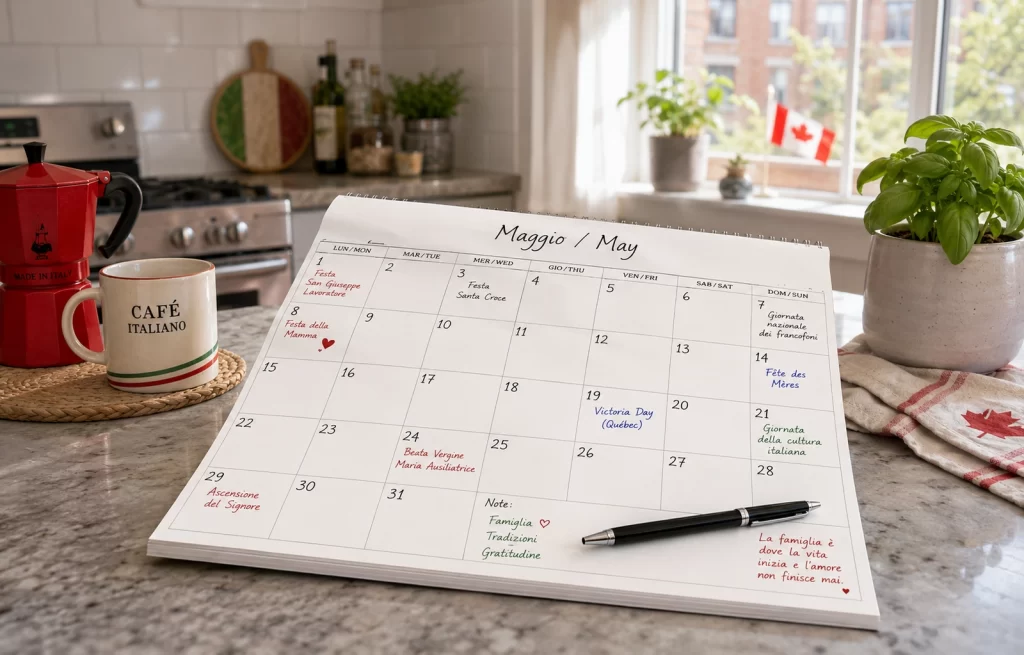
La Gazzetta Italiana notes that Italians typically know the most common onomastico dates without ever consulting a calendar — June 24 means Giovanni and Giovanna the way December 25 means Christmas. For the full explanation of how onomastico works and how it connects to traditional Italian naming patterns across generations, read the complete guide to what onomastico is and why Italians celebrate name days. For quick reference, here are the dates tied to the most common traditional Italian names.
| Name | Onomastico date | Saint |
|---|---|---|
| Giuseppe / Giuseppina | March 19 | San Giuseppe |
| Giovanni / Giovanna | June 24 | San Giovanni Battista |
| Antonio / Antonia / Antonietta | June 13 | Sant’Antonio di Padova |
| Francesco / Francesca | October 4 | San Francesco d’Assisi |
| Maria | May 1 (or August 15, the Assumption) | Various Marian feasts |
| Anna | July 26 | Sant’Anna |
| Lucia | December 13 | Santa Lucia |
| Valentino / Valentina | February 14 | San Valentino |
| Stefano / Stefania | December 26 | Santo Stefano |
| Marco | April 25 | San Marco Evangelista |
| Pietro | June 29 | San Pietro |
| Carlo | November 4 | San Carlo Borromeo |
| Teresa | October 1 or October 15 | Santa Teresa |
| Caterina | April 29 | Santa Caterina da Siena |
| Rosa | August 23 | Santa Rosa da Viterbo |
| Salvatore | March 18 | San Salvatore da Horta |
| Domenico | August 8 | San Domenico |
| Carmela | July 16 | Madonna del Carmine |
If your name, or a family member’s name, isn’t on this shorter list, Easy Milano maintains a more complete reference of Italian names and their corresponding onomastico dates worth checking. And if no specific saint’s day matches your name at all, the fallback in Italian tradition is simple: November 1, Ognissanti, All Saints’ Day, covers every name without its own dedicated feast.
The calendar’s high point of summer is Ferragosto on August 15, the Feast of the Assumption.
My grandparents never owned a planner. The year came pre-loaded with meaning, saint by saint, feast by feast, from Capodanno in January to La Vigilia in December. Some of it traveled whole across the ocean. Some of it traveled only in spirit. All of it, in one form or another, is still here — waiting to be passed to whoever asks.
This calendar connects to nearly everything else on this site. For the people who carried it — the Italian nonna who knew every date without looking — and for the broader story of how Italian families adapted their traditions after immigration, read Italian-American traditions: what changed and what stayed. And for how to capture the specific, personal version of this calendar your own family kept before it’s lost, read how to record family stories before they’re lost.
Behind the feast days are the saints and devotions themselves — find a saint with the patron saint finder, explore the many names of the Madonna, and learn the prayers every family knew.
📌 Quick summary
- Three overlapping systems: national Catholic feasts, local patron saint days, and personal onomastico name days
- 16+ major feast days structure the Italian year, from Capodanno on January 1 to La Vigilia on December 24
- Densest stretch: late October through December, with five major feasts in ten weeks
- What survived immigration best: portable, private traditions requiring only a family — not civic-scale holidays like Ferragosto
- The calendar still lives in the families who kept it, often without ever needing to write it down
FAQ
What are the most important feast days in the Italian calendar?
The most universally significant feasts, observed nationally across Italy, include Capodanno (January 1), Epiphany/La Befana (January 6), Easter and Easter Monday, Ferragosto (August 15), All Saints’ Day (November 1), and Christmas (December 24-25). Catholics and Cultures notes that only four of Italy’s major holidays are secular in origin, with the rest rooted in Catholic tradition. Beyond these national feasts, every Italian town also observes its own local patron saint’s day, which can be just as significant to that specific community even though it isn’t observed nationwide.
What is the difference between a national feast and a patron saint day?
National feasts, like Christmas or Ferragosto, are observed throughout Italy on the same date, with public offices and businesses closed nationwide. Patron saint days are local — Getting to Know Italy explains that every Italian town has its own patron saint believed to protect it, and that saint’s feast day functions as a public holiday only in that specific town. Two neighboring towns can have completely different patron saints and completely different days off, which is why Italian feast day calendars can look quite different depending on which specific region or town a family originates from.
What is onomastico and how is it different from a birthday?
Onomastico is an individual’s name day — the feast day of the saint they were named after — and in traditional Italian families it was celebrated with similar or even greater warmth than a birthday. Because every day in the Catholic calendar is assigned to a saint, every name carries its own associated feast date. A child named Antonio would have his onomastico on Sant’Antonio’s feast day; a child named Giuseppe would celebrate on San Giuseppe’s. This created a deeply personal layer on top of the broader national and local feast calendars, woven into the rhythm of Italian family life.
Which Italian feast days did immigrant families keep in Canada and America?
The feasts that survived most completely were the portable, private ones that required only a family rather than an entire civic infrastructure — La Vigilia, La Befana, and the practice of calling on Sant’Antonio when something was lost are strong examples. Feasts that depended on national-scale civic participation, like Ferragosto, were harder to maintain as actively observed holidays, since Italian-Canadian and Italian-American workplaces did not close for them the way Italian workplaces did. In many cases, the underlying spirit of a feast survived even when its formal, named observance did not.
Why do some Italian feast days move every year?
Several major feasts, including Easter, Easter Monday, Carnevale, Ash Wednesday, and Palm Sunday, are tied to the lunar calendar that determines the date of Easter each year, which is why their exact dates shift annually rather than falling on a fixed calendar date. Most other feast days, particularly those tied to specific saints — Sant’Antonio, San Martino, Santa Lucia — fall on the same fixed date every year, since they commemorate the saint’s traditional feast date in the Catholic liturgical calendar rather than a moveable religious calculation.
What does “fare il ponte” mean in relation to Italian holidays?
“Fare il ponte” — literally “to make a bridge” — refers to the common Italian practice of extending a holiday into a longer break by also taking off the day connecting it to the nearest weekend. If a feast day falls on a Tuesday, for example, many Italians will also take Monday off, turning a single day of observance into a four-day holiday. This practice reflects how thoroughly the feast calendar was woven into practical, everyday planning in Italy — entire workplaces and schools structured their year around it.
How can I start observing the Italian feast calendar with my own family?
Start with the feasts already connected to your own family’s names and region — look up the onomastico associated with each family member’s first name, and research whether your family’s specific town or region of origin in Italy has a particular patron saint or local feast tradition worth reviving. A dedicated book of saints and feast days makes this kind of research far easier than searching piecemeal, and turns into a useful year-round family reference once you have it. From there, the most accessible entry points are the feasts that require the least infrastructure: La Vigilia on Christmas Eve, La Befana on January 6, and Sant’Antonio’s feast on June 13 are all well-documented on this site and require only a family willing to observe them, not a whole community.
💬 Which feast day did your family keep most faithfully after immigration — and which one quietly faded? Leave a comment below. Mapping what survived and what didn’t is exactly the kind of family history worth recording.

Marco Ricci is an Italian-Canadian writer and the grandson of Calabrian immigrants. He created Italian Family Traditions to document the customs, feast days, and family rituals Italian families carried from Italy to North America — and to understand what they actually meant. He is based in Montreal.